2015 chevy traverse owners manual

Chevrolet provides comprehensive owner’s manuals and guides for the 2015 Traverse, accessible online or via printed copies for a fee.

These resources detail vehicle operation, maintenance, and safety features, ensuring a positive ownership experience.

A 2015 model manual is available as a PDF, containing 434 pages and 5.8 MB of information.

Overview of the Manual’s Purpose

The 2015 Chevy Traverse owner’s manual serves as a vital resource, meticulously detailing every aspect of your vehicle. Chevrolet designed this guide to empower owners with a thorough understanding of operation, maintenance schedules, and crucial safety protocols.

It clarifies features, explains controls, and offers troubleshooting advice for common issues. The manual aims to maximize driving enjoyment and ensure the longevity of your Traverse. Accessing this 434-page PDF provides comprehensive support, fostering confident and informed vehicle ownership.

Where to Find the Official Manual Online

The official 2015 Chevy Traverse owner’s manual is readily available online through Chevrolet’s official support website. Visit chevrolet.com/support/vehicle/manuals-guides to access and download the 5.8 MB PDF document.

Alternatively, startmycar.com also hosts the manual for easy access. These platforms provide a convenient way to view or download the 434-page guide, ensuring you have essential vehicle information at your fingertips, anytime, anywhere;

Understanding Your Vehicle

The 2015 Chevy Traverse owner’s manual details crucial information, including the Vehicle Identification Number (VIN) location and comprehensive vehicle specifications.

Vehicle Identification Number (VIN) Location

Locating your 2015 Chevy Traverse’s VIN is essential for various reasons, including warranty claims and vehicle history reports. The owner’s manual will specify the precise locations, but generally, you can find it on the driver’s side dashboard, visible through the windshield.

Additionally, the VIN is typically located on the driver’s side doorjamb sticker and within the vehicle’s registration and insurance documents. Knowing its location ensures easy access when needed for service or identification purposes.

Key Features and Specifications of the 2015 Traverse

The 2015 Chevy Traverse is a spacious eight-passenger crossover known for its comfortable ride and ample cargo space. Key features include a 3.6L V6 engine, offering a balance of power and efficiency.

Specifications detail various trim levels, each with unique options. Standard features often include a rearview camera, while available upgrades encompass leather seating and a premium sound system. The owner’s manual provides a detailed breakdown of all specifications.

Operating Your Vehicle

Chevrolet’s 2015 Traverse owner’s manual details essential procedures, including starting, stopping, driving modes, and crucial fluid checks for optimal performance.

Starting and Stopping the Engine

The 2015 Chevy Traverse owner’s manual provides detailed instructions for safely starting and stopping the engine. It covers procedures for normal conditions, as well as guidance for cold weather starting.

Understanding the correct sequence ensures optimal engine performance and longevity.

The manual also outlines precautions to take before shutting down the vehicle, such as ensuring it’s in Park or Neutral, and fully depressing the brake pedal.

Proper engine operation is vital for a safe driving experience.

Driving Modes and Controls

The 2015 Chevy Traverse owner’s manual thoroughly explains all driving modes and vehicle controls. It details the function of steering wheel-mounted controls, including audio and cruise control operation.

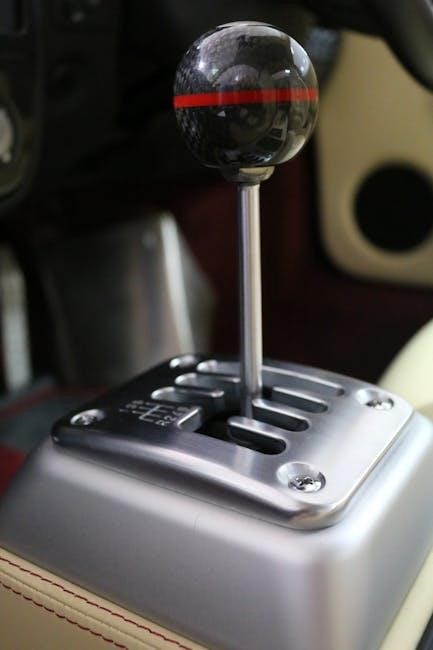
Information on the gear selector, including manual shift mode, is also provided.

The manual clarifies the use of various dashboard indicators and their meanings, ensuring drivers understand vehicle status.

Mastering these controls enhances the driving experience and safety.

Fueling and Fluid Checks

The 2015 Chevy Traverse owner’s manual provides detailed instructions for proper fueling procedures, including fuel type recommendations.

It outlines how to safely check essential fluid levels like engine oil, coolant, brake fluid, and power steering fluid.

Locating and understanding the dipsticks and reservoir markings is clearly explained.

Regular fluid checks are crucial for maintaining optimal vehicle performance and preventing potential mechanical issues, as detailed within the guide.

Safety Features

The 2015 Chevy Traverse manual details the airbag system, proper seat belt usage, and crucial guidelines for safe and correct child safety seat installation.

Airbag System Information

The 2015 Chevrolet Traverse owner’s manual provides detailed information regarding the vehicle’s airbag system. It explains the components, functionality, and important safety precautions related to airbags.

Understanding how the system operates during a collision is crucial for occupant safety.

The manual outlines potential risks and emphasizes the importance of always wearing seatbelts in conjunction with the airbag system for optimal protection.

Proper maintenance and awareness are key.

Seat Belt Usage and Maintenance

The 2015 Chevy Traverse owner’s manual stresses the critical importance of proper seat belt usage for all occupants. It details how to correctly position and secure seat belts, ensuring maximum safety during a collision.

The manual also provides guidance on inspecting seat belts for damage or wear.

Regular maintenance, including cleaning and checking for proper retraction, is essential for optimal performance.

Always replace damaged seat belts immediately.

Child Safety Seat Installation

The 2015 Chevy Traverse owner’s manual provides detailed instructions for the correct installation of various child safety seats. It emphasizes following both the vehicle’s guidelines and the child seat manufacturer’s instructions.

The manual illustrates proper LATCH system usage and top tether anchor points.

It’s crucial to ensure the child seat is securely fastened and appropriate for the child’s weight and height.

Always verify installation before each trip.

Maintenance and Care

The 2015 Chevy Traverse manual details a recommended maintenance schedule, covering oil changes, tire rotations, and fluid checks for optimal vehicle performance.

Recommended Maintenance Schedule

The 2015 Chevrolet Traverse owner’s manual outlines a detailed maintenance schedule to ensure longevity and reliability. Regular inspections of vital components, like fluids, belts, and hoses, are crucial.

Oil changes are specified at certain mileage intervals, alongside tire rotations to promote even wear.

The manual also highlights the importance of periodic checks for brakes, steering, and suspension systems, contributing to overall safety and performance. Following this schedule helps maintain the vehicle’s value.

Oil Change Procedures

The 2015 Chevy Traverse owner’s manual details the proper oil change procedure. It specifies the correct oil type and capacity for optimal engine performance.

The manual guides users through locating the oil drain plug and filter, emphasizing the need for proper disposal of used oil.

Torque specifications for the drain plug and filter are provided to prevent leaks, ensuring a secure and reliable oil change. Regular oil changes are vital for engine health.

Tire Pressure and Rotation

The 2015 Chevy Traverse owner’s manual emphasizes maintaining correct tire pressure for safety and fuel efficiency. Recommended PSI is listed on the vehicle’s tire placard.

Regular tire rotation is crucial for even wear, extending tire life and improving handling.

The manual details a recommended rotation pattern. Checking tire pressure monthly and inspecting for damage are also highlighted for optimal performance and longevity.

In-Vehicle Technology

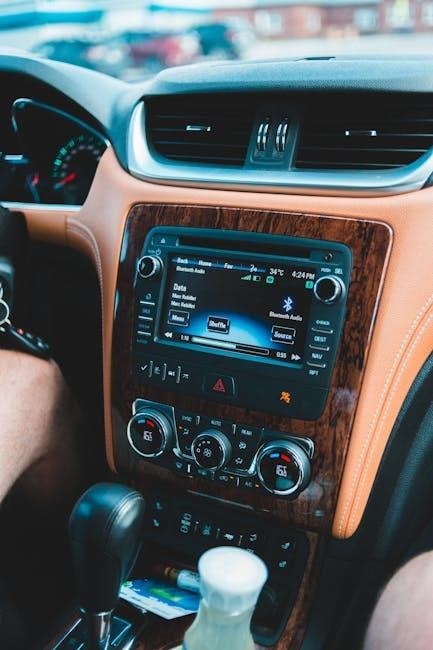
The 2015 Chevy Traverse features an infotainment system; the owner’s manual details its operation, Bluetooth pairing, and navigation system functionalities.

Infotainment System Overview

The 2015 Chevrolet Traverse infotainment system serves as the central hub for audio, connectivity, and vehicle settings. Owners can access features through a touchscreen display, offering intuitive control.

The system supports Bluetooth for hands-free calling and audio streaming, alongside USB ports for connecting external devices. Understanding the system’s layout and functions, as detailed in the owner’s manual, enhances the driving experience.

It allows for customization and provides access to vehicle information.

Bluetooth Pairing and Usage

The 2015 Chevy Traverse allows for seamless Bluetooth connectivity, enabling hands-free calling and wireless audio streaming from compatible devices. Pairing involves accessing the infotainment system’s settings and selecting the Bluetooth option.

Follow the on-screen prompts to search for and connect to your smartphone or other Bluetooth-enabled device. The owner’s manual provides detailed instructions for pairing, managing connected devices, and troubleshooting potential issues.

Enjoy safer and more convenient communication on the road.

Navigation System Details

The 2015 Chevy Traverse’s navigation system, if equipped, offers turn-by-turn directions, points of interest, and real-time traffic updates. The owner’s manual details how to input destinations, customize route preferences, and utilize the system’s advanced features.

Users can explore map views, search for specific addresses, and save frequently visited locations. Understanding the system’s voice command functionality enhances usability while driving, promoting safer navigation.

Regular map updates are recommended for optimal performance.

Troubleshooting Common Issues

The 2015 Traverse manual assists with warning lights, jump-starting, and fuse box issues. It provides diagrams and procedures for quick resolutions.

Popular searches include radio, overheating, and fusebox problems.

Dealing with Warning Lights

The 2015 Chevy Traverse owner’s manual provides crucial information regarding illuminated warning lights on the dashboard. Chevrolet emphasizes understanding each light’s meaning to address potential vehicle issues promptly.

The manual details the difference between critical warnings requiring immediate attention and those indicating less urgent maintenance needs. It guides owners through initial diagnostic steps and recommends seeking professional assistance when necessary, ensuring safe operation and preventing further damage.

Referencing the manual is the first step in resolving warning light concerns.

Jump Starting Procedures

The 2015 Chevy Traverse owner’s manual outlines safe and effective jump starting procedures for a discharged battery. Chevrolet stresses the importance of following these steps precisely to avoid damage to the vehicle’s electrical system or personal injury.

The manual details proper cable connection order – positive to positive, negative to ground – and emphasizes the need for a properly functioning jumper cable set. It also cautions against attempting a jump start if the battery is cracked or leaking.

Always consult the manual before attempting this procedure.

Fuse Box Location and Diagram

The 2015 Chevy Traverse owner’s manual provides detailed information regarding fuse box locations and comprehensive diagrams. Chevrolet indicates there are multiple fuse boxes within the vehicle, typically located within the passenger compartment and under the hood.

The manual illustrates each fuse box’s layout, identifying the function of each fuse. This allows owners to quickly diagnose and resolve electrical issues. Diagrams clearly label fuse amperage and corresponding circuits, aiding in proper replacement.

Refer to the manual for specific locations.

Interior Features

The 2015 Chevy Traverse offers adjustable seats, a user-friendly climate control system, and ample storage compartments for passengers and cargo convenience.

The owner’s manual details operation.

Seat Adjustments and Controls

The 2015 Chevy Traverse features manually adjustable front seats, allowing drivers and passengers to customize their seating position for optimal comfort and support during travel.

The owner’s manual provides detailed instructions on how to operate the seat controls, including recline, height adjustment, and lumbar support features.

Understanding these controls ensures a personalized and comfortable driving experience, maximizing enjoyment on both short commutes and long journeys.

Climate Control System

The 2015 Chevy Traverse is equipped with a user-friendly climate control system designed to maintain a comfortable cabin temperature for all occupants.

The owner’s manual details the operation of the system, including controls for temperature, fan speed, and air distribution. It explains how to effectively use the air conditioning and heating functions.

Proper understanding of these controls ensures a pleasant driving environment, regardless of external weather conditions.

Storage Compartments

The 2015 Chevy Traverse offers a variety of storage compartments throughout the cabin, maximizing space and convenience for passengers and cargo.

The owner’s manual details the location and capacity of these compartments, including the glove box, center console, door pockets, and rear storage areas.

It also explains the proper use of the power liftgate and folding rear seats, optimizing cargo-carrying flexibility for various needs.

Exterior Features

The 2015 Traverse manual details operation of lights, wipers, door locks, and the security system.

It also explains hood and trunk operation for easy access.

Lights and Wipers Operation

The 2015 Chevy Traverse owner’s manual provides detailed instructions for all exterior lighting, including headlights, turn signals, and parking lights.

It explains how to adjust headlight aiming for optimal visibility and covers operation of the automatic headlight feature, if equipped.

Regarding wipers, the manual outlines settings for various weather conditions, including intermittent, low, and high speeds.

It also details washer fluid operation and potential troubleshooting steps if the wipers aren’t functioning correctly.

Door Locks and Security System

The 2015 Chevy Traverse owner’s manual thoroughly explains the operation of both manual and power door locks, including the child safety rear door locks.

It details the remote keyless entry system, covering functions like locking/unlocking doors and activating the panic alarm.

The manual also provides information on the vehicle’s security system, including arming/disarming procedures and understanding any warning indicators.

Instructions on replacing key fob batteries and programming additional fobs are also included.

Hood and Trunk Operation

The 2015 Chevy Traverse owner’s manual provides clear instructions for safely opening and closing both the hood and the trunk/liftgate.

It details the location of the hood release lever inside the vehicle and explains the proper procedure for securing the hood after maintenance.

The manual also covers the operation of the power liftgate, if equipped, including any safety features or override mechanisms.

Information on the trunk’s emergency release and cargo area access is also included for owner convenience.

Warranty Information

The 2015 Chevy Traverse owner’s manual outlines comprehensive warranty coverage details and claim procedures for vehicle repairs and component failures.

Owners can find specifics regarding bumper-to-bumper, powertrain, and safety restraint system warranties within the manual.

Coverage Details

The 2015 Chevy Traverse warranty, as detailed in the owner’s manual, typically includes a bumper-to-bumper coverage for 3 years/36,000 miles, protecting against defects in materials or workmanship.

Powertrain coverage extends to 5 years/100,000 miles, safeguarding the engine, transmission, and drive systems. Corrosion protection is often offered for 6 years/100,000 miles.

Safety restraint system coverage may also be included, ensuring protection for airbags and seatbelts. Specific terms and conditions apply, so reviewing the manual is crucial.

Claim Procedures

To file a warranty claim for your 2015 Chevy Traverse, first, contact your authorized Chevrolet dealership’s service department to schedule an appointment.

Clearly explain the issue and provide documentation, like service records. The dealership will diagnose the problem and submit the claim to Chevrolet for approval.

Keep copies of all paperwork and communication. If a claim is denied, you have the right to appeal the decision through Chevrolet’s customer service channels.

Important Notices

Chevrolet disclaimers and legal information are included within the 2015 Traverse manual.

For support, contact Chevrolet directly; details are available within the owner’s resources online.

Legal Disclaimers

Chevrolet reserves the right to make changes to the vehicle’s specifications and information without prior notice, as detailed in the 2015 Traverse owner’s manual.

The manual provides guidance, but owners are responsible for safe vehicle operation and adherence to all applicable laws. Chevrolet is not liable for damages resulting from improper use or modifications.

Information is current at the time of publication but may be subject to updates; always refer to the latest official documentation available through Chevrolet support.

Contact Information for Chevrolet Support

For assistance with your 2015 Chevy Traverse, Chevrolet support is readily available through their official website: chevrolet.com/support.

This platform offers access to manuals, guides, and troubleshooting resources. Owners can also find helpful information within the vehicle support section. Further assistance can be obtained by exploring community forums and frequently asked questions.

Direct contact options may also be available through the website for specific inquiries.

e4od manual valve body

E4OD Manual Valve Body: A Comprehensive Guide (Updated 03/09/2026)

Today, March 9th, 2026, explore comprehensive repair kits like ZIP kits and Superior Shift options for your E4OD/4R100 transmission’s valve body, enhancing performance and durability.

The E4OD automatic transmission, prevalent in Ford trucks from 1989 onwards (including the 4R100 variant), is renowned for its robust construction and ability to handle substantial power, particularly in diesel applications. However, like any complex mechanical system, the E4OD is susceptible to wear and tear, often manifesting as shifting problems. A critical component within this transmission is the valve body, responsible for directing hydraulic fluid to operate the various clutches and bands that facilitate gear changes.

Understanding the E4OD’s architecture is crucial before delving into valve body specifics. Its design prioritizes durability, making it a favorite for heavy-duty applications like towing and hauling. Over time, components within the valve body can degrade, leading to issues like harsh shifting, delayed engagement, or complete gear failure. Addressing these concerns often involves inspection, repair, or complete replacement of the valve body, frequently utilizing specialized kits designed to restore optimal functionality;

What is a Manual Valve Body?

A manual valve body, in the context of the E4OD transmission, isn’t truly “manual” in the sense of a fully mechanical linkage. Instead, it refers to a modified or rebuilt valve body designed to override the transmission’s original programming, offering firmer, more predictable shifts. These kits, like the ZIP Kit and Superior Shift options, replace or modify internal valves and accumulators to alter hydraulic pressure and timing.

The stock valve body relies on intricate passages and valves controlled by hydraulic pressure. A manual valve body kit introduces changes to these pathways, often incorporating upgraded components to withstand increased stress. This results in a more aggressive shift feel, beneficial for performance or heavy towing. Essentially, it’s a recalibration of the transmission’s hydraulic control system, providing greater control over gear engagement.

E4OD Valve Body Functionality

The E4OD valve body acts as the transmission’s central control hub, directing hydraulic fluid to various clutches and bands to execute gear changes. It houses a complex network of valves, accumulators, and passages that respond to driver input (throttle position, gear selector) and vehicle speed. These components regulate line pressure and timing, ensuring smooth and efficient shifting.

Specifically, valves like the 1-2 and 2-3 accumulator control valves manage the engagement of different gear ranges. Modifications within a manual valve body kit, such as those found in Superior Shift or PowerTow kits, alter these controls. This impacts shift firmness and responsiveness, often improving performance or towing capacity. Proper functionality relies on clean fluid and precise component operation.

Common E4OD Valve Body Problems

Several issues can plague the E4OD valve body, leading to transmission malfunctions. Wear within the valve body, particularly in the boost sleeve of the line pressure modulator valve, is a frequent culprit, causing reduced line pressure. Contamination from debris or clutch material can obstruct valve passages, hindering proper operation. Accumulator valve failures often result in harsh or delayed shifts.

Furthermore, sticking valves or worn seals contribute to erratic shifting behavior. These problems often manifest as slipping gears or harsh engagement. Addressing these concerns typically involves a thorough inspection, cleaning, and component replacement, often utilizing a rebuild kit. Kits like the ZIP kit provide necessary parts for a comprehensive overhaul.

Shift Issues & Harsh Engagement

Harsh engagement and problematic shifting are common symptoms of E4OD valve body issues. Often, these stem from a malfunctioning 1-2 accumulator control valve or the 2-3 accumulator control valve, leading to abrupt gear changes. A worn or sticking valve body can cause delayed shifts, or conversely, overly aggressive shifts that stress the transmission components.

Low line pressure, frequently caused by wear in the boost sleeve of the line pressure modulator valve, exacerbates these problems. Utilizing a valve body repair kit, such as those offered by Superior Shift or a ZIP kit, can address these issues by replacing worn parts and restoring proper hydraulic function. Proper diagnosis is crucial to pinpoint the root cause and implement the correct solution.

Delayed or Slipping Gears

Delayed engagement or slipping gears within the E4OD transmission frequently indicate internal hydraulic problems centered within the valve body. Worn or damaged valves, particularly the accumulator control valves (1-2 and 2-3), can disrupt the precise timing and pressure required for smooth gear transitions. This results in a noticeable delay when shifting or a sensation of the transmission momentarily losing its grip on the selected gear.

A failing valve body can also contribute to reduced line pressure, further exacerbating slipping. Repair kits, including those from Superior Shift and ZIP, offer replacement components designed to restore optimal hydraulic performance. Thorough inspection during a rebuild is vital to identify and rectify the underlying cause of these frustrating symptoms.

Valve Body Repair Kits: Overview

Valve body repair kits for the E4OD and 4R100 transmissions are readily available, offering solutions ranging from basic component replacement to complete rebuilds and performance enhancements. These kits typically include updated valves, seals, and springs designed to address common failure points. Popular options include ZIP kits, providing drop-in repairs for accumulator control valves, and Superior Shift kits, known for their comprehensive overhaul capabilities.

Furthermore, reprogramming kits like the E4OD-HD2 Gear Command kit allow for modifications to shift points and firmness. Selecting the appropriate kit depends on the specific issues experienced and desired outcome – whether it’s restoring factory functionality or improving performance for heavy-duty applications.

ZIP Kit Components

ZIP valve body kits for the E4OD/4R100 transmission are designed as convenient, drop-in repair solutions. A core component is the 1-2 Accumulator Control Valve Kit, addressing a frequent source of shifting issues. Similarly, the 2-3 Accumulator Control Valve Kit is included to resolve problems in that gear range. Beyond these, a master overhaul kit provides a complete set of friction and steel plates for a thorough rebuild.

These kits prioritize ease of installation and often include detailed instructions. They aim to restore proper valve body function without requiring extensive machining or specialized tools, making them a popular choice for both DIY mechanics and professional rebuilders seeking efficient repair options.

Superior Shift Kit Options

Superior Shift offers comprehensive valve body kits for the E4OD/4R100 transmissions, known for enhancing both performance and durability. These kits often include modifications to the line pressure modulator valve, compensating for wear in the boost sleeve – a common failure point. They are designed to revitalize the transmission’s responsiveness and provide firmer, more positive shifts.

Superior kits frequently feature upgraded components and revised valve body passages, optimizing hydraulic flow. They cater to a range of applications, from daily driving to heavy-duty towing, offering solutions for both gas and diesel engines. Choosing a Superior kit often means a more robust and reliable shifting experience, extending the life of your E4OD transmission.

E4OD-HD2 Reprogramming Kits

The E4OD-HD2 Reprogramming Kit, designed for all E4OD and 4R100 transmissions from 1989 onwards, focuses on modifying existing valve body components rather than complete replacement. Utilizing Gear Command technology, these kits alter hydraulic pressures and shift points, resulting in a firmer, more precise shifting experience tailored for demanding applications.

HD2 kits are particularly beneficial for vehicles used for towing or experiencing heavy loads. They address common issues like soft shifts and delayed engagement by recalibrating the transmission’s internal controls. Installation typically involves swapping specific valves and springs, requiring a moderate level of mechanical skill. This reprogramming approach offers a cost-effective solution for improving transmission performance and reliability.

E4OD Valve Body Rebuild Process

A thorough E4OD valve body rebuild involves a systematic three-stage process: disassembly & inspection, cleaning & component replacement, and finally, reassembly & testing. Disassembly requires careful labeling and organization of parts to ensure correct reinstallation. Inspection focuses on identifying worn or damaged valves, springs, and seals.

Cleaning is crucial, utilizing specialized solvents to remove debris and varnish. Component replacement should utilize a complete overhaul kit, including friction and steel plates, alongside individual valve kits. Reassembly demands meticulous attention to detail, following a torque sequence. Post-rebuild testing, ideally on a transmission dyno, verifies proper function and shift quality, guaranteeing a reliable and smooth operation;

Disassembly and Inspection

Begin the E4OD valve body rebuild by carefully disassembling the unit, meticulously labeling each component and its location. Organization is paramount for successful reassembly. A comprehensive inspection follows, focusing on identifying wear and damage. Pay close attention to the 1-2 and 2-3 accumulator control valves, checking for scoring or sticking.

Inspect all valves for free movement within their bores, and examine springs for proper tension. Look for cracks or breaks in the valve body itself. Note any signs of excessive wear on the boost sleeve, as this impacts line pressure. Detailed inspection guides comprehensive valve body and pump repair, ensuring all potential issues are identified before proceeding.

Cleaning and Component Replacement

After thorough disassembly and inspection, meticulous cleaning is crucial. Use a solvent designed for automatic transmission components to remove all traces of old fluid and debris. Avoid abrasive cleaners that could damage valve surfaces. Replace all friction and steel plates included in a master overhaul kit, ensuring optimal clutch performance.

Replace any valves exhibiting wear or damage, particularly the 1-2 and 2-3 accumulator control valves. Install new springs and seals. Address the line pressure modulator valve, utilizing kits that compensate for boost sleeve wear. A complete rebuild necessitates replacing all worn components, guaranteeing a reliable and smoothly shifting transmission.

Reassembly and Testing

Carefully reassemble the valve body, ensuring all components are correctly positioned and lubricated with clean transmission fluid during installation. Double-check valve seating and spring placement. Once assembled, perform a thorough bench test using an air pressure tester to verify proper valve operation and shift pattern functionality.

This testing phase identifies leaks or sticking valves before installation in the transmission. Simulate gear changes and observe valve movements. After successful bench testing, install the valve body, following the manufacturer’s torque specifications. A road test is essential to confirm smooth, precise shifts and proper engagement, validating the rebuild’s success.

Specific Valve Replacements

When rebuilding an E4OD valve body, certain valves commonly require replacement due to wear or failure. The 1-2 Accumulator Control Valve Kit addresses issues with smooth 1-2 shifts, often resolving harsh engagement. Similarly, the 2-3 Accumulator Control Valve Kit is crucial for proper 2-3 gear transitions, eliminating slipping.

For heavy-duty applications, consider the PowerTow PT4R100 Valve Body Kit, designed to enhance durability and performance in both gas and diesel engines. Replacing these valves, alongside a complete overhaul kit with new friction and steel plates, ensures optimal transmission function and longevity. Careful inspection guides replacement needs.

1-2 Accumulator Control Valve Kit

The 1-2 Accumulator Control Valve Kit is a vital component in restoring smooth and firm 1-2 shifts within the E4OD transmission. This kit directly addresses common issues like delayed engagement or harsh transitions between first and second gear. Worn or damaged valves cause these problems, leading to a less enjoyable driving experience and potential transmission stress.

Installation involves replacing the existing valve with a new, precision-engineered component. This kit often includes necessary seals and springs for a complete repair. Addressing this valve proactively can prevent further damage and improve overall transmission reliability. It’s a frequently recommended upgrade during valve body rebuilds.

2-3 Accumulator Control Valve Kit

The 2-3 Accumulator Control Valve Kit is crucial for achieving smooth and consistent shifts from second to third gear in the E4OD transmission. A malfunctioning valve often manifests as harsh 2-3 upshifts, delayed engagement, or even slipping between gears. This kit provides a direct replacement for the worn or damaged valve, restoring proper hydraulic control.

Typically, this kit includes the updated valve, along with new seals and springs to ensure a leak-free and reliable repair. Replacing this valve is a common practice during valve body overhauls, significantly improving the transmission’s overall performance and longevity. Addressing this issue proactively prevents further internal damage and enhances the driving experience.

PowerTow PT4R100 Valve Body Kit (Heavy Duty)

The Superior Shift PowerTow PT4R100 Valve Body Kit is engineered for enhanced durability and performance, particularly for trucks used in demanding applications like towing or hauling heavy loads. This heavy-duty kit addresses common E4OD/4R100 weaknesses, providing increased line pressure and improved shift firmness. It’s suitable for both gas and diesel engines, offering a robust solution for increased reliability.

This kit typically includes upgraded valves, springs, and check balls designed to withstand higher hydraulic stresses. Installation requires a thorough understanding of transmission hydraulics, but the benefits include reduced slippage, firmer shifts, and extended transmission life. It’s a popular choice for those seeking a significant performance upgrade and increased longevity for their E4OD transmission.

Troubleshooting Valve Body Issues

Diagnosing E4OD valve body problems requires a systematic approach. Begin by identifying specific symptoms: harsh shifting, delayed engagement, or slipping gears. Check transmission fluid condition – burnt or contaminated fluid indicates potential internal damage. A scan tool can reveal transmission-related diagnostic trouble codes (DTCs), providing valuable clues.

Visual inspection during disassembly is crucial. Look for worn or damaged valves, springs, and seals. Pay close attention to the accumulator control valves, as they frequently contribute to shift quality issues. Online resources, including YouTube videos, offer helpful guides for identifying common failure points and proper repair techniques. Remember to address the root cause, not just the symptoms, for a lasting repair.

Resources & Further Information (YouTube Videos)

Numerous YouTube channels provide invaluable resources for E4OD valve body repair and troubleshooting. Search for videos demonstrating complete valve body rebuilds, focusing on disassembly, cleaning, and reassembly techniques. Look for tutorials specifically addressing common issues like harsh shifting or delayed engagement. Many experienced transmission technicians share their expertise online, offering practical tips and insights.

Specifically, seek out videos detailing the installation of ZIP kits, Superior Shift kits, and E4OD-HD2 reprogramming kits. Visual guidance can significantly simplify the process. Remember to cross-reference information from multiple sources and prioritize videos from reputable channels. These resources complement written guides and help ensure a successful valve body repair.

canon 5d mark 111 manual

Canon EOS 5D Mark III: A Comprehensive Guide

Discover essential resources for your 5D Mark III! Access the official Canon manual (PDF) online, explore third-party guides like “Canon 5D Mark III Experience,” and find Amazon listings for the original instruction manual.

Welcome to the world of professional photography with the Canon EOS 5D Mark III, a full-frame DSLR renowned for its exceptional image quality and robust performance. This guide serves as your companion, helping you unlock the camera’s full potential. A crucial first step is familiarizing yourself with available resources, particularly the official Canon documentation.

Fortunately, obtaining a digital copy of the 5D Mark III’s user manual is readily achievable. Canon provides a downloadable PDF version on their website, accessible through the Canon USA link provided. Notably, a watermark-free version has been identified on Canon Rumors, offering a cleaner reading and printing experience. Beyond the official manual, supplementary guides like the “Canon 5D Mark III Experience” ebook offer in-depth tutorials and insights. Amazon also provides access to the original instruction manual in book format, catering to those who prefer a physical copy. These resources collectively empower you to master your new camera.

Key Features and Specifications

While this guide focuses on accessing information about the Canon EOS 5D Mark III, understanding its core capabilities is vital. The camera’s manual, available as a PDF from Canon’s website and through resources like Canon Rumors (for a watermark-free version), details these extensively. It’s a full-frame DSLR, celebrated for its 22.3MP Full-Frame CMOS sensor and DIGIC X Image Processor.

The manual outlines features like its 61-Point High-Density Reticular AF system, crucial for precise focusing, and its ability to record Full HD video. Exploring the “Canon 5D Mark III Experience” ebook can further illuminate these specifications with practical application examples. Amazon offers the original instruction manual for a comprehensive overview. Canon’s support website provides firmware updates and drivers, ensuring optimal performance. Mastering these features, guided by the available documentation, unlocks the camera’s full potential for stunning imagery.


Getting Started

Begin your journey with the Canon 5D Mark III by downloading the official PDF manual from Canon’s website for setup guidance and operational understanding.

Unboxing and Initial Setup

Upon receiving your Canon EOS 5D Mark III, carefully unpack the box, ensuring all components are present. The official manual, available as a PDF download from Canon’s website, is your primary resource during this phase. Begin by identifying the camera body, battery, battery charger, strap, and various cables.

Initial setup involves inserting the battery and a compatible memory card. Refer to the manual for proper insertion techniques. Power on the camera and follow the on-screen prompts to set the language, date, and time. The manual details each step, including customizing initial camera settings.

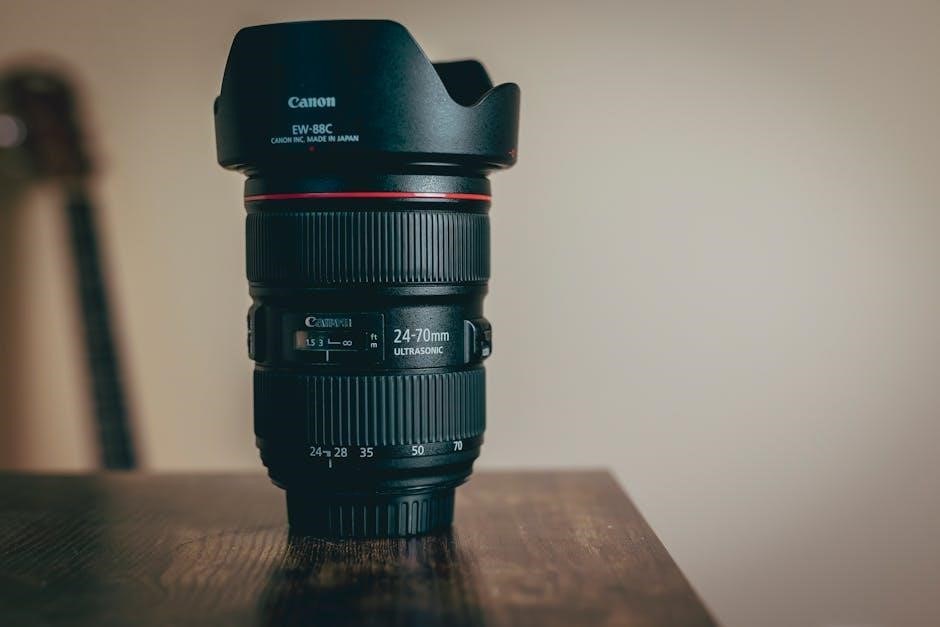
Pay close attention to lens attachment procedures outlined in the manual. Proper mounting is crucial for optimal image quality. Familiarize yourself with the camera’s buttons and dials, referencing the manual’s diagrams for clarity. A thorough unboxing and setup, guided by the manual, will ensure a smooth start to your photographic experience.

Battery and Charging

The Canon EOS 5D Mark III utilizes a Canon LP-E6 battery. Always use the supplied Canon LC-E6 charger for optimal performance and safety, as detailed in the official manual. Initial charging can take several hours; the manual specifies a full charge indicator. Avoid using third-party chargers, as they may damage the battery or camera.

The manual emphasizes proper battery handling. Do not expose the battery to extreme temperatures or disassemble it. To check battery level, use the camera’s battery indicator or the charging display on the LC-E6. A fully charged battery provides substantial shooting capacity, but this varies with usage.

For extended shooting sessions, consider acquiring a spare battery. The manual recommends storing batteries in a cool, dry place when not in use. Understanding these guidelines, as outlined in the Canon 5D Mark III manual, will maximize battery life and ensure reliable camera operation.

Memory Card Compatibility and Usage

The Canon EOS 5D Mark III supports CompactFlash (CF) cards and SD cards (SDHC/SDXC). The official manual details specific compatibility, recommending high-speed cards for optimal performance, especially when recording video or shooting in burst mode. Using a slower card can significantly impact write speeds and buffer capacity.

Formatting cards within the camera is strongly advised, as this ensures compatibility and optimizes performance. The manual cautions against formatting cards on a computer if they are frequently used in the camera. Always eject cards safely from both the camera and computer to prevent data corruption.

The 5D Mark III features dual card slots, allowing for redundancy or overflow recording. The manual explains how to configure these slots for various shooting scenarios. Regularly back up your images to a computer or external storage device to safeguard your valuable photos and videos, as detailed in the Canon documentation.

Understanding the Camera Interface

Explore the 5D Mark III’s layout! The manual guides you through the Mode Dial, menu navigation, and Quick Control Screen for efficient customization and operation.

The Mode Dial and Shooting Modes

Mastering the Canon EOS 5D Mark III begins with understanding its Mode Dial. The official manual comprehensively details each setting, empowering you to take full creative control. From fully automatic modes – ideal for beginners – to advanced manual controls for experienced photographers, the 5D Mark III caters to all skill levels.

Explore Program (P), Shutter-priority (Tv), Aperture-priority (Av), and Manual (M) modes. Learn how each impacts exposure and creative effects. The manual clarifies the functions of Scene Intelligent Auto, allowing the camera to optimize settings for various scenarios. Dedicated modes for video recording and creative filters are also explained.

Furthermore, the manual illustrates custom User Defined modes, enabling you to save preferred settings for quick access. Understanding these modes, as detailed in the Canon documentation, unlocks the camera’s full potential and allows for consistent, high-quality results in any shooting situation.

Menu Navigation and Customization

The Canon EOS 5D Mark III’s menu system, thoroughly explained in the official manual, offers extensive customization options. Navigate through clearly organized menus to tailor the camera to your shooting style. The manual details each menu item, from image quality settings to autofocus configurations and display preferences.

Personalize button functions and control layouts for efficient operation. Customize Quick Control settings for instant access to frequently used features. The manual guides you through creating and managing custom Picture Styles, allowing you to achieve unique color renditions. Explore menu options for optimizing video recording parameters.

Understanding these customization features, as outlined in the Canon documentation, is crucial for maximizing workflow efficiency. The ability to fine-tune the camera’s behavior ensures a seamless and intuitive shooting experience, perfectly aligned with individual preferences and photographic needs.

Quick Control Screen Overview

The Canon EOS 5D Mark III’s Quick Control screen, detailed within the comprehensive manual, provides rapid access to essential shooting settings. Activated by pressing the ‘Q’ button, this screen displays frequently adjusted parameters like shooting mode, image quality, autofocus settings, and white balance.

Navigate the Quick Control screen using the directional buttons and Set button to modify values directly. The manual illustrates how to customize the information displayed on this screen, prioritizing the settings most relevant to your shooting style. Adjust ISO, aperture, shutter speed, and metering mode with ease.

Mastering the Quick Control screen, as explained in the Canon documentation, significantly speeds up workflow. It allows for on-the-fly adjustments without navigating through the full menu system, ensuring you never miss a crucial moment while capturing images.

Mastering Shooting Techniques

Unlock your 5D Mark III’s potential! The manual details autofocus modes, metering for optimal exposure, and precise white balance adjustments for stunning image quality.

Autofocus System: Modes and Settings

The Canon EOS 5D Mark III boasts a sophisticated autofocus (AF) system, crucial for capturing sharp images. The official manual comprehensively explains the various AF modes available, allowing photographers to tailor the system to their specific shooting scenarios. These modes include One Shot, for static subjects, and AI Servo, designed for tracking moving objects. Understanding the differences is paramount for achieving optimal results.

Furthermore, the manual details the AF point selection methods – from single-point AF for precise control to automatic selection modes for quick acquisition. Customization options abound, enabling users to adjust tracking sensitivity and acceleration/deceleration settings within AI Servo. Exploring these settings allows for fine-tuning the AF system to match individual shooting styles and subject characteristics. The manual also covers back-button focus techniques, offering an alternative control scheme favored by many professionals. Mastering these features unlocks the full potential of the 5D Mark III’s AF capabilities.

Metering Modes and Exposure Control

Achieving proper exposure is fundamental to photography, and the Canon 5D Mark III’s manual provides detailed guidance on its metering modes. Evaluative metering, the default, analyzes the entire scene for balanced exposure. Partial metering focuses on a smaller area, useful for backlit subjects. Center-weighted average metering prioritizes the center of the frame, and spot metering measures a very small point, ideal for precise control in challenging lighting.

The manual thoroughly explains exposure compensation, allowing photographers to override the camera’s automatic settings. It also details the use of aperture priority (Av), shutter priority (Tv), and manual (M) modes for complete creative control. Understanding the interplay between ISO, aperture, and shutter speed is crucial, and the manual offers clear explanations and practical examples. Furthermore, it covers histogram interpretation, a vital tool for assessing exposure accuracy and avoiding clipped highlights or shadows. Mastering these concepts ensures consistently well-exposed images.

White Balance Adjustment

Accurate color rendition hinges on proper white balance, and the Canon 5D Mark III manual dedicates significant attention to this crucial aspect. The camera offers numerous presets – Auto, Daylight, Cloudy, Shade, Tungsten, Fluorescent, Flash, and Custom – to match various lighting conditions. Auto White Balance (AWB) is convenient, but often benefits from manual adjustment for consistent results.

The manual details how to create a Custom White Balance using a gray card or white object, ensuring precise color accuracy. It explains the Kelvin temperature scale, allowing photographers to fine-tune white balance for creative effects or to correct color casts. White Balance Correction and White Balance Shift options provide further control. Understanding these settings is vital for achieving natural-looking skin tones and vibrant colors. The guide also covers white balance bracketing, enabling the capture of multiple images with slightly different white balance settings for later selection.

Advanced Features

Explore the 5D Mark III’s capabilities! The manual details video recording, Live View functions, and high ISO performance with noise reduction techniques for optimal image quality.

Video Recording Capabilities

The Canon EOS 5D Mark III boasts impressive video recording features, thoroughly documented within the official manual. Users can delve into the specifics of Full HD video capture, understanding resolution options and frame rates available for diverse shooting scenarios. The manual provides detailed guidance on achieving optimal video quality, covering aspects like manual exposure control during video recording and utilizing external microphones for enhanced audio.

Furthermore, the guide explains how to leverage the camera’s autofocus capabilities while filming, ensuring sharp and focused footage. It also details the use of the camera’s various ports for external monitoring and recording devices. Troubleshooting sections address common video-related issues, offering solutions for problems like moiré patterns or exposure inconsistencies. Accessing the downloadable PDF manual unlocks a wealth of knowledge for maximizing the 5D Mark III’s video potential, allowing photographers and videographers to create professional-quality content.

Live View Shooting and Features

The Canon EOS 5D Mark III’s Live View mode offers a unique shooting experience, comprehensively explained in the official user manual. Discover how to activate Live View and utilize its magnification feature for precise focusing, particularly useful for macro photography or critical sharpness. The manual details the various display options available within Live View, including grid lines and histograms, aiding in composition and exposure assessment.

Explore the benefits of using Live View for silent shooting, ideal for sensitive environments. Learn about the limitations of autofocus in Live View compared to traditional viewfinder shooting, and how to optimize performance. The guide also covers features like movie recording initiation directly from Live View. Troubleshooting sections address potential issues like overheating or slow autofocus response. Mastering Live View, as detailed in the downloadable manual, expands the 5D Mark III’s versatility and creative possibilities.

High ISO Performance and Noise Reduction

The Canon EOS 5D Mark III excels in low-light conditions, and the official manual provides detailed guidance on maximizing its high ISO performance. Understand the camera’s ISO range and how increasing ISO affects image brightness and noise levels. Explore the various noise reduction settings available, including High ISO Speed NR, and learn how to balance noise reduction with image detail preservation.

The manual explains the impact of different noise reduction levels on image quality and processing time. Discover how to customize these settings to suit your specific shooting conditions and preferences. It also details the benefits of shooting in RAW format for greater flexibility in post-processing noise reduction. Troubleshooting sections address potential issues like banding or excessive noise, offering solutions for optimal image clarity. Mastering these settings, as outlined in the manual, unlocks the 5D Mark III’s full potential in challenging lighting scenarios.

Utilizing the Manual for Optimal Performance

Download the official Canon 5D Mark III PDF manual for comprehensive guidance. Explore troubleshooting, firmware updates, and unlock the camera’s full potential through detailed instructions.

Downloading the Official Canon 5D Mark III Manual (PDF)

Accessing the official Canon EOS 5D Mark III manual in PDF format is straightforward and provides a wealth of information at your fingertips. Canon provides a downloadable version directly on their website, ensuring you have the most up-to-date guidance for your camera. A reliable source, as noted on Canon Rumors, is the Canon USA website, specifically the Brochures and Manuals section for the EOS 5D Mark III.

You can find it at usa.canon.com under the consumer products section, navigating to cameras, SLR cameras, and then the EOS 5D Mark III. Be aware that some downloaded versions may initially appear without a watermark when viewed in Acrobat Reader, but the watermark may become visible upon printing. This doesn’t affect the manual’s content or usability. Having this PDF readily available allows for offline access to detailed explanations of all camera functions, settings, and troubleshooting tips, maximizing your photographic experience.

Troubleshooting Common Issues

Encountering difficulties with your Canon EOS 5D Mark III? The official manual, and supplemental guides, offer solutions to frequent problems. Canon’s support resources, accessible through their central and North Africa website, provide drivers, software, firmware, and manuals – a crucial starting point for resolving issues. Common concerns often relate to autofocus performance, exposure settings, or memory card compatibility.

Refer to the manual’s sections on these topics for detailed troubleshooting steps. If facing persistent problems, explore third-party resources like the “Canon 5D Mark III Experience” ebook, which often addresses user-reported issues and provides practical solutions. Remember to check for firmware updates, as these frequently address bugs and improve camera functionality. Don’t hesitate to utilize Canon’s online technical support for more complex problems, ensuring optimal performance and extending the lifespan of your valuable camera.

Understanding Firmware Updates

Maintaining your Canon EOS 5D Mark III’s optimal performance relies heavily on keeping its firmware updated. Canon regularly releases these updates to address bugs, enhance compatibility, and introduce new features. Access the latest firmware versions through Canon’s official support website for Central and North Africa, ensuring you download the correct version for your camera model.

Before updating, carefully read the accompanying release notes, detailing the changes and improvements included. The update process typically involves downloading the firmware file to a compatible memory card and then following the on-screen instructions on your camera. Crucially, ensure a stable power source during the update to prevent interruptions. Regularly checking for updates is a proactive step towards maximizing your camera’s capabilities and resolving potential issues, as highlighted in the official Canon documentation and user guides.

Resources and Support

Find help via Canon’s support website for drivers and manuals, or explore guides like “Canon 5D Mark III Experience.” Amazon also offers the original instruction manual.

Canon Support Website and Drivers

Canon’s official website serves as a central hub for comprehensive support regarding the EOS 5D Mark III. Users can directly download the latest drivers, software updates, and crucially, the complete digital manual in PDF format. This ensures you always have access to the most current information regarding your camera’s operation and compatibility.

The support portal also provides access to firmware updates, vital for optimizing performance and addressing potential issues. Regularly checking for and installing these updates is highly recommended. Beyond downloads, Canon’s website offers extensive troubleshooting resources, FAQs, and online technical support to assist with any challenges you might encounter;

Furthermore, the site allows registration of your 5D Mark III, providing access to exclusive benefits and ensuring you receive important notifications regarding product updates and recalls. Canon Central and North Africa specifically caters to users in that region, offering localized support and resources. Utilizing these official channels guarantees genuine assistance and maintains the integrity of your camera’s functionality.

Third-Party Guides and Tutorials (e.g., “Canon 5D Mark III Experience”)

While Canon’s official manual provides a solid foundation, numerous third-party resources offer alternative perspectives and in-depth tutorials for mastering the 5D Mark III. “Canon 5D Mark III Experience” stands out as a highly-rated ebook, designed as a user’s guide and tutorial specifically for this camera model.

These guides often complement the official documentation by providing practical examples, shooting techniques, and workflow suggestions tailored to various photographic disciplines. They can be particularly helpful for users seeking to unlock the camera’s full potential and explore advanced features beyond the basics.

Exploring these resources can accelerate your learning curve and inspire creative approaches to photography. Many online platforms also host tutorials, forums, and communities dedicated to the 5D Mark III, fostering a collaborative learning environment. Remember to critically evaluate the information presented and cross-reference it with official Canon documentation for accuracy.

Amazon Availability of the Original Instruction Manual

For those preferring a physical copy, the Canon EOS 5D Mark III Original Instruction Manual is available for purchase through Amazon. This provides a tangible reference guide, ideal for offline study and quick access to information without relying on digital devices or internet connectivity.

Amazon listings offer various conditions, ranging from new to used, potentially catering to different budgets. Checking customer reviews can provide insights into the manual’s condition and shipping experience. Availability may fluctuate, so regular checks are recommended if you’re seeking a specific edition or condition.

Having the original printed manual can be particularly useful for quick reference during shoots or when troubleshooting issues in the field. It serves as a reliable backup to digital resources and a valuable addition to any 5D Mark III user’s toolkit. Ensure the listing specifies it’s the correct manual for the Mark III model.

ke2 therm manual

KE2 Therm Manual: Comprehensive Article Plan (as of 02/17/2026)

This manual, dated February 2013 (Q.1.20), details the KE2 Temp Defrost controller (pn 20611) installation, operation, and troubleshooting procedures.

KE2 Therm Solutions, Inc., established in Washington, Missouri 63090, is a leading provider of temperature control solutions, specializing in defrost controllers for diverse refrigeration applications. With a commitment to innovation and reliability, KE2 Therm delivers products designed to optimize performance and energy efficiency. The KE2 Temp Defrost controller, documented in installation manual pn 20611 (copyright 2013), exemplifies this dedication.

KE2’s solutions cater to a broad spectrum of industries, ensuring precise temperature management for critical processes. Their controllers are known for user-friendly interfaces and robust functionality, simplifying operation and minimizing downtime. Further product details and datasheets, including packaging specifications, are available at http://www.diodes.com/datasheets/ap02007.pdf. KE2 Therm Solutions prioritizes customer support and product mastery, empowering users to fully leverage their controller’s capabilities.

Understanding the KE2 Temp Defrost Controller

The KE2 Temp Defrost controller (pn 20611) is a sophisticated device designed for medium temperature applications, particularly those utilizing air defrost systems. It manages defrost cycles to prevent ice buildup on evaporator coils, maintaining optimal refrigeration efficiency. The controller features a user-adjustable setpoint, modified using the UP and DOWN buttons, confirmed with ENTER, and escaped with BACK.

Crucially, the controller incorporates both automatic and manual thermal protection reset mechanisms. Automatic reset returns the system to operation after a thermal event, while manual reset, activated by the RESET button, requires user intervention. Understanding these features, detailed in the February 2013 installation manual, is vital for safe and effective operation.

Key Features and Benefits

The KE2 Temp Defrost controller boasts several key features enhancing performance and reliability. Precise temperature control, achieved through adjustable setpoints, minimizes energy consumption and maximizes product preservation. Robust thermal protection, with both automatic and manual reset options, safeguards the system from damage due to overheating.

Its intuitive interface, utilizing UP, DOWN, ENTER, and BACK buttons, simplifies operation and configuration. The controller’s compatibility with air defrost systems ensures efficient ice removal. Furthermore, the comprehensive February 2013 installation manual (pn 20611) provides detailed guidance, facilitating easy installation and troubleshooting, ultimately delivering a cost-effective and dependable solution.

Applications of the KE2 Temp Defrost Controller

The KE2 Temp Defrost controller is ideally suited for medium temperature applications, particularly those utilizing air defrost systems. It effectively manages temperature in refrigeration units, ensuring optimal preservation of perishable goods. Its robust design and reliable thermal protection make it suitable for demanding environments.

While the provided context references a medical device (SOL XIRE 2 Reziscubrization Device) as a related application, the KE2 controller’s primary function centers on temperature regulation. It’s commonly found in commercial refrigeration, food processing, and similar industries where precise temperature control is critical for maintaining product quality and safety, offering a versatile solution for diverse cooling needs.

Unpacking and Initial Inspection

Upon receiving the KE2 Temp Defrost controller, carefully inspect the packaging for any signs of damage incurred during shipping. Verify that the package contains all listed components – refer to the supplied ‘Supplies List’ within the installation manual (pn 20611).

Thoroughly examine the controller itself for physical damage, such as cracks or loose connections. If any damage is detected, immediately document it with photographs and contact KE2 Therm Solutions support. Do not attempt to operate a damaged controller. Proper initial inspection ensures safe and reliable operation, preventing potential issues down the line and validating the product’s integrity.

Contents of the Package

The KE2 Temp Defrost controller package is supplied with all necessary accessories for immediate operation, eliminating the need for sourcing standard truck stock items. While a detailed ‘Supplies List’ is included within the installation manual (pn 20611), expect the package to contain the controller unit itself, mounting hardware for secure installation, and potentially wiring connectors depending on the specific model.

Carefully inventory all components against the list to confirm completeness. Any missing items should be reported to KE2 Therm Solutions immediately to ensure a smooth setup process and avoid operational delays. Proper verification of contents is crucial before proceeding with installation.

Checking for Damage During Shipping

Upon receiving the KE2 Temp Defrost controller, thoroughly inspect the packaging for any visible signs of damage incurred during transit. This includes dents, punctures, crushing, or water damage to the external box. If external damage is apparent, carefully document it with photographs before opening the package.

Once opened, examine the controller unit and all included accessories for any physical damage, such as cracked housings, bent connectors, or loose components. Report any damage immediately to both the shipping carrier and KE2 Therm Solutions to initiate a claim and ensure a replacement is provided promptly.

Installation Procedures

Proper installation of the KE2 Temp Defrost controller is crucial for optimal performance and reliable operation. Before commencing, ensure all power sources are disconnected to prevent electrical hazards. Carefully review the supplied wiring diagrams to correctly identify and connect all necessary wires, paying close attention to polarity and grounding requirements.

Securely mount the controller in a suitable location, protecting it from extreme temperatures, moisture, and physical impact. Verify all connections are tight and secure before restoring power. Refer to the detailed instructions within this manual for specific wiring configurations and mounting guidelines tailored to your application.

Wiring Diagrams and Connections

Accurate wiring is paramount for the KE2 Temp Defrost controller’s functionality. The installation manual (pn 20611) provides detailed diagrams illustrating proper connections for various configurations. Carefully identify each wire based on its designated function – power supply, sensor inputs, defrost heater control, and communication lines.

Ensure all connections are secure and conform to local electrical codes. Incorrect wiring can lead to malfunction, damage to the controller, or safety hazards. Double-check polarity before applying power. Refer to the diagrams frequently during the wiring process to avoid errors and guarantee a reliable system.

Mounting the Controller

Proper mounting ensures stable operation and protects the KE2 Temp Defrost controller from environmental factors. Select a location that is easily accessible for viewing the display and operating the buttons, yet shielded from direct sunlight, excessive moisture, and extreme temperatures.

The controller can be mounted on a panel or enclosure using appropriate screws or mounting hardware (not supplied). Ensure the mounting surface is flat and sturdy. Avoid locations near strong electromagnetic interference sources. Securely fasten the controller to prevent vibration or movement that could damage internal components or loosen connections.

Controller Interface Overview

The KE2 Temp Defrost controller features a user-friendly interface designed for intuitive operation and monitoring. The interface consists of a clear display and four primary buttons: UP, DOWN, ENTER, and BACK. The display provides real-time information regarding temperature setpoints, operational status, and any active alarms or error conditions.

These buttons facilitate navigation through the controller’s menus and allow for adjustments to settings. Understanding the function of each button is crucial for effective control and customization of the defrost cycle. The interface is designed for ease of use, even for operators with limited experience.

Display and Indicators

The KE2 Temp Defrost controller’s display presents critical operational data at a glance. It clearly shows the current temperature, the programmed setpoint, and the status of the defrost cycle – whether it’s running, idle, or in manual defrost mode. Indicators illuminate to signal specific conditions, such as active thermal protection or alarm states.

These visual cues are essential for quickly assessing system performance and identifying potential issues. The display’s brightness and contrast are optimized for readability in various lighting environments, ensuring clear visibility of all displayed information. Proper interpretation of these indicators is key to efficient operation.

Button Functions (UP, DOWN, ENTER, BACK)

The KE2 Temp Defrost controller utilizes four primary buttons for user interaction: UP, DOWN, ENTER, and BACK. The UP and DOWN buttons facilitate setpoint adjustments, allowing precise temperature control; Pressing ENTER moves between digits during setpoint modification, accelerating the change process. Holding ENTER confirms each setpoint alteration, ensuring accurate input.

Conversely, the BACK button serves as an escape mechanism, allowing users to revert to previous menus or cancel ongoing adjustments. These intuitive controls streamline navigation and configuration, making the controller user-friendly. Mastering these functions is crucial for effective operation and customization.

Setting the Setpoint

Adjusting the setpoint on the KE2 Temp Defrost controller is a straightforward process utilizing the UP and DOWN buttons. Initially, access the setpoint adjustment mode through the controller interface. Employ the UP button to increase the desired temperature, and the DOWN button to decrease it. The ENTER button plays a dual role: briefly pressing it moves between individual digits for finer control, while a prolonged press confirms the selected setpoint.

Remember to use the BACK button to escape the setpoint adjustment if changes are unwanted. Accurate setpoint configuration is vital for optimal performance and maintaining desired temperature levels.

Operating Procedures

The KE2 Temp Defrost controller primarily operates in Normal Operation mode, maintaining the setpoint temperature automatically. However, a Manual Defrost Mode is also available for initiating defrost cycles on demand. During normal operation, the controller monitors temperature and activates/deactivates the connected load accordingly. To engage Manual Defrost, consult the interface instructions for activation.

Ensure proper configuration before initiating any defrost cycle. Understanding these modes is crucial for efficient operation and preventing unnecessary energy consumption. Always refer to the complete manual for detailed instructions and safety precautions.

Normal Operation Mode

In Normal Operation Mode, the KE2 Temp Defrost controller continuously monitors the system temperature against the established setpoint. The controller automatically activates the connected load – typically a defrost heater – when the temperature falls below the setpoint. Conversely, it deactivates the load when the temperature rises back to the desired level.

This automated process ensures consistent temperature control, minimizing temperature fluctuations and optimizing system performance. Proper setpoint configuration is vital for efficient operation. The controller’s intelligent algorithms maintain stable conditions without manual intervention, providing reliable and energy-efficient temperature management.

Manual Defrost Mode

The KE2 Temp Defrost controller offers a Manual Defrost Mode for initiating a defrost cycle independent of temperature readings. This feature is useful for scheduled maintenance or when a forced defrost is required, overriding the automatic operation. To activate Manual Defrost, utilize the controller’s interface – specifically, the UP and DOWN buttons to navigate to the function, followed by the ENTER button to confirm.

During Manual Defrost, the controller activates the defrost heater for a pre-determined duration or until manually terminated. This mode provides direct control over the defrost process, ensuring optimal system performance when needed. Remember to monitor the system during manual defrost.

Understanding Thermal Protection

The KE2 Temp Defrost controller incorporates robust thermal protection features to safeguard against system failures and potential damage. This protection operates through both automatic and manual reset mechanisms. Automatic thermal protection triggers a shutdown when excessive temperatures are detected, preventing component overheating. Upon cooling, the system automatically resets to operational status.

However, in certain fault conditions, manual intervention is required. The controller features a dedicated RESET button for manually restoring operation after a thermal protection event. It’s crucial to address the root cause of the overheat before resetting, ensuring continued safe and reliable performance.

Automatic Thermal Protection Reset

The KE2 Temp Defrost controller’s automatic thermal protection is a key safety feature designed for seamless operation. When an over-temperature condition is detected, the controller initiates a shutdown to prevent damage. Critically, this system is designed for self-recovery; once the temperature returns to a safe operating range, the controller automatically resets itself and resumes normal function.

This eliminates the need for manual intervention in most over-temperature scenarios, providing uninterrupted operation. However, frequent automatic resets indicate an underlying issue requiring investigation and resolution to prevent recurring shutdowns and potential system failures.

Manual Thermal Protection Reset (RESET Button)

In situations where automatic thermal protection has activated and the controller doesn’t automatically reset, the RESET button provides a manual override. This is crucial when the initial over-temperature condition has been resolved, but the controller remains in a protected state. Pressing the RESET button allows you to restore the controller to normal operation.

However, it’s vital to understand that manual resets should only be performed after verifying and correcting the cause of the thermal trip. Repeated manual resets without addressing the root problem can lead to further complications and potential damage. The manual reset does not resolve the underlying issue; it simply restarts the controller.

Troubleshooting Common Issues

Addressing operational hiccups is vital for sustained performance. If the controller fails to power on, verify the wiring connections and power supply. For display issues, check the contrast settings or consider a potential hardware malfunction. If defrost cycles aren’t initiating, confirm the setpoint temperature and sensor functionality.

Persistent thermal protection trips indicate an underlying problem – investigate the cause before repeatedly using the RESET button. Incorrect temperature readings suggest sensor calibration or replacement may be necessary. Refer to the manual for specific error codes and their corresponding solutions, ensuring a systematic approach to diagnosis and repair.

Ethernet Protocol and Connectivity (Related Documentation)

For advanced KE2 Temp Defrost controllers featuring Ethernet capabilities, understanding the underlying protocol is crucial. Ethernet, invented in 1973, remains a dominant LAN topology. The related documentation details its history and common protocols utilized for network communication.

This connectivity enables remote monitoring, data logging, and control of refrigeration systems. Accessing the controller’s web interface allows for parameter adjustments and performance analysis. Consult the supplementary documentation for specific IP addressing schemes, network configuration instructions, and troubleshooting network connectivity issues. Proper setup ensures seamless integration into existing network infrastructures.

Date Code Key and Marking Information

Identifying the manufacturing date of your KE2 Temp Defrost controller is simplified through the date code key. This system allows for traceability and ensures you have the latest firmware and documentation. The marking information provides a clear understanding of the controller’s production timeline.

The key utilizes a numerical representation of the year of manufacture. For example, 1998, 1999, 2000, 2001, and 2002 are explicitly defined. This information, alongside other markings on the device, assists in verifying authenticity and warranty status. Refer to the complete date code table within the documentation for precise decoding.

Packaging Details and Specifications

The KE2 Temp Defrost controller is carefully packaged to ensure safe delivery and protection during transit. While the controller includes all necessary accessories for operation, standard truck stock items may be required for complete installation. Detailed packaging specifications, including dimensions and weight, are available for logistical planning.

For comprehensive information regarding packaging materials and detailed specifications, please visit the KE2 Therm Solutions website. A direct link to the relevant datasheet (http://www.diodes.com/datasheets/ap02007.pdf) provides access to crucial details. This resource ensures proper handling and storage of the controller upon receipt.

Product Mastery and User Manual Resources

Unlock the full potential of your KE2 Controller with dedicated resources designed for comprehensive understanding and efficient operation. This user manual serves as your primary guide, detailing capabilities, installation procedures, operating instructions, and troubleshooting steps. Mastering the KE2 Temp Defrost controller ensures optimal performance and longevity of your refrigeration system.

Beyond this document, KE2 Therm Solutions provides additional support materials, including application notes and frequently asked questions. These resources are designed to enhance your product knowledge and address specific operational challenges. Explore the KE2 Therm Solutions website for access to these valuable tools.

Medium Temperature Applications

The KE2 Temp Defrost controller is specifically engineered for reliable performance in medium temperature refrigeration applications. This includes environments typically ranging from 33°F to 55°F, commonly found in supermarkets, convenience stores, and food processing facilities. The controller’s advanced defrost algorithms optimize energy efficiency and minimize product loss during defrost cycles.

For optimal results in these applications, refer to the installation manual (pn 20611) for detailed wiring diagrams and configuration settings. Proper setup ensures accurate temperature control and consistent performance, safeguarding the quality and safety of stored products.

Air Defrost System Integration

The KE2 Temp Defrost controller seamlessly integrates with air defrost systems commonly utilized in medium temperature refrigeration applications. This integration allows for precise control of the defrost cycle, optimizing efficiency and minimizing downtime. The controller manages fan operation, ensuring effective air circulation during both cooling and defrost modes.

Refer to the KE2 Temp Defrost installation manual (pn 20611) for specific wiring configurations and parameter settings tailored to air defrost systems. Proper integration is crucial for maximizing system performance and maintaining consistent temperature control, ultimately preserving product quality and reducing energy consumption.

SOL XIRE 2 Reziscubrization Device (Related Medical Application ‒ Contextual Reference)

While seemingly disparate, referencing the SOL XIRE 2 Reziscubrization Device highlights the critical importance of precise temperature control in sensitive applications. This device, designed to restore blood flow in ischemic strokes, demands meticulously maintained conditions for optimal efficacy and patient safety.

Similarly, the KE2 Temp Defrost controller ensures stable temperatures within refrigeration systems, vital for preserving medical supplies, pharmaceuticals, and biological samples. Both applications underscore the need for reliable thermal management and robust protection mechanisms, demonstrating a shared emphasis on precision and dependability.

Strategic Planning in Healthcare (Related Research ‒ Contextual Reference)

Research into medium-term strategic planning within healthcare systems, like those in the Moscow Region, emphasizes the need for reliable infrastructure and efficient resource management. Maintaining optimal temperatures for storing vaccines, medications, and biological samples is a crucial component of this planning.

The KE2 Temp Defrost controller directly contributes to this efficiency by ensuring consistent refrigeration, minimizing spoilage, and reducing waste. Effective temperature control isn’t merely a technical detail; it’s a foundational element of a robust healthcare supply chain and strategic preparedness, aligning with broader healthcare planning objectives.

KE2 Therm Solutions Contact Information and Support

For comprehensive support regarding the KE2 Temp Defrost controller and this manual, KE2 Therm Solutions, Inc. is the primary point of contact. Located in Washington, Missouri 63090, they offer assistance with installation, operation, and troubleshooting.

Users can access additional resources, including detailed product mastery information and potentially updated manuals, through their official website. While the provided documentation references a February 2013 manual (pn 20611), checking for the latest revisions is recommended. Further information, including packaging specifications, can be found at http://www.diodes.com/datasheets/ap02007.pdf.

gaggia brera instruction manual

Gaggia Brera Instruction Manual: A Comprehensive Guide

This manual details the Gaggia Brera’s features, from initial setup to troubleshooting, encompassing service, descaling, and parts diagrams for optimal performance.

Welcome to the world of authentic Italian espresso! Your Gaggia Brera super-automatic espresso machine is engineered to deliver café-quality beverages in the comfort of your home. This machine blends sleek design with intelligent functionality, offering a user-friendly experience for both coffee novices and enthusiasts.

This instruction manual serves as your comprehensive guide, walking you through every step – from unboxing and initial setup to understanding the control panel and performing routine maintenance. We’ll cover key features like the automatic milk frothing system and adjustable coffee settings.

Before operating your Gaggia Brera, please carefully read this manual to ensure safe and optimal performance. Keep it readily available for future reference, alongside the important safety information provided.

Unboxing and Initial Setup

Carefully unpack your Gaggia Brera, ensuring all components are present: the machine itself, water tank, bean container, milk carafe, and accompanying accessories. Remove all protective packaging materials. Before first use, thoroughly clean the water tank and drip tray with warm water.

Fill the water tank with fresh, cold water – avoid using warm or hot water. Insert the water filter (if applicable) according to the instructions. Fill the bean container with your favorite coffee beans. Power on the machine and follow the on-screen prompts to complete the initial setup, including language selection and time setting.

Perform a rinsing cycle as directed to prime the system before brewing your first cup.

Understanding the Control Panel

The Gaggia Brera’s control panel features an intuitive interface with buttons for power, brewing options (espresso, lungo), and milk frothing. Illuminated icons clearly indicate selected functions. Use the rotary dial to navigate the menu and adjust coffee length and strength to your preference.

The display screen provides information on machine status, error messages, and maintenance alerts, such as descaling reminders. Familiarize yourself with the button layout and menu options to efficiently customize your coffee experience. The panel also controls the automatic milk frothing system, allowing for easy creation of cappuccinos and lattes.

Key Features and Functions

The Gaggia Brera boasts automatic milk frothing, adjustable coffee settings, a pre-infusion system, and a bypass doser for ground coffee versatility.

Automatic Milk Frothing System

The Gaggia Brera features an integrated automatic milk frothing system, designed for consistently perfect milk-based beverages with minimal effort. This system automatically textures the milk to create a rich, creamy froth, ideal for cappuccinos and lattes.

After each use, it’s crucial to quickly clean the milk frother by dispensing a small quantity of hot water. This prevents milk residue buildup and ensures optimal hygiene and performance. Following the detailed cleaning instructions outlined in the user manual is essential for maintaining the longevity and efficiency of the frothing system.

Regular cleaning guarantees consistently excellent results and prevents potential malfunctions, allowing you to enjoy barista-quality drinks at home effortlessly.

Adjustable Coffee Length and Strength

The Gaggia Brera empowers users with complete control over their coffee experience through adjustable coffee length and strength settings. Easily customize your brew to match your personal preferences, whether you desire a short, intense espresso or a longer, milder coffee.

These adjustments are conveniently accessible via the control panel, allowing for quick and easy modifications. Experiment with different settings to discover your ideal coffee profile. The ability to fine-tune both length and strength ensures a consistently satisfying cup, tailored precisely to your taste.

This flexibility makes the Brera suitable for a wide range of coffee drinkers and preferences.

Pre-Infusion System

The Gaggia Brera incorporates a sophisticated pre-infusion system, designed to enhance the flavor and aroma of your espresso. Before full pressure is applied, a small amount of hot water gently wets the coffee grounds.

This pre-wetting process allows the coffee to bloom, releasing trapped carbon dioxide and preparing the grounds for optimal extraction. The result is a richer, more balanced espresso with a fuller body and improved crema.

This feature contributes significantly to the Brera’s ability to deliver café-quality coffee in the comfort of your home.

Bypass Doser for Ground Coffee

The Gaggia Brera features a convenient bypass doser, offering flexibility for using pre-ground coffee. This allows you to enjoy your favorite blends or decaffeinated options without needing to refill the bean hopper.

Simply add the desired amount of ground coffee directly into the bypass doser compartment. When selected, the machine will brew using this pre-ground coffee instead of drawing from the bean container.

This is a useful feature for guests or when you want a quick change of pace, providing versatility beyond whole bean operation.

Maintenance and Cleaning

Regular cleaning—descaling, brew group maintenance, and milk frother care—ensures optimal performance and longevity of your Gaggia Brera espresso machine.

Descaling Procedure

Descaling is crucial for maintaining your Gaggia Brera’s performance, removing mineral buildup that impacts brewing quality and machine lifespan. Use a commercially available descaling solution specifically designed for coffee machines, following the product’s instructions carefully. Empty the water tank and fill it with the descaling solution mixed with water, as directed. Initiate the descaling cycle through the machine’s control panel – consult your user manual for specific steps.

Run a full tank of fresh water through the system afterward to thoroughly rinse away any remaining descaling solution. Repeat this rinsing process at least twice to ensure no residue affects the taste of your coffee. Regular descaling, typically every 2-3 months depending on water hardness, prevents damage and ensures consistently delicious espresso.

Brew Group Removal and Cleaning

Regularly removing and cleaning the brew group is essential for optimal Gaggia Brera performance and coffee quality. First, ensure the machine is off and cooled down. Carefully remove the brew group following the instructions in your user manual – typically involving a slight pull and rotation. Disassemble the brew group components, including the piston and shower screen.

Wash all parts thoroughly with warm water, removing any coffee residue. A soft brush can aid in cleaning hard-to-reach areas. Lubricate the o-rings with a food-safe silicone grease before reassembling. Reinsert the brew group, ensuring it clicks securely into place. This process prevents clogging and ensures consistent extraction.

Cleaning the Milk Frother

Maintaining a clean milk frother is crucial for hygienic milk-based beverages and preventing blockages in your Gaggia Brera. After each use, immediately dispense a small amount of hot water through the frother to rinse away any remaining milk residue. Regularly disassemble the frother components – the steam wand and milk carafe – for a more thorough cleaning.

Wash all parts with warm, soapy water, paying attention to any milk buildup. Ensure all components are completely dry before reassembling. The automatic milk frother system benefits from periodic deep cleaning, as detailed in the user manual, to remove stubborn deposits and maintain optimal frothing performance.

Water Filter Replacement

Regular water filter replacement is essential for maintaining water quality and protecting your Gaggia Brera from scale buildup. The filter should be replaced approximately every two months, or after 60 liters of water, depending on water hardness. Refer to your user manual for specific recommendations based on your water supply.

To replace the filter, first remove the water tank and locate the filter compartment. Remove the old filter and insert a new one, ensuring it’s properly seated. Rinse the filter under cold water for a few minutes before installation. This process ensures optimal filtration and extends the lifespan of your machine.

Troubleshooting Common Issues

This section provides solutions for typical problems like brewing failures, milk frother malfunctions, and deciphering error messages for a smooth experience.

Coffee Not Brewing

If your Gaggia Brera isn’t brewing, first ensure the water tank is adequately filled and correctly inserted. Check the bean container; insufficient beans or improper bean type can halt operation. Verify the brew group is properly engaged and isn’t obstructed. A clogged brew group requires cleaning – refer to the maintenance section.

Also, confirm the machine isn’t in descaling mode or a cleaning cycle. Inspect for error messages on the display, consulting the error code list for specific guidance. A blocked filter or airlock in the water circuit could also be the culprit; try priming the system. Finally, ensure the machine is powered on and receiving electricity.

Milk Frother Not Working

When the Gaggia Brera’s milk frother fails, begin by verifying the milk container is correctly attached and contains sufficient milk. Ensure the frother nozzle isn’t blocked with dried milk residue – regular cleaning after each use is crucial. Check for any error messages displayed, referencing the troubleshooting guide for specific codes.

Confirm the automatic milk frothing system hasn’t timed out during operation. A kinked or blocked milk tube can also prevent proper frothing; inspect and clear any obstructions. Finally, ensure the machine has completed its warm-up cycle before attempting to froth milk, as insufficient temperature impacts performance.

Error Messages and Codes

The Gaggia Brera utilizes error messages to indicate specific issues, requiring prompt attention. Consult the comprehensive troubleshooting section of this manual for a detailed explanation of each code. Common errors include “No Water” (refill the tank), “Brew Group Error” (requires cleaning or servicing), and “Descaling Needed” (initiate the descaling procedure).

Ignoring error messages can lead to further damage. Note the exact code displayed and refer to the manual’s performance test section. If the issue persists after attempting recommended solutions, contact authorized Gaggia service for professional assistance, providing the error code for efficient diagnosis.

Technical Specifications

The Gaggia Brera boasts specific power, water tank, and bean container capacities, crucial for understanding its operational limits and planning usage effectively.

Power Requirements

Understanding the Gaggia Brera’s power needs is essential for safe and efficient operation. This machine is designed to operate on a standard household electrical supply. Specifically, the Gaggia Brera typically requires a voltage of 120V or 230V, depending on the region it’s sold in – always verify your local voltage compatibility before use.

The power consumption generally ranges between 1450-1750 Watts during the brewing process, and a lower wattage when in standby mode. It’s crucial to use a properly grounded outlet to prevent electrical hazards. Avoid using extension cords if possible; if necessary, ensure they are heavy-duty and rated for the machine’s wattage.

Water Tank Capacity

The Gaggia Brera features a removable water tank, designed for convenient filling and cleaning. Its capacity is approximately 1.4 liters (or around 47 ounces). This size allows for multiple brewing cycles before requiring a refill, making it suitable for both individual and small-group use.

Using filtered water is highly recommended to optimize coffee flavor and minimize scale buildup within the machine. Regularly check the water level indicator on the tank to avoid running dry during operation; Ensure the tank is properly seated in its compartment to prevent leaks and ensure correct machine function.

Bean Container Capacity

The Gaggia Brera’s bean container is designed to hold approximately 250 grams (8.8 ounces) of whole coffee beans. This capacity strikes a balance between convenience and freshness, allowing you to store a reasonable amount of beans without compromising their aroma and flavor.

It’s best practice to only fill the container with the amount of beans you anticipate using within a week or two, to maintain optimal quality. The container features an airtight seal to help preserve bean freshness. Regularly check the bean level and refill as needed to ensure uninterrupted brewing.

Safety Precautions

Always adhere to electrical safety guidelines and important safety information detailed in this manual to prevent hazards during Gaggia Brera operation and maintenance.

Important Safety Information

Before operating your Gaggia Brera, carefully read and understand all instructions. Retain this manual for future reference. Never immerse the appliance in water or any other liquids. Avoid operating the machine with a damaged cord or plug.

Ensure the voltage of your power supply matches the appliance’s specifications. Do not allow the cord to hang over the edge of a table or counter, or touch hot surfaces. Supervision is necessary when the appliance is used near children.

Always unplug the machine before cleaning or performing maintenance. Hot surfaces can cause burns; exercise caution. Do not operate the appliance outdoors. Keep the manual with the machine for easy access.

Electrical Safety Guidelines

To prevent electrical shock, never operate the Gaggia Brera with a damaged cord or plug. Do not use an extension cord unless absolutely necessary, and ensure it is appropriately rated for the appliance’s power consumption. Always plug the machine directly into a grounded electrical outlet.

Avoid touching the plug with wet hands. Disconnect the appliance from the power supply before cleaning, performing maintenance, or when not in use. Do not attempt to repair the appliance yourself; contact qualified service personnel for assistance.

Ensure the electrical system is compliant with local regulations. Never immerse the appliance, cord, or plug in water. Regularly inspect the cord for damage and replace if necessary.

Gaggia Brera Parts Diagram

Detailed diagrams illustrate key components, brew unit parts, and the electrical system, aiding in maintenance, repair, and understanding the machine’s internal structure.

Identifying Key Components

Locating and understanding the Gaggia Brera’s core parts is crucial for effective maintenance and troubleshooting. The water tank, easily removable for filling, provides water to the system. The bean container holds your favorite coffee beans, while the brew group is the heart of the espresso-making process.

The drip tray collects excess liquid, and the grounds container stores used coffee grounds. The control panel, featuring intuitive buttons, manages all functions. The automatic milk frother creates creamy milk-based beverages. Finally, the bypass doser allows for using pre-ground coffee. Familiarizing yourself with these components, as shown in the parts diagram, will greatly enhance your experience with the Gaggia Brera.

Brew Unit Parts

The Gaggia Brera’s brew unit is a complex assembly requiring careful attention during maintenance. Key components include the brew piston, responsible for forcing hot water through the coffee grounds. The dispersion screen evenly distributes water, ensuring optimal extraction. The chamber holds the coffee grounds during brewing, and the seals prevent leaks.

Regular cleaning of these parts is vital for consistent performance. The brew unit’s electronic card, with its microprocessor and memory, controls the brewing process. Understanding the function of each part, as detailed in the service manual, allows for effective troubleshooting and replacement when necessary, maintaining your machine’s quality.

Electrical Diagram Overview

The Gaggia Brera’s electrical system is governed by a sophisticated circuit board featuring a microprocessor and memory, crucial for operational control. This diagram illustrates the power supply, heating element connections, and motor controls for the brew unit and milk frother.

Understanding the wiring configurations is essential for qualified technicians performing repairs or diagnostics. Safety precautions are paramount when working with electrical components; always disconnect power before servicing. The diagram details the connections for the display, sensors, and various switches, enabling precise troubleshooting and ensuring the machine’s reliable performance.

dyson dc14 owners manual

Dyson DC14 Owners Manual: A Comprehensive Guide

Welcome! This detailed manual provides essential guidance for Dyson DC14 owners‚ covering assembly‚ operation‚ maintenance‚ and troubleshooting—downloadable as a PDF.

The Dyson DC14 represents a significant advancement in vacuum cleaner technology‚ designed for powerful suction and efficient cleaning across various floor surfaces. This upright vacuum‚ available in models like Origin‚ All Floors‚ Allergy‚ and Animal‚ utilizes Dyson’s patented Root Cyclone technology to capture dirt and allergens effectively.

This comprehensive guide serves as your primary resource for understanding and maximizing the performance of your DC14. It details everything from initial setup and component identification to routine maintenance and troubleshooting common issues. Whether you’ve just unboxed your DC14 or are a long-time user‚ this manual will ensure optimal cleaning results and prolong the life of your machine. Download the PDF version for convenient offline access!

Unboxing and Component Identification

Upon opening your Dyson DC14 box‚ carefully verify all components are present. You should find the main body of the vacuum‚ the wand‚ the hose‚ and various attachments tailored to your model (All Floors‚ Animal‚ etc.). Locate the upper cord hook for convenient storage;

Inspect each part for any shipping damage. The box contents are clearly outlined in the included documentation. Familiarize yourself with the hose guides at the back of the machine‚ where the hose securely clicks into place. Proper identification of each component is crucial for correct assembly and future maintenance‚ ensuring optimal performance from your new Dyson vacuum.

Assembling Your Dyson DC14

Begin assembly by sliding the hose firmly into the guides located at the back of the Dyson DC14 machine until it clicks securely into place. This ensures a proper airtight seal for optimal suction. Next‚ attach the wand by sliding it straight down into the hose connector.

Ensure a snug fit; the wand should not wobble. These initial steps are fundamental to preparing your DC14 for effective cleaning. Refer to the owner’s manual for visual aids if needed. Correct assembly guarantees efficient operation and prevents potential performance issues. Double-check all connections before use.

Attaching the Wand

To properly attach the wand to your Dyson DC14‚ locate the wand’s connector end and align it with the hose opening. Gently‚ but firmly‚ slide the wand straight down into the hose until you hear a distinct click. This click confirms a secure connection‚ vital for maintaining suction power.

Avoid forcing the wand‚ as this could damage the connector. Ensure the wand is fully inserted; any gaps will reduce cleaning efficiency. If resistance is met‚ slightly rotate the wand while applying gentle pressure. A properly attached wand extends the reach of your DC14‚ allowing for versatile cleaning.

Connecting the Hose

Begin by identifying the hose and the designated connection point at the rear of the Dyson DC14 machine. Carefully align the hose connector with the guides on the vacuum body. Slide the hose firmly into these guides until it clicks securely into place. This ensures an airtight seal‚ crucial for optimal suction performance.

Double-check that the hose is fully engaged and doesn’t wobble. A loose connection will significantly reduce cleaning effectiveness. If you encounter resistance‚ ensure proper alignment before applying gentle pressure. A correctly connected hose expands the DC14’s cleaning range.

Understanding the DC14 Controls

The Dyson DC14 features intuitive controls for effortless operation. Locate the primary power button‚ typically positioned on the machine’s body‚ to initiate or cease cleaning. Adjacent to the power button‚ you’ll find settings allowing adjustment of suction power‚ optimizing performance for various surfaces.

Familiarize yourself with the brush head control‚ enabling switching between floor types or disengaging the brush bar for delicate surfaces. Understanding these controls maximizes cleaning efficiency and protects your floors. Refer to the detailed diagrams within this manual for precise locations and functions.

Power Button and Settings

The DC14’s power button initiates the vacuum; a single press activates it‚ and another deactivates it. Some models feature variable power settings‚ allowing you to tailor suction to the cleaning task. Lower settings conserve energy and are ideal for delicate fabrics or lighter dust.

Higher settings deliver maximum suction for deep cleaning carpets and stubborn debris. Experiment with these settings to find the optimal balance between power and efficiency. Always ensure the machine is properly assembled before powering on. Refer to the manual’s illustrations for precise button locations.

Brush Head Control

The DC14’s brush head is crucial for effective cleaning‚ and its control mechanisms vary by model. Some versions offer a brush bar on/off switch‚ enabling you to disable the rotating brush for delicate hard floors‚ preventing scattering. Others feature automatic head height adjustment‚ adapting to different floor types for optimal contact.

Regularly check the brush bar for obstructions like hair or string‚ as these can impede performance. The manual details how to access and clear the brush head. Proper brush head maintenance ensures consistent suction and prevents motor strain‚ extending the lifespan of your Dyson DC14.

Using the Dyson DC14 on Different Floor Types

The Dyson DC14 excels on various surfaces‚ but optimal performance requires adjustments. For carpets‚ utilize the brush bar – ensure it’s enabled for effective agitation and dirt removal. On hard floors‚ consider disabling the brush bar (if your model allows) to prevent scratching and scattering debris.

The DC14’s suction power is generally suitable for most floor types‚ but for particularly delicate surfaces‚ a lower suction setting (if available) might be preferable. Regularly check the brush head for obstructions to maintain consistent cleaning across all floor types‚ maximizing your Dyson’s efficiency.

Carpets

When cleaning carpets with your Dyson DC14‚ ensure the brush bar is actively rotating to agitate and lift embedded dirt and debris. The DC14’s powerful suction effectively removes particles from carpet fibers. For deep pile carpets‚ a slower‚ more deliberate pace is recommended to allow the brush bar sufficient contact time.

Regularly inspect the brush bar for tangled hair or fibers‚ as these obstructions can reduce cleaning performance. Adjust the floor head height if necessary‚ ensuring optimal contact with the carpet surface. The DC14 is designed to tackle various carpet types‚ delivering consistent cleaning results.

Hard Floors

To effectively clean hard floors with your Dyson DC14‚ utilize the appropriate settings to prevent scratching or damage. It’s crucial to disengage the brush bar when vacuuming delicate surfaces like hardwood or tile. This prevents swirling and maintains the floor’s finish.

The DC14’s strong suction effortlessly captures dust‚ dirt‚ and debris from hard floors. Employ a smooth‚ consistent motion for optimal results. Regularly check the floor head for any accumulated debris that might cause scratching. The DC14 adapts well to various hard floor types‚ providing a thorough clean.

Maintenance and Cleaning

Regular maintenance ensures your Dyson DC14 operates at peak performance. Key tasks include emptying the dust bin frequently – ideally after each use – to maintain strong suction. The filter requires periodic washing; refer to the manual for specific instructions to avoid damage.

Inspect the brush bar for hair or fiber entanglement and remove any obstructions. Check the hose and wand for blockages. A clean machine delivers optimal cleaning power. Following these simple steps will prolong the life of your Dyson and maintain its efficiency‚ ensuring consistently excellent results.

Emptying the Dust Bin

To empty the Dyson DC14 dust bin‚ locate the release mechanism – typically a button or lever – on the bin itself. Press or slide to unlock‚ then pull the bin away from the machine. Position the bin over a suitable waste receptacle and depress the bin emptying release button‚ allowing debris to fall out.

Ensure all dust and dirt are removed. Wipe the bin clean with a dry cloth if necessary. Reattach the bin securely‚ ensuring it clicks firmly into place. Regular emptying maximizes suction and cleaning performance‚ preventing blockages and maintaining optimal efficiency.

Washing the Filter

Maintaining a clean filter is crucial for your Dyson DC14’s performance. Remove the filter – consult your manual for its exact location. Gently tap the filter to remove loose dust. Rinse the filter under cold water until the water runs clear; do not use detergents.

Squeeze gently to remove excess water‚ then allow the filter to air dry completely for at least 24 hours. Reinstall the completely dry filter before using your Dyson. A clean filter ensures optimal suction and airflow‚ prolonging the life of your machine.

Troubleshooting Common Issues

Encountering problems with your Dyson DC14? Common issues include a failure to power on – check the power cord and ensure it’s securely plugged in. Another frequent concern is loss of suction. First‚ empty the dust bin and check for blockages in the wand‚ hose‚ or brush head.

Also‚ verify the filter is clean and dry. If problems persist‚ consult the full owner’s manual or Dyson’s support resources. Regularly addressing these issues will maintain peak performance and extend the lifespan of your vacuum cleaner.

DC14 Fails to Power On

If your Dyson DC14 isn’t powering on‚ begin with the basics: ensure the machine is correctly plugged into a working electrical outlet. Inspect the power cord for any visible damage‚ such as cuts or fraying. Test the outlet with another device to confirm it’s functioning properly.

Also‚ check the machine’s base for any obstructions that might prevent proper power flow. If the issue persists‚ consult the comprehensive owner’s manual for detailed troubleshooting steps or contact Dyson’s helpline at 1-877-397-6622 for assistance.

Loss of Suction

Experiencing reduced suction with your Dyson DC14? First‚ thoroughly check the dust bin – an overfilled bin significantly restricts airflow. Next‚ inspect the filters; a clogged filter is a common cause of suction loss and requires regular washing. Ensure the wand and hose are securely connected and free from blockages.

Carefully examine the brush bar for tangled hair‚ threads‚ or debris. A blocked brush bar hinders effective cleaning. Refer to your Dyson DC14 owner’s manual for detailed cleaning instructions and diagrams to restore optimal suction power.

Replacing Parts

Maintaining your Dyson DC14 involves periodic part replacement to ensure peak performance. The brush bar‚ prone to wear from debris‚ should be replaced when bristles are damaged or cleaning effectiveness diminishes. Filters also require regular replacement – typically every year‚ or more frequently with heavy use – to maintain optimal airflow and suction.

Genuine Dyson parts are recommended for compatibility and quality. Consult your Dyson DC14 owner’s manual for specific part numbers and replacement instructions. Numerous online retailers offer authentic Dyson components‚ ensuring a seamless replacement process and continued cleaning power.

Brush Bar Replacement

Replacing the Dyson DC14 brush bar is a straightforward process. First‚ disconnect the machine from power. Access the brush head by removing the soleplate – typically secured with clips or screws. Carefully detach the old brush bar‚ noting its orientation for correct re-installation.

Align the new brush bar‚ ensuring the drive mechanism engages properly. Reattach the soleplate‚ securing all clips or screws. A worn brush bar significantly reduces cleaning performance‚ especially on carpets. Regularly inspect and replace it to maintain optimal suction and agitation‚ restoring your Dyson’s cleaning power.

Filter Replacement

Maintaining a clean filter is crucial for your Dyson DC14’s performance. Locate the filter‚ usually within the machine’s clear bin area; Remove the old filter – it may require twisting or releasing a catch. Before installing the new filter‚ ensure it’s fully dry if previously washed.

Align the new filter correctly within its housing‚ ensuring a secure fit to prevent air leakage. A clogged or damaged filter reduces suction and can strain the motor. Replace the filter regularly‚ typically every year‚ or more often if used frequently‚ to uphold peak cleaning efficiency and prolong your Dyson’s lifespan.

Dyson DC14 Technical Specifications

The Dyson DC14 is a corded‚ upright vacuum cleaner designed for powerful suction. It features Root Cyclone technology‚ maintaining consistent airflow without loss of suction. Power input is rated at approximately 1400 Watts. The bin capacity is around 0.5 liters‚ suitable for moderate cleaning tasks.

Its dimensions are roughly 39.2 x 15.8 x 10.2 inches‚ with a weight of approximately 16.8 pounds. The DC14 boasts a cord length of 25 feet‚ offering a substantial cleaning radius. It’s engineered for both carpets and hard floors‚ utilizing a self-adjusting cleaner head.

Safety Precautions

Important: Always disconnect the Dyson DC14 from the power outlet before any maintenance or troubleshooting. Do not use with damaged cords or plugs. Avoid operating on wet surfaces or with flammable liquids. Keep hair‚ loose clothing‚ and fingers away from moving parts.

Never point the hose or wand at eyes or ears while the machine is running. This appliance is not intended for use by persons with reduced physical‚ sensory‚ or mental capabilities‚ or lack of experience‚ unless supervised. Ensure the filter is properly installed before use. Use only genuine Dyson parts.

Warranty Information

Dyson DC14 vacuums are covered by a limited warranty against defects in materials and workmanship. The warranty period typically begins from the date of purchase. This warranty covers parts and labor for repair or replacement‚ at Dyson’s discretion.

The warranty does not cover damage caused by misuse‚ neglect‚ unauthorized repair‚ or normal wear and tear. Proof of purchase is required for all warranty claims. For specific warranty details‚ including duration and exclusions‚ please refer to the warranty card included with your Dyson or visit the official Dyson website.

Frequently Asked Questions (FAQ)

Q: Why does my DC14 lose suction? A: Check for blockages in the wand‚ hose‚ or dust bin. Ensure the filter is clean.

Q: How often should I wash the filter? A: Wash the filter every four weeks‚ allowing it to dry completely before re-installing.

Q: My DC14 won’t turn on. What should I do? A: Verify the machine is plugged in and the power button is pressed firmly. Check the fuse or circuit breaker.

Q: Where can I find replacement parts? A: Visit the official Dyson website or authorized retailers.

Downloading the Dyson DC14 Manual (PDF)

Accessing your Dyson DC14 manual is simple! A comprehensive PDF version is readily available for download‚ offering detailed instructions and troubleshooting guidance. This digital copy ensures you always have access to essential information‚ even without an internet connection.

Find the PDF through Dyson’s official support website. Search for “Dyson DC14 manual” and select the appropriate link. The PDF file‚ approximately 12.15 MB in size‚ covers all DC14 models – Origin‚ All Floors‚ Allergy‚ and Animal.

Contacting Dyson Support

Need assistance with your Dyson DC14? Dyson offers multiple avenues for support. For immediate help‚ contact the Dyson Helpline directly at 1-877-397-6622. This is the quickest way to speak with a knowledgeable representative.

Alternatively‚ visit the official Dyson website’s support section. Here‚ you’ll find FAQs‚ troubleshooting guides‚ and the option to submit an online inquiry. Detailed information regarding warranty claims and service requests is also available online. Ensure you have your model number handy when contacting support for efficient assistance.

Genuine Dyson DC14 Parts and Accessories

Maintain peak performance with genuine Dyson DC14 parts and accessories! Using non-genuine parts can compromise suction and potentially damage your machine. Shop directly through Dyson’s official website or authorized retailers to guarantee compatibility and quality.

Essential replacements include brush bars‚ filters‚ and hoses. Regularly replacing these components ensures optimal cleaning efficiency. Explore available accessories like crevice tools and dusting brushes to enhance your DC14’s versatility. Find Your Dyson Vacuum Cleaner Parts – select from six models for accurate matching!

zebra zd620 manual

Zebra ZD620 Manual: A Comprehensive Guide

This comprehensive guide details the Zebra ZD620 and ZD420 Link-OS printers, covering installation, configuration, and operation for both integrators and operators.

The Zebra ZD620 is a direct thermal/thermal transfer desktop printer designed for light-duty printing applications. It represents a significant upgrade over legacy models, offering superior print quality and sustained high speeds. This printer is ideal for various industries, including retail, healthcare, and transportation.

Featuring the innovative Media Dancer Arm, the ZD620 ensures consistent media tension, enhancing print accuracy. It operates within the Zebra Link-OS environment, providing extensive printer status information and streamlined management capabilities. This manual serves as a complete resource for setup and operation.

Unboxing and Initial Setup

Upon receiving your Zebra ZD620, carefully inspect the box for any shipping damage. The package should include the printer, power cord, a quick start guide, and potentially a USB cable. Remove all packing materials. Connect the power cord and turn on the printer.

Initial setup involves installing the necessary drivers and connecting the printer to your network or computer. Refer to the included documentation or Zebra’s website for the latest software downloads and detailed instructions.

Hardware Overview

The Zebra ZD620 is a compact, user-friendly desktop printer designed for various labeling applications. It features a durable construction and intuitive controls. Key components include the printhead, platen roller, media supply options (roll-fed or fan-folded), and a control panel with LED indicators and buttons.

The printer supports diverse media types and sizes, offering flexibility for different labeling needs. Understanding these components is crucial for effective operation and maintenance.

Printer Components

The ZD620’s core components ensure reliable performance. The printhead delivers thermal printing, while the platen roller supports media movement. A media dancer arm maintains consistent tension, improving print quality. The control panel features LEDs for status and buttons for operation.

Essential parts also include the tear-off edge for label dispensing and various sensors for media detection, contributing to seamless label production.

Media Supply Options

The Zebra ZD620 supports diverse media types for varied labeling needs. Options include continuous rolls, die-cut labels, fan-folded stock, and tags. Compatible ribbon types are wax, wax-resin, and resin, depending on application durability requirements.

Media width and diameter specifications must align with printer capabilities for optimal performance. Proper media selection ensures high-quality, long-lasting labels.

Installing the Zebra ZD620 Printer

Proper installation ensures seamless operation of your Zebra ZD620. This process involves both physical setup and software configuration. Begin by unpacking all components and connecting the printer to a power source.

Next, install the necessary drivers and software, followed by connecting the printer to your network or computer. Refer to the detailed instructions within this manual for a step-by-step guide.

Driver Installation

Installing the correct drivers is crucial for communication between your computer and the Zebra ZD620 printer. Download the latest drivers from the Zebra website, ensuring compatibility with your operating system.

Run the downloaded installer and follow the on-screen prompts. The installation process typically involves accepting license agreements and selecting the desired installation path. Restart your computer after installation for optimal performance.

Connecting to a Network

The Zebra ZD620 supports various network connectivity options, including Ethernet and Wi-Fi. For Ethernet, connect the printer to your network using an Ethernet cable and configure the IP address through the printer’s control panel or Zebra Setup Utilities.

For Wi-Fi, select your network and enter the password. Ensure the printer is within range of your wireless access point for a stable connection.

Understanding the Control Panel

The ZD620 features an intuitive control panel for easy operation and monitoring. It includes LED indicators displaying printer status – ready, pause, error, and data receiving. Button functions allow for feed/stop, pause/resume, and media loading control;

These controls facilitate basic printer management and troubleshooting without needing a computer connection, providing essential status information at a glance.

LED Indicators

The ZD620 utilizes several LED indicators to communicate printer status effectively. A ready LED signifies normal operation, while a pause LED indicates a paused print job. The error LED illuminates when issues arise, requiring attention. A data receiving LED flashes during data transmission.

Understanding these indicators is crucial for quick troubleshooting and maintaining optimal printer performance.

Button Functions

The ZD620 features intuitive button controls for managing print jobs and printer settings. The Feed/Pause button initiates media advance and temporarily halts printing. Holding this button performs media calibration. The Cancel button stops the current print job immediately.

These buttons provide direct control, simplifying operation and troubleshooting without requiring a computer connection.

Media Loading and Calibration

Proper media loading is crucial for optimal ZD620 performance. Ensure the media roll is securely positioned on the media supply, feeding smoothly towards the platen roller. After loading, perform a media type calibration using the printer’s control panel – holding the Feed/Pause button – to accurately detect label gaps or marks.

Accurate calibration prevents misfeeds and ensures precise label dispensing.

Loading Media Roll

To load the media roll, lift the printer’s media cover and position the roll onto the media spindle. Ensure the media unwinds correctly, following the designated media path. Thread the label through the tension guide and align it with the platen and printhead.

Close the media cover securely; improper loading can cause errors.

Media Type Calibration

Accurate media type calibration is crucial for optimal print quality. Access the printer’s control panel and navigate to the calibration settings. Select the appropriate media type – direct thermal, thermal transfer, or gap/black mark – based on your label stock.

Follow the on-screen prompts to complete the calibration process, ensuring precise label detection.

Print Quality Optimization

Achieving superior print quality with the ZD620 involves several key adjustments. Begin by fine-tuning the print density to match your media and ribbon combination. Utilize the Media Dancer Arm feature, which maintains consistent media tension, eliminating slack and improving registration.

Regularly inspect and adjust these settings for consistently sharp and clear prints.

Print Density Adjustment

Optimizing print density is crucial for clear, readable labels. Access the printer’s settings via the control panel or Zebra Setup Utilities to adjust this parameter. Higher density settings are suitable for darker, more prominent prints, while lower settings conserve ribbon.

Experiment to find the ideal balance for your specific media and ribbon, ensuring optimal legibility without excessive ribbon usage.

Media Dancer Arm Functionality

The ZD620t’s Media Dancer Arm significantly enhances print quality and media handling. This innovative feature maintains consistent tension on the media roll, eliminating slack between the roll and the platen roller.

By applying constant pressure, it ensures smooth media feeding, resulting in sharper, more consistent prints, especially at sustained high printing speeds, surpassing legacy models.

Troubleshooting Common Issues

This section addresses frequent problems encountered with the Zebra ZD620 printer. Common issues include paper jams, requiring careful media path inspection and removal of obstructions.

Print head errors, often indicated by LED signals, may necessitate cleaning or, in severe cases, print head replacement. Refer to the manual for detailed diagnostics and resolution steps to restore optimal printer functionality.

Paper Jams

Paper jams are a common issue; carefully open the printer cover and inspect the entire media path. Gently remove any torn or misfed labels, ensuring no fragments remain within the printer.

Verify proper media loading and alignment. Consult the manual’s diagrams for correct paper path guidance. Avoid forcing jammed media, as this can damage the printer’s internal components.

Print Head Errors

Print head errors often indicate damage or contamination. Begin by powering off the printer and allowing the print head to cool. Carefully inspect the print head for debris or burned elements; gentle cleaning with isopropyl alcohol may resolve minor issues.

If the error persists, a print head replacement might be necessary. Refer to the manual for detailed instructions and compatible replacement parts. Avoid applying excessive force during inspection or cleaning.

Zebra Link-OS Environment

Zebra Link-OS provides a robust platform for printer management and application development. Utilize Zebra Setup Utilities for initial configuration, driver installation, and printer diagnostics. Regularly check for firmware updates to benefit from performance enhancements and security patches.

Link-OS also supports various ZebraLink software suites, enabling advanced features and integration capabilities. These tools streamline workflows and optimize printer functionality.

Zebra Setup Utilities

Zebra Setup Utilities is a powerful tool for discovering, configuring, and monitoring Zebra printers. It simplifies driver installation, allowing seamless connectivity with your computer system. This utility provides extensive printer status information, especially for networked Zebra devices.

Users can perform diagnostics, update firmware, and adjust printer settings directly through this user-friendly interface, ensuring optimal performance and troubleshooting capabilities.

Firmware Updates

Maintaining up-to-date firmware is crucial for optimal ZD620 performance and security. Zebra Setup Utilities facilitates easy firmware updates, ensuring access to the latest features and bug fixes. Regularly checking for updates resolves potential issues and enhances printer functionality.

Updates can be downloaded from the Zebra website and applied directly through the utilities, streamlining the process and minimizing downtime.

Printer Configuration

Proper printer configuration is essential for seamless operation. This involves setting up network connectivity, ensuring the ZD620 integrates correctly with your system. Configuring label size accurately is also vital for correct printing.

Adjusting network settings allows for remote monitoring and control, while precise label size configuration prevents wasted materials and ensures professional results.

Network Settings

Configuring network settings enables remote printer management and monitoring. The ZD620 supports various connectivity options, including Ethernet and Wi-Fi, allowing integration into existing infrastructure.

Assigning a static IP address ensures consistent access, while utilizing Zebra Setup Utilities simplifies the configuration process. Proper network setup is crucial for accessing extensive printer status information remotely.

Label Size Configuration

Accurate label size configuration is vital for optimal print quality and preventing errors. The ZD620 allows precise adjustments to label width, height, and gap/mark sensing parameters.

Utilize Zebra Setup Utilities or the printer’s control panel to define custom label dimensions. Correctly setting these parameters ensures labels feed and print accurately, maximizing efficiency and minimizing waste.

Maintenance and Cleaning

Regular maintenance ensures consistent print quality and extends the lifespan of your Zebra ZD620 printer. Key areas require periodic cleaning to prevent debris buildup and malfunctions.

Specifically, the print head and platen roller demand attention. Use lint-free cloths and recommended cleaning solutions to remove ink residue and contaminants, maintaining optimal performance and preventing print defects. Consistent cleaning is crucial.

Cleaning the Print Head

Proper print head cleaning is vital for optimal Zebra ZD620 performance. Use a lint-free cloth dampened with isopropyl alcohol, gently wiping the entire surface of the print head. Avoid abrasive materials that could cause damage;

Perform this cleaning regularly, especially after printing several labels, to remove ink residue and ensure consistent, high-quality prints. A clean print head prevents streaks and blurry outputs.

Cleaning the Platen Roller

Maintaining a clean platen roller is crucial for consistent media feeding and print quality on your Zebra ZD620. Use a lint-free cloth dampened with warm water and mild dish soap to gently wipe the roller’s surface.

Ensure the roller is completely dry before reloading media. A dirty platen roller can cause slippage, resulting in skewed or incomplete prints, and potentially lead to paper jams.

Factory Reset Procedures

Restoring the Zebra ZD620 to its factory default settings erases all customized configurations, returning the printer to its original state. This is useful for troubleshooting or preparing the printer for a new user.

There are multiple methods to perform a factory reset, often involving specific button combinations or utilizing Zebra Setup Utilities via a network connection. Refer to the full manual for detailed step-by-step instructions.

Restoring Default Settings

To restore factory defaults, access the printer’s control panel and navigate to the ‘Reset’ option within the configuration menu. Confirm the action, understanding all custom settings will be lost.

Alternatively, utilize Zebra Setup Utilities connected via USB or network. Select the ‘Restore Factory Defaults’ function. This process reverts the ZD620 to its original shipped configuration, resolving potential software conflicts or errors.

Zebra Browser Print Integration

Zebra Browser Print enables direct printing from web pages to your ZD620 without requiring dedicated drivers or software installations on the client device. This functionality facilitates seamless label creation and printing directly from web applications.

Installation involves deploying a small JavaScript library to your web server. This library establishes communication between the web page and the Zebra printer, streamlining the printing process for enhanced user convenience and efficiency.

ZD620 Specifications

The Zebra ZD620 boasts impressive printing capabilities and a compact design. Physically, it’s built for desktop use, offering a robust construction. Printing speeds are sustained at high rates, exceeding legacy models.

It supports various media types and label sizes, accommodating diverse labeling needs. Detailed specification sheets, available from Zebra, outline precise dimensions, weights, and operational parameters for comprehensive understanding.

Physical Characteristics

The Zebra ZD620 is designed as a compact, desktop-style printer, ideal for space-constrained environments. Its robust construction ensures durability for consistent performance. Precise dimensions and weight specifications are detailed in the official Zebra documentation.

The printer’s footprint is optimized for easy integration into various workflows. It’s built to withstand typical office or light industrial conditions, offering a reliable printing solution.

Printing Capabilities

The ZD620 excels in delivering superior print quality at sustained high speeds, surpassing older models and competitors, thanks to the innovative Media Dancer Arm feature. It supports direct thermal and thermal transfer printing methods.

Capable of producing up to 3000 units daily, the ZD620 handles diverse labeling needs efficiently; Resolution options cater to various application requirements, ensuring crisp, clear outputs.

ZebraLink Software Suite

ZebraLink offers a comprehensive suite of software tools designed to streamline printer management and label design. This includes Zebra Setup Utilities for configuration, and tools for firmware updates, ensuring optimal performance;

The suite facilitates seamless integration with various applications and provides extensive printer status information, particularly for networked Zebra devices. It empowers users with enhanced control and monitoring capabilities.

Resources and Support

Zebra provides extensive resources to assist users with their ZD620 printers. The official Zebra website offers comprehensive documentation, including detailed manuals, specification sheets, and troubleshooting guides, readily available for download.

For personalized assistance, Zebra Support can be contacted directly through their website. This ensures users have access to expert help when needed, maximizing printer uptime and operational efficiency.

Zebra Website and Documentation

The Zebra website serves as a central hub for all ZD620 support materials. Users can find detailed manuals, including the full 348-page ZD420/ZD620 PDF, alongside specification sheets (like the 4-page ZD620 spec sheet) and helpful guides.

Documentation covers everything from initial setup to advanced configuration, ensuring users have the resources needed for optimal printer performance and troubleshooting.

Contacting Zebra Support

For issues not resolved through online documentation, direct assistance from Zebra Support is readily available. Users can access support channels through the official Zebra website, offering various options to address their specific needs.

These channels include phone support, email inquiries, and potentially online chat features, ensuring prompt and effective resolution of any ZD620-related challenges.

canon fl lens service manual

Canon FL Lens Service Manual: A Comprehensive Plan

This manual details servicing procedures for Canon FL lenses, encompassing disassembly, repair, cleaning, and calibration. It references models like the 50mm f/1.4 and zoom lenses, acknowledging differences from FD lenses.

Canon FL lenses represent a pivotal era in Canon’s lens development, bridging the gap between earlier R-mount designs and the later, more sophisticated FD system. Introduced in the early 1960s, these lenses were designed for use with Canon’s FL mount cameras, offering a significant leap in optical quality and mechanical precision.

The “FL” designation stands for “Fluorite,” reflecting Canon’s early experimentation with fluorite elements to reduce chromatic aberration and improve image sharpness. While not all FL lenses incorporated fluorite, the name became synonymous with this series. These lenses are valued by collectors and photographers alike for their unique rendering and build quality. Understanding their mechanics is crucial for effective servicing and restoration, as noted in available resources like the Butkus camera manual site.

Historical Context of the FL Series

The Canon FL lens series emerged as Canon sought to modernize its lens offerings and compete with established European manufacturers. Following the R-mount lenses, the FL mount introduced a breech-lock mechanism for secure lens attachment, a feature highlighted in service documentation. This system, while effective, required careful handling during disassembly and reassembly.

The early 1960s saw a surge in photographic innovation, and Canon aimed to deliver lenses capable of meeting the demands of professional and enthusiast photographers. The FL series represented a significant investment in optical design and manufacturing techniques. Later, the FD lenses built upon the FL foundation, adding features like electronic aperture control. Servicing these older lenses requires understanding their historical context and the evolution of Canon’s lens technology, as referenced in various online resources.

FL Lens Mount Mechanics

The Canon FL mount is characterized by its breech-lock design, a key element for technicians to understand during servicing. This mechanism involves a split ring on the lens barrel that, when rotated, locks the lens securely onto the camera body. Proper operation of this lock is crucial for maintaining optical alignment and preventing accidental detachment;

Disassembly requires carefully rotating the breech lock to release the lens. Service manuals emphasize avoiding excessive force, as damage to the locking mechanism is a common issue. The mount also incorporates mechanical linkages for aperture control, which must be handled with precision. Understanding the interaction between the lens mount, aperture blades, and camera body is essential for successful repair, as noted in available documentation.

Understanding the Canon FL Breach Lock

The Canon FL breech lock is a split-ring mechanism securing the lens to the camera body with a twisting motion. It’s a defining feature of the FL system, differing significantly from later FD mounts. Technicians must recognize its operation – rotating the ring engages or disengages the lens.

Careful manipulation is vital; forcing the lock can cause damage to the ring or the surrounding lens barrel. Inspection should focus on the ring’s threads and the locking surfaces for wear or debris. Proper lubrication is essential for smooth operation, but using the wrong type can attract dust. The lock’s functionality directly impacts optical alignment, making its service a critical aspect of FL lens repair, as highlighted in available resources.

Tools Required for FL Lens Servicing

Servicing Canon FL lenses demands a specialized toolkit beyond standard camera repair equipment. Essential tools include a range of screwdrivers – both standard and JIS (Japanese Industrial Standard) – to address various screw types within the lens assembly. Spanners and wrenches are needed for disassembling the lens barrel and focusing mechanisms.

Precision tweezers and delicate probes are crucial for handling fragile components like diaphragm blades. Calibration and testing require an optical bench, a collimator, and potentially a lens spanner. Cleaning necessitates specialized solvents and lint-free cloths. A thorough understanding of each tool’s application is paramount to avoid damaging these vintage lenses during disassembly and repair.

Essential Disassembly Tools

For Canon FL lens disassembly, a comprehensive set of screwdrivers is paramount, including various sizes of both Phillips and flathead types. Crucially, a JIS screwdriver set is essential, as many screws utilize this standard to prevent stripping. Spanners, both fixed and adjustable, are needed for loosening retaining rings and barrel sections.

Precision tweezers are vital for handling delicate components, such as aperture blades and small screws. Lens spanners, designed to grip the lens barrel without causing damage, are indispensable. A rubber mallet can assist in gently separating stuck parts. Finally, a magnifying glass or loupe aids in inspecting small details and identifying screw types during the disassembly process.

Calibration and Testing Equipment

Accurate calibration demands specialized equipment. A collimator is essential for verifying optical alignment after reassembly, ensuring sharp focus across the image plane. An optical bench provides a stable platform for testing lens performance and resolving aberrations. A precision light source is needed to assess lens flare and internal reflections.

A diaphragm calibration tool ensures accurate aperture operation and consistent exposure. A screw gauge allows for precise measurement of component dimensions during repair. Furthermore, a multimeter is useful for testing electrical connections within zoom lenses. Finally, a well-lit, clean workspace is crucial for accurate visual inspection and calibration procedures.

Disassembly Procedures

Careful disassembly is vital, starting with the breach lock and external components. Optical assembly removal requires precision, followed by the focusing mechanism, and finally the diaphragm unit.

Disassembling the Optical Assembly

The optical assembly’s removal demands meticulous attention to detail. Begin by carefully noting the position of any retaining rings or screws before loosening them. These components often secure lens elements within their respective cells. Slowly and deliberately unscrew these retainers, keeping track of their order and location for reassembly.

Avoid forcing any parts; resistance indicates a hidden screw or locking mechanism. Gentle tapping with a plastic tool can sometimes help loosen stubborn rings. As elements are freed, place them on a clean, soft surface to prevent scratches. Document the arrangement of spacers and shims, as their precise positioning is crucial for maintaining optical alignment. Pay close attention to the order of lens groups, as incorrect reassembly will severely impact image quality. Remember that the optical assembly is the heart of the lens, and its careful handling is paramount.

Removing the Focusing Mechanism

Disassembling the focusing mechanism requires a systematic approach. First, identify and remove any screws securing the focus ring and associated components. Often, these are hidden beneath cosmetic covers or rubber grips. Once the screws are removed, gently lift the focus ring, observing any linkages or guides that connect it to the lens barrel.

Carefully detach the helicoid gears and rails, noting their orientation for reassembly. These parts are critical for smooth and accurate focusing. Inspect the gears for wear or damage, as this can cause stiffness or backlash. Pay attention to any lubrication points, as old lubricant can contribute to sluggish movement. Document the position of any springs or detents that provide tactile feedback during focusing. Proper removal ensures a smooth reassembly process.

Focus Ring Lubrication and Adjustment

After cleaning, apply a small amount of recommended lubricant to the helicoid gears and rails. Avoid over-lubrication, as this can attract dust and debris. A high-quality, slow-drying grease is ideal. Rotate the focus ring several times to distribute the lubricant evenly. Check for smooth, consistent movement throughout the entire focusing range.

If the focus ring feels stiff, carefully adjust the tension using any available adjustment screws or shims. Ensure the ring moves freely without binding or excessive play. Proper adjustment is crucial for accurate focusing. Test the focusing accuracy at various distances, and fine-tune the adjustment as needed. Remember to document any adjustments made for future reference.

Diaphragm Unit Disassembly and Cleaning

Carefully disassemble the diaphragm unit, noting the position of each blade and spring. These units are delicate and require patience. Clean each blade thoroughly with an appropriate cleaning solvent, removing any oil, grease, or corrosion. Inspect the blades for damage, bending, or wear. Pay close attention to the aperture control mechanism, ensuring smooth operation.

Remove any old lubricant and apply a fresh, light coating. Reassemble the unit, ensuring each blade is correctly seated and the springs are properly tensioned. Test the diaphragm’s full range of motion, verifying that it opens and closes smoothly and evenly. Address any sticking or binding issues before proceeding.

Diaphragm Blade Inspection and Replacement

Thoroughly inspect each diaphragm blade for signs of corrosion, bending, or wear. Even slight damage can affect aperture accuracy and smoothness. If blades are bent, attempt gentle straightening, but replacement is often preferable. Sourcing replacement blades can be challenging; consider donor lenses or specialized parts suppliers.

When replacing blades, ensure they are the correct type and size for the specific FL lens model. Carefully remove the old blades, noting their orientation and securing mechanisms. Install the new blades, ensuring proper spring tension and alignment. Test the diaphragm’s full range of motion after replacement, verifying smooth and accurate operation. Address any binding or uneven movement immediately.

Common FL Lens Issues & Repairs

Typical problems include haze, separation within elements, stiff focusing rings, and diaphragm malfunctions. Repair often involves cleaning, lubrication, and careful blade adjustments.

Haze and Separation within Lens Elements

Haze within Canon FL lens elements often stems from balsam degradation, a common issue in older lenses. This manifests as a milky appearance, reducing contrast and sharpness. Separation, or delamination, occurs when the cement bonding lens elements fails, creating air gaps. Identifying these issues requires careful visual inspection under bright light.

Repairing haze is challenging; often, the only solution is element replacement, which can be costly and difficult due to parts availability. For separation, re-cementing the elements is possible, but demands specialized skills and equipment to ensure proper alignment and avoid introducing further distortion; Thorough cleaning of the bonding surfaces is crucial before re-cementing. Attempting these repairs without experience can easily damage the lens, so professional servicing is often recommended.

Focusing Ring Stiffness

Stiffness in the Canon FL lens focusing ring typically arises from dried or degraded lubricant within the helical focusing mechanism. Over time, this lubricant thickens, creating friction and hindering smooth rotation. Disassembly is required to access and clean the old lubricant, being careful not to disturb the optical alignment.

After cleaning, applying a fresh, appropriate lubricant is essential. Avoid using excessive amounts, as this can attract dust and worsen the problem. The correct lubricant ensures smooth, consistent focusing action. Inspect the focusing track for any damage or wear that might contribute to the stiffness. Reassembly requires careful attention to ensure proper alignment and function. If stiffness persists after lubrication, internal mechanical issues may necessitate further investigation.

Diaphragm Malfunctions

Diaphragm malfunctions in Canon FL lenses often manifest as slow response, sticking blades, or incomplete aperture closure. These issues typically stem from dried lubricant, corrosion, or physical damage to the diaphragm blades or mechanism. Careful disassembly is crucial, noting the blade arrangement for correct reassembly. Cleaning the diaphragm unit with appropriate solvents removes old lubricant and contaminants.

Inspect each blade for bends or damage; replacement may be necessary. Apply a small amount of recommended lubricant to the pivot points, ensuring smooth movement. Slow diaphragm response can also indicate issues with the aperture linkage. Proper calibration is vital after repair, verifying accurate aperture settings. Remember the FD lenses have more functions, so FL repairs are simpler.

Slow Diaphragm Response

Slow diaphragm response in Canon FL lenses frequently points to lubrication issues within the aperture mechanism. Dried-out lubricant creates friction, hindering the blades’ swift movement. Thorough cleaning with appropriate solvents is the initial step, removing old, hardened grease. Inspect the aperture linkage for any binding or obstruction; even slight resistance can significantly slow operation.

After cleaning, carefully apply a small amount of recommended lubricant to all pivot points and sliding surfaces. Ensure the lubricant doesn’t contaminate the optical elements; Test the diaphragm’s full range of motion repeatedly, observing for improvement. If the problem persists, examine the diaphragm blades themselves for any bending or damage, as this can also impede smooth operation. Remember FD lenses have more complex systems.

Lens Mount Damage and Repair

Canon FL lens mount damage, often stemming from impact or improper handling, requires meticulous attention. The breach-lock mechanism is particularly vulnerable, demanding careful inspection for bent or broken components. Minor bending can sometimes be corrected with specialized tools, but severely damaged mounts may necessitate replacement. Screws securing the mount should be checked for tightness, but avoid over-tightening, which can cause further stress;

When disassembling the mount, document the original configuration meticulously. Pay close attention to shims and spacers, as their precise placement is crucial for proper alignment. If replacement parts are unavailable, careful straightening and re-lubrication may be the only option, though this is less reliable. Always verify proper lens-to-camera communication after repair.

Cleaning and Lubrication

Proper cleaning utilizes appropriate solvents, while recommended lubricants ensure smooth lens mechanism operation. Reassembly and calibration demand precise optical alignment and diaphragm calibration steps.

Appropriate Cleaning Solvents for FL Lenses

Selecting the correct cleaning solvent is crucial for preserving the integrity of Canon FL lens elements and coatings. Avoid harsh chemicals or abrasive cleaners that can damage delicate surfaces. Isopropyl alcohol, at a concentration of 99%, is generally considered safe for removing fingerprints, dust, and light grime. However, prolonged exposure should be avoided, as it can potentially affect certain coatings over time.

For more stubborn residues, such as old lubricant or haze, specialized lens cleaning solutions are recommended. These solutions are formulated to dissolve contaminants without harming the lens elements. Always apply the solvent to a clean, lint-free microfiber cloth, never directly onto the lens. Gently wipe the surface in a circular motion, working from the center outwards. Ensure complete evaporation of the solvent before reassembling the lens. Avoid using household cleaners, window cleaners, or solvents not specifically designed for optical lenses, as these can leave streaks or cause irreversible damage.

Recommended Lubricants for Lens Mechanisms

Proper lubrication is vital for smooth operation of Canon FL lens focusing and diaphragm mechanisms. Avoid using general-purpose greases or oils, as these can attract dust and become sticky over time. A high-quality, light-weight silicone grease is generally recommended for focusing helicoids, providing smooth movement and preventing binding. Apply sparingly, using a fine brush or toothpick to distribute evenly.

For diaphragm mechanisms, a specialized camera lubricant is preferred. These lubricants are designed to maintain viscosity across a wide temperature range and won’t gum up the delicate blades. Avoid over-lubrication, as this can impede diaphragm movement. Clean existing lubricant thoroughly before applying a fresh coat. Regular re-lubrication, as part of a service routine, ensures continued smooth and accurate operation of the lens. Always test the mechanism after lubrication to confirm proper function.

Reassembly and Calibration

Careful reassembly is crucial after any Canon FL lens service. Ensure all parts are clean and correctly positioned before tightening screws. Start with the optical assembly, verifying element spacing and alignment. Next, reassemble the focusing mechanism, checking for smooth operation and accurate range. The diaphragm unit requires precise reinstallation, ensuring blades move freely without obstruction.

Calibration follows reassembly. Optical alignment procedures involve projecting a test pattern and adjusting elements for sharpness. Diaphragm calibration steps include verifying accurate aperture settings and smooth, consistent operation. Confirm the breach lock functions correctly. Thorough testing, including focus and aperture checks, is essential to guarantee the lens performs to its original specifications.

Optical Alignment Procedures

Precise optical alignment is paramount for restoring Canon FL lens image quality. Begin by securing the lens in a stable vise. Project a high-contrast test chart onto a ground glass or sensor. Carefully adjust the lens elements, observing the projected image for sharpness and distortion. Focus on correcting any aberrations, such as coma or astigmatism.

Utilize collimation tools to ensure elements are perfectly centered. Check for proper spacing between elements, referencing service documentation for specific models. Iteratively adjust and re-test, meticulously refining the alignment until optimal image quality is achieved. Document all adjustments for future reference. Confirm alignment across the entire zoom range, if applicable.

Diaphragm Calibration Steps

Diaphragm calibration ensures accurate exposure and bokeh quality in Canon FL lenses. After cleaning and reassembly, verify each blade moves freely without binding. Using a light source, project the diaphragm aperture onto a white surface. Observe the shape at each f-stop setting; it should be consistently circular.

Adjust the diaphragm linkage screws to correct any irregularities. Confirm the aperture opens and closes smoothly and consistently. Check for proper operation in both manual and automatic modes, if applicable. Refer to the lens’s service manual for specific calibration points. Finalize calibration by testing with a light meter, ensuring accurate f-stop readings.

Specific FL Lens Models & Considerations

Each Canon FL lens model presents unique servicing challenges; the 50mm f/1.4, 35mm f/2.8, and zoom lenses—like the EF35-350mm—require tailored approaches.

Canon FL 50mm f/1.4 Service Notes

The Canon FL 50mm f/1.4 is a frequently encountered lens requiring careful attention during service. Disassembly should begin with gentle removal of the front element retaining ring, noting its orientation. Inspect the element for haze or separation, common issues with age. The diaphragm unit demands meticulous cleaning, as stuck blades can significantly impact image quality.

Focusing mechanism stiffness often arises from hardened grease; thorough cleaning and relubrication with appropriate lubricants are crucial. Pay close attention to the breach lock mechanism, ensuring smooth operation. Optical alignment is paramount after reassembly, verifying sharpness across the frame. Remember that the FT QL often utilized this lens as standard equipment. Careful handling prevents damage to the delicate elements and maintains the lens’s optical performance. Always consult diagrams when available.

Canon FL 35mm f/2.8 Service Notes

Servicing the Canon FL 35mm f/2.8 requires a systematic approach, focusing on common issues like internal haze and diaphragm malfunctions. Disassembly necessitates careful attention to screw locations and component orientation. Inspect lens elements for separation, a frequent problem in older units. The diaphragm unit should be thoroughly cleaned, ensuring smooth blade movement; slow response indicates lubrication issues.

Focusing ring stiffness can be addressed with gentle cleaning and relubrication, avoiding excessive force. The breach lock mechanism, typical of FL lenses, needs inspection for proper engagement. Optical alignment is critical post-reassembly to maintain image sharpness. Remember to check for any signs of damage to the lens mount. Proper calibration ensures accurate focusing and optimal performance. Refer to available diagrams for guidance during disassembly and reassembly.

Zoom Lens EF35-350mm FL Servicing

The Canon EF35-350mm FL zoom lens presents unique servicing challenges due to its complex mechanics. Disassembly requires meticulous documentation of component placement, particularly the zoom and focusing mechanisms. Inspect the lens for smooth zoom operation, addressing any stiffness with careful cleaning and relubrication. Pay close attention to the internal lens groupings, checking for haze or separation.

Diaphragm functionality is crucial; ensure blades move freely and consistently. The lens mount should be examined for damage, as it’s prone to wear. Optical alignment is paramount after reassembly to maintain image quality across the zoom range. Refer to the lens’s external dimension diagrams during servicing. Calibration of the zoom and focus scales is essential for accurate operation.

folding drone user manual

EACHINE’s E56 Folding Drone delivers an exceptional flying experience, blending portability with advanced features. Discover the joy of effortless flight with one-handed gravity mode!

This manual guides you through setup, operation, and maintenance, ensuring safe and enjoyable flights. Welcome to the world of convenient, foldable drone technology.

What is a Folding Drone?

Folding drones represent a significant advancement in drone technology, prioritizing portability without sacrificing performance. Unlike traditional drones with fixed frames, these innovative aircraft feature arms that fold inwards, dramatically reducing their size for convenient storage and transport.

The EACHINE E56 exemplifies this design, offering a compact solution for aerial enthusiasts. This portability makes them ideal for travelers, hikers, and anyone seeking a drone that can easily accompany them on adventures. Despite their smaller size, folding drones often boast impressive features, including high-quality cameras and intelligent flight modes, providing a versatile and user-friendly experience.

Key Features and Benefits

Folding drones offer a compelling combination of convenience and capability. Key features include their compact, portable design, allowing for easy transport and storage. The EACHINE E56 specifically highlights a user-friendly experience, notably with its one-handed gravity mode for simplified control.

Benefits extend to accessibility for beginners and seasoned pilots alike. Intelligent flight modes, like Follow Me and Orbit, enhance the flying experience, while high-quality cameras capture stunning aerial footage. These drones provide a versatile platform for recreation, photography, and videography, all within a remarkably portable package.

Package Contents – What’s in the Box?

Upon opening your folding drone package, you should find the following components: the drone itself, a remote controller, and an intelligent flight battery. Additional items include spare propellers (typically a full set), a battery charger with the appropriate power cable, and a user manual for detailed instructions.

You’ll also receive a screwdriver for propeller replacement and potential maintenance. Some packages may include a carrying case for convenient transport and protection. Verify all listed items are present to ensure a complete and ready-to-fly experience. Retain the packaging for potential warranty claims or returns.

Safety Precautions & Regulations

Prioritize safety! Always adhere to local drone regulations and the FAA guidelines. Pre-flight checks are crucial for a secure and responsible flying experience.

Pre-Flight Safety Checklist

Before each flight, meticulously follow this checklist: First, fully charge the drone’s battery and the remote controller. Inspect propellers for any cracks or damage, replacing them if necessary. Ensure the gimbal is functioning smoothly and isn’t obstructed.

Confirm a strong GPS signal is acquired before takeoff. Verify the flight area is clear of people, obstacles, and restricted zones. Check weather conditions – avoid flying in high winds or precipitation. Calibrate the compass and IMU as needed for accurate flight control. Finally, confirm the Return-to-Home (RTH) altitude is appropriately set.

Understanding Drone Regulations (FAA/Local)

Compliance with regulations is crucial for safe and legal drone operation. In the US, the FAA requires drone registration for most aircraft. Pilots must pass the TRUST safety test and adhere to Part 107 rules for commercial operations. Always check for Temporary Flight Restrictions (TFRs) before flying.

Local regulations may further restrict drone use – research city, county, and state laws. Respect privacy and avoid flying over private property without permission. Maintain visual line of sight with your drone at all times. Failure to comply can result in fines and penalties.

Flying in Restricted Areas

Operating a drone in restricted airspace is illegal and dangerous. Airports, prisons, military bases, and national parks often have strict no-fly zones. Utilize apps like B4UFLY to identify these areas before each flight. Temporary Flight Restrictions (TFRs), often issued for events or emergencies, must also be observed.

Penalties for violating airspace restrictions can be severe, including substantial fines and potential legal action. Always prioritize safety and adhere to all regulations. Respecting these boundaries protects both airspace users and ensures responsible drone operation. Never assume an area is clear – verify it!

Drone Components & Overview

Familiarize yourself with the drone’s parts – propellers, motors, battery, gimbal, and camera. Understand the remote controller’s functions for optimal flight control and operation.

Identifying the Drone’s Parts

Let’s explore the key components of your folding drone! The propellers, crucial for lift and maneuverability, should be inspected for damage before each flight. Motors power these propellers, ensuring stable flight. The battery provides the energy, with its compartment easily accessible.

The gimbal stabilizes the camera, delivering smooth footage, while the camera itself captures stunning aerial perspectives. Don’t forget the landing gear, providing a stable base. Finally, the drone’s body houses all these components, designed for portability and durability; Understanding each part is vital for safe operation and maintenance.

Understanding the Remote Controller

Your remote controller is the key to commanding your drone! Familiarize yourself with the control sticks – left controls altitude and rotation, right manages forward/backward and sideways movement. The power button initiates the connection. Intelligent Flight Mode buttons activate features like ‘Follow Me’ and ‘Orbit’.

The camera control dial adjusts camera settings, while the Return-to-Home (RTH) button initiates automatic return. Status indicators display battery life and signal strength. Ensure fully charged batteries for optimal performance. Mastering the controller unlocks the full potential of your drone’s capabilities.

Battery and Charging Information

Your drone utilizes a high-capacity LiPo battery for extended flight times. Always use the provided charger to ensure safe and efficient charging. A full charge typically takes 60-90 minutes, indicated by a color change on the battery.

Never leave the battery unattended during charging! Avoid extreme temperatures and store batteries in a fireproof location. Low battery warnings will appear on the remote controller – land immediately when prompted. Proper battery care maximizes lifespan and ensures reliable performance. Disconnect after charging is complete.

Getting Started: Setup & Activation

Begin by downloading the official app and updating the drone’s firmware. Pair the drone and controller, then calibrate the compass and IMU for optimal flight performance.

Installing the App & Firmware Updates

To begin, download the dedicated app from the App Store (iOS) or Google Play Store (Android). Ensure compatibility with your smartphone’s operating system. Once installed, launch the app and create an account or log in if you already have one.

Next, connect your drone to your mobile device via the provided USB cable. The app will prompt you to check for firmware updates. Updating the firmware is crucial for optimal performance, stability, and access to the latest features. Follow the on-screen instructions carefully during the update process, ensuring a stable connection throughout. Do not interrupt the update!

A successful update will enhance your overall flying experience and resolve potential bugs.

Pairing the Drone and Remote Controller

Before initiating pairing, ensure both the drone and remote controller are fully charged and powered on. Within the drone’s app, navigate to the “Device Connection” or “Remote Control” settings. The app will guide you through the pairing process, typically involving pressing and holding a designated button on both devices simultaneously.

Observe the indicator lights on both the drone and remote. A successful pairing is usually indicated by solid, illuminated lights and a confirmation message within the app. If pairing fails, repeat the process, ensuring close proximity between the devices and minimizing potential interference.

A stable connection is vital for safe and reliable flight control.

Calibrating the Compass & IMU

Accurate compass and IMU calibration are crucial for stable flight and precise positioning. Within the drone’s app, locate the “Calibration” or “Sensors” section. Follow the on-screen prompts carefully, which typically involve placing the drone on a level surface and rotating it horizontally and vertically.

Avoid calibration near metal objects, power lines, or areas with strong magnetic interference. Successful calibration is indicated by a confirmation message in the app. Recalibrate if experiencing erratic flight behavior or GPS inaccuracies.

Regular calibration ensures optimal drone performance and flight safety.

Flight Controls & Operation

Master basic commands – takeoff, landing, and directional movement – using the remote controller. Explore intelligent flight modes like ‘Follow Me’ and ‘Orbit’ for enhanced experiences!

Basic Flight Commands (Takeoff, Landing, Movement)

Takeoff: Ensure a clear, open space. Simultaneously push both control sticks downwards and inwards (or use the auto-takeoff function if equipped). The drone will ascend and hover.

Landing: Gently lower the drone using the left stick (throttle) until it touches down. Alternatively, use the auto-landing feature for a controlled descent; Always land on a level surface.

Movement: The right stick controls horizontal movement. Push forward to fly forward, backward to fly backward, left to strafe left, and right to strafe right. Coordinate with the left stick for altitude control.

Practice these commands in an open area to gain proficiency before attempting more complex maneuvers.

Utilizing Intelligent Flight Modes (Follow Me, Orbit)

Follow Me Mode: Activate this mode within the app. The drone will lock onto your mobile device (ensure GPS is enabled) and follow your movements, maintaining a set distance. Be aware of surroundings and potential obstacles.

Orbit Mode: Select a subject on the app screen. The drone will circle around the selected point of interest, keeping it centered in the frame. Adjust orbit radius and speed within the app settings.

These modes enhance your aerial footage, providing dynamic and cinematic shots with minimal effort. Always monitor the drone’s flight path and be prepared to take manual control if needed.

Understanding Return-to-Home (RTH) Function

Return-to-Home (RTH) is a crucial safety feature. The drone automatically returns to its takeoff point if signal is lost, battery is critically low, or activated manually via the app.

RTH Altitude: Set a safe RTH altitude higher than surrounding obstacles in the app settings. This prevents collisions during the return flight. Ensure GPS signal is strong before initiating flight.

RTH Range: Understand the maximum RTH range specified in the drone’s specifications. Always maintain visual line of sight whenever possible, even with RTH enabled. Familiarize yourself with manual override procedures.

Camera & Gimbal Operation

Capture stunning aerial footage by adjusting resolution and frame rates within the app. Utilize gimbal controls for remarkably smooth and stable video recordings.

Adjusting Camera Settings (Resolution, Frame Rate)

Access camera settings through the drone’s mobile application interface. You can precisely control image and video quality by adjusting resolution options, ranging from 1080p to 4K, depending on your drone’s capabilities.

Frame rate selection is crucial for achieving desired motion effects; higher frame rates (60fps) are ideal for capturing fast-paced action and creating smooth slow-motion footage. Lower frame rates (30fps) are suitable for standard videos.

Experiment with different settings to find the optimal balance between image detail, video smoothness, and storage space. Remember that higher resolutions and frame rates require more storage capacity on your device.

Utilizing Gimbal Controls for Smooth Footage

The gimbal is essential for stable, professional-looking aerial footage. Within the app, access gimbal controls to adjust the camera’s tilt and pan angles, compensating for drone movement.

Utilize the gimbal’s stabilization modes – often including ‘Follow’, ‘Lock’, and ‘FPV’ – to suit your shooting style. ‘Follow’ smoothly tracks the drone’s orientation, ‘Lock’ maintains a fixed camera angle, and ‘FPV’ mimics a first-person view.

Fine-tune gimbal responsiveness to minimize unwanted vibrations and ensure silky-smooth video. Practice adjusting these settings to master cinematic aerial shots.

Photo and Video Recording Options

Your folding drone offers versatile photo and video capabilities. Access recording settings via the mobile app, adjusting resolution (e.g., 4K, 1080p) and frame rates (e.g., 30fps, 60fps) for optimal quality.

Explore shooting modes like single shot, burst mode (for rapid-fire photos), and time-lapse. Video options typically include standard video and cinematic modes, influencing color profiles and dynamic range.

Utilize pre-set shooting profiles or customize settings for creative control. Remember to format your SD card regularly to ensure sufficient storage for extended flights and recordings.

Maintenance & Troubleshooting

Regular cleaning and proper storage are vital for longevity. Address common issues like connection problems or propeller imbalances promptly for safe operation.

Cleaning and Storage of Your Drone

Maintaining your folding drone involves regular cleaning to remove dust, dirt, and debris that can accumulate during flights. Use a soft, dry cloth to wipe down the drone’s body and components. Avoid using liquids or harsh chemicals, as these can damage sensitive electronics.

For storage, ensure the drone is completely dry before placing it in a protective case. Disconnect the battery and store it separately in a cool, dry place. Properly securing the propellers prevents damage during transport. Store the drone in a location free from extreme temperatures and humidity to prolong its lifespan and ensure optimal performance for future flights.

Common Issues and Solutions

Experiencing connection issues? Ensure the drone and remote controller are fully charged and within range. Restarting both devices often resolves pairing problems. If the drone drifts, calibrate the compass and IMU following the instructions in the ‘Setup & Activation’ section.

For unresponsive controls, check propeller attachment and replace any damaged props. If facing camera issues, verify the SD card is properly inserted and has sufficient space. Consult the online support resources or contact customer service for more complex problems and detailed troubleshooting steps.

Propeller Replacement Guide

To replace propellers, power off the drone and secure it. Identify the correct propeller type – clockwise (CW) or counter-clockwise (CCW) – marked on both the propeller and the motor arm. Use a screwdriver to gently remove the screw securing the damaged propeller.

Align the new propeller with the motor shaft, ensuring correct rotation. Tighten the screw firmly, but avoid over-tightening. Always replace propellers in pairs to maintain balanced flight performance. Regularly inspect propellers for cracks or damage and replace as needed for safe operation.

nortel networks telephone manual

Nortel Networks Telephone Manual: A Comprehensive Guide

This comprehensive guide details programming a Business Communications Manager telephone‚ covering personal features and system-wide configurations for optimal Nortel phone service.

Nortel phone systems‚ once a dominant force in business communications‚ offered a robust and scalable solution for organizations of all sizes. Understanding these systems requires familiarity with their diverse range of telephones and the underlying programming architecture. This manual aims to provide a comprehensive overview‚ assisting administrators and users in maximizing system functionality.

Historically‚ Nortel catered to varying business needs with systems like Norstar and Business Communications Manager (BCM). These platforms supported a wide array of features‚ including voicemail‚ conferencing‚ and advanced call routing. The evolution of workforce mobility significantly impacted system requirements‚ necessitating remote access capabilities and unified communications solutions.

Effective system programming is crucial for tailoring the phone system to specific organizational needs. This includes configuring class of service (COS)‚ setting up speed dials‚ and managing dialing restrictions. Specialist support and detailed user documentation are available for setup‚ programming‚ and ongoing maintenance of these systems‚ even in today’s VOIP and UCaaS environments.

Understanding Nortel Phone System Programming

Nortel phone system programming involves configuring various parameters to customize functionality and meet specific business requirements. Access levels are tiered‚ offering different levels of control – from basic user features to comprehensive system administration. The Norstar systems‚ for example‚ utilized a system range concept‚ allowing programming via an extension phone terminal with distinct access levels.

Programming encompasses setting up speed dials (both personal and system-wide)‚ adjusting the time and date‚ and modifying the name and extension number of individual sets. Advanced features include configuring Class of Service (COS) passwords to control calling privileges and implementing dialing restrictions to manage costs and security.

Successful programming relies on understanding feature codes and navigating the programming interface. Remote access options are available‚ facilitating off-site administration and support. Detailed user documentation and specialist support services are essential resources for effective Nortel system management and troubleshooting common programming issues.

Accessing the System Programming Mode

Accessing the system programming mode on a Nortel phone system typically requires entering a specific administrative mailbox number and associated password. The exact procedure can vary depending on the specific model and software version‚ but generally involves dialing a feature code followed by the administrator’s extension. It’s crucial to have this information readily available before initiating the process.

Before attempting access‚ ensure you possess the necessary authorization and understand the potential impact of changes. Incorrect programming can disrupt phone service. Refer to the system documentation or consult with a qualified technician if unsure. The system often provides prompts guiding you through the access sequence.

Successful access grants entry to the programming interface‚ allowing modification of various system parameters. Remember to document any changes made for future reference and troubleshooting. Remote access methods may also exist‚ offering convenient administration from off-site locations.

Navigating the Programming Interface

Navigating the Nortel programming interface often involves a menu-driven system accessed via the telephone keypad. Understanding the structure is key to efficient modification of system settings. Expect a hierarchical arrangement of features‚ categorized for ease of access. Common navigation keys include feature codes‚ the pound (#) key for next menu‚ and the star (*) key for previous menu or exit.

The interface utilizes numerical codes to identify specific features and parameters. A comprehensive list of these codes is essential‚ typically found in the system’s programming guide. Pay close attention to prompts and on-screen displays‚ as they provide valuable guidance.

Carefully review each option before making changes‚ and utilize the system’s help functions if available. Documenting your navigation path and any modifications is highly recommended for future reference and troubleshooting. Remember that incorrect settings can disrupt phone service.

Basic Phone Programming

Basic phone programming on Nortel systems typically begins with accessing the system programming mode‚ often initiated via a specific feature code entered on the telephone. Common initial tasks include changing the name of a set‚ adjusting the system time and date‚ and configuring basic call handling features. These adjustments are foundational for personalized user experience.

Simple modifications‚ like adjusting volume levels or enabling/disabling call forwarding‚ are usually straightforward. However‚ always consult the system’s programming guide for precise instructions and code sequences. Incorrect entries can lead to unexpected behavior or service disruptions.

Remember to test any changes thoroughly after implementation. Basic programming also encompasses understanding common feature codes for everyday tasks‚ such as transferring calls or accessing voicemail. Careful documentation of all modifications is crucial for future reference and troubleshooting.

Programming Personal Features

Programming personal features on a Nortel phone system allows users to customize their call handling experience. This includes setting up personalized ringtones‚ configuring call forwarding options to different extensions or external numbers‚ and managing voicemail greetings and notification preferences. Each user typically has a dedicated mailbox for voicemail access.

A key feature is the ability to define how incoming calls are handled – whether to answer immediately‚ forward to voicemail‚ or route to another extension. Users can also program their phones to automatically forward calls during specific times or when unavailable.

Furthermore‚ personal features often include the ability to customize the LOG button for specific functions‚ such as quickly dialing frequently contacted numbers or accessing frequently used features. Detailed instructions for each feature are available in the system’s programming guide;

Setting Up Speed Dial

Speed dial programming significantly enhances user efficiency on Nortel phone systems. Both system-wide and personal speed dial options are available. Personal speed dials are configured directly from the user’s phone‚ allowing quick access to frequently called numbers without manually dialing each digit.

To program a personal speed dial‚ users typically access the programming interface via feature codes. They then assign a number (often a two-digit code) to a specific phone number. System speed dials‚ managed by the administrator‚ are accessible to all users with appropriate permissions.

The process often involves pressing a designated ‘FEATURE’ button followed by the speed dial code and the desired phone number. Refer to the phone system programming guide for specific feature codes and detailed instructions. Proper setup streamlines communication and reduces dialing errors.

Changing the Phone’s Name and Extension Number

Modifying a phone’s name and extension number is a fundamental aspect of Nortel system administration. This is typically performed through system programming mode‚ accessible with the appropriate administrative credentials. Changing the name allows for easy identification within the system‚ particularly useful in larger organizations.

The extension number is crucial for internal and external call routing. Altering it requires careful consideration to avoid disrupting existing call flows. System administrators utilize specific feature codes and the programming interface to make these changes.

Detailed instructions are found within the Nortel phone system programming guide. It’s vital to document all changes for future reference and troubleshooting. Incorrectly configured extensions can lead to communication breakdowns‚ so accuracy is paramount. Remember to test the changes after implementation.

Advanced System Programming

Advanced system programming within Nortel Networks telephone systems delves into complex configurations beyond basic user features. This includes intricate settings for Class of Service (COS) passwords‚ dictating access levels and call handling privileges for different user groups. Programming system speed dials requires careful planning to optimize internal communication efficiency.

Administrators can also configure dialing restrictions and system range parameters‚ controlling outbound call access and defining the scope of the phone system. Understanding the Norstar system programming overview is crucial for navigating these advanced options.

These settings demand a thorough understanding of the system architecture and potential impacts. Incorrect configurations can disrupt critical business functions. Detailed user documentation and remote support services are invaluable resources for managing these complexities.

Configuring Class of Service (COS)

Class of Service (COS) configuration within Nortel Networks telephone systems is a powerful tool for managing user call handling privileges. COS passwords control access to specific features‚ enabling administrators to differentiate service levels based on roles or departments; This granular control impacts outbound calling access‚ call forwarding options‚ and voicemail access.

Proper COS setup ensures that sensitive features are restricted to authorized personnel‚ enhancing security and preventing misuse. Different COS levels can be assigned to individual extensions‚ tailoring the phone system to specific business needs.

Understanding the implications of each COS setting is vital. Incorrect configurations can inadvertently restrict legitimate users or grant unauthorized access. Detailed documentation and careful planning are essential for successful COS implementation.

Programming System Speed Dials

System Speed Dials offer a convenient way to quickly connect to frequently called numbers across the entire Nortel phone system. Unlike personal speed dials tied to individual extensions‚ system speed dials are accessible from any phone programmed to utilize them. This centralized approach streamlines communication for common destinations like service providers or interoffice extensions.

Programming typically involves accessing the system programming mode and assigning a numerical code (e;g.‚ 911) to a specific phone number. Administrators control these system-wide shortcuts‚ ensuring consistency and ease of use for all employees.

Careful planning is crucial when assigning system speed dial codes to avoid conflicts with existing features or emergency numbers. Thorough testing after programming confirms functionality and accessibility from various handsets.

Voicemail System Programming

Voicemail System Programming within a Nortel environment involves configuring various settings to optimize message handling and user experience. This includes defining mailbox sizes‚ greeting options‚ notification preferences‚ and access codes. Administrators can customize voicemail features to align with specific business needs and security protocols.

Programming often entails setting up auto-attendant options‚ directing callers to appropriate extensions or departments. Integration with the phone system allows for visual voicemail indicators and message waiting lights‚ enhancing user awareness.

Proper configuration of voicemail passwords and security settings is paramount to protect sensitive information. Regular review and updates to voicemail programming ensure optimal performance and prevent unauthorized access. Detailed user documentation and remote support are often available for assistance.

Troubleshooting Common Programming Issues

Common programming issues in Nortel phone systems often stem from incorrect feature code entries‚ conflicting settings‚ or password errors. Frequently encountered problems include difficulties with speed dial programming‚ voicemail access‚ or class of service configurations. A systematic approach to troubleshooting is crucial.

Verify all entered codes and settings against the system documentation. Resetting a phone to factory defaults can resolve persistent issues‚ but requires re-programming. Incorrect system range settings can also cause communication failures.

Consulting the user documentation and seeking remote support from a Nortel specialist can expedite resolution. Documenting changes made during programming assists in identifying the source of errors. Regularly backing up system configurations prevents data loss and simplifies recovery.

Programming the LOG Button for Caller ID

Programming the LOG button enables display of Caller ID information before answering a call on Nortel systems. This feature requires accessing system programming mode and assigning a specific feature code to an unused programmable button. The process involves pressing FEATURE 3‚ selecting an available button‚ and then dialing FEATURE 812.

This configuration must be completed for each telephone extension that requires pre-ring Caller ID functionality. Users can then customize their individual LOG button preferences by dialing FEATURE 84‚ selecting the desired call types to log.

Ensure the system is properly configured for Caller ID service with your telephone provider. Incorrect programming or service issues can prevent the LOG button from functioning correctly. Refer to the telephone features programming guide for detailed instructions.

Remote Access and Programming

Remote access and programming of Nortel phone systems are crucial for modern businesses‚ especially with today’s highly mobile workforce. Specialist support services offer setup‚ programming‚ and ongoing support for VOIP and UCaaS phone services‚ including remote assistance for Nortel systems.

This capability allows administrators to manage system settings and troubleshoot issues from any location‚ enhancing efficiency and reducing downtime. User documentation and remote support are readily available to assist with configuration and maintenance.

Facilitating mobility requires the ability for users to remotely access features and make necessary adjustments. Remote access often involves secure connections and appropriate authentication protocols to protect system integrity. Proper configuration ensures seamless communication for distributed teams.

Dialing Restrictions and System Range

The Norstar system employed a concept of “system range” enabling programming via an extension phone terminal‚ offering two levels of programming access. This functionality allowed administrators granular control over dialing permissions and network access.

Programming set capabilities within the Norstar system involved controlling aspects like dialing restrictions‚ ensuring adherence to company policies and preventing unauthorized calls. These restrictions could be applied at the individual extension level or system-wide.

Understanding system range is vital for configuring appropriate access levels for different users. It’s essential to define clear boundaries for outbound dialing‚ potentially blocking international calls or specific area codes. Proper implementation of dialing restrictions enhances security and manages communication costs effectively.

Norstar System Programming Overview

Nortel’s Norstar system programming centers around controlling features directly from an extension phone. This allows administrators to manage various settings without dedicated computer interfaces‚ offering a streamlined approach to system administration.

Key areas of programming include setting up dialing restrictions‚ managing user access levels‚ and configuring system-wide features. The system utilizes feature codes‚ accessed by dialing specific numbers on the telephone‚ to initiate programming functions.

Administrators can modify set capabilities‚ such as the name of a set‚ the current time and date‚ and system speed dials. Understanding common feature codes is crucial for efficient programming. The Norstar system’s design prioritizes accessibility and ease of use for routine administrative tasks.

User Documentation and Remote Support

Comprehensive user documentation is vital for effectively managing Nortel phone systems. Specialist support services are readily available for setup‚ programming‚ and ongoing maintenance of VOIP and UCaaS phone services utilizing Nortel technology.

Remote support offers a convenient solution for troubleshooting and resolving issues without on-site visits. Experienced technicians can remotely access and configure systems‚ providing efficient assistance to businesses of all sizes.

Access to detailed guides and resources empowers users to perform basic programming tasks and address common problems independently. However‚ complex configurations or critical system failures often necessitate professional remote support to ensure optimal performance and minimize downtime. Reliable documentation and support are key to maximizing the value of your Nortel investment.

Business Communications Manager Programming

Programming a Business Communications Manager (BCM) telephone involves configuring various settings to tailor the system to specific business needs. This includes customizing personal features‚ adjusting system-wide parameters‚ and managing user access levels.

The process often requires accessing the system programming mode and navigating the programming interface‚ which can be complex for novice users. Detailed instructions are crucial for successfully implementing changes without disrupting service.

Key programming areas include setting up speed dial‚ configuring class of service (COS)‚ and managing voicemail options. Understanding the BCM’s capabilities and following established procedures are essential for optimal system performance. Proper programming ensures efficient communication and maximizes the return on investment in your Nortel phone system.

Understanding Mobility Requirements in Modern Systems

Today’s workforce demands increased mobility‚ significantly impacting business phone system requirements. Traditional systems often lacked the flexibility to support remote workers effectively. Modern Nortel solutions‚ particularly those integrated with Business Communications Manager‚ address this need by enabling remote access for users.

Facilitating mobility involves features like remote call forwarding‚ voicemail access from any location‚ and potentially integration with unified communications platforms. These capabilities ensure employees remain connected and productive regardless of their physical location.

Programming considerations include configuring secure remote access protocols and managing user permissions to protect sensitive data. Understanding these mobility requirements is crucial for optimizing communication infrastructure and supporting a dynamic work environment.

1 2 3 4