nas42 pdf

NAS42 PDF: A Comprehensive Guide (Updated 04/28/2026)

Today’s date is 04/28/2026 14:38:43. This guide details NAS42, covering services like locker rentals, job opportunities, and precious metal transactions—buying, selling, and appraisals.

What is NAS42?

NAS42 represents a set of guidelines and protocols primarily focused on transactions involving precious metals – gold, silver, palladium, and platinum. It’s a framework designed to ensure clarity and compliance within these dealings, encompassing both purchases and sales.

The system appears to be heavily oriented towards cash-only transactions, explicitly stating that credit cards or alternative payment methods are not accepted. This emphasis on cash likely ties into anti-money laundering (AML) regulations and reporting requirements. NAS42 also facilitates services beyond direct metal trading, including options for locker rentals, potentially for secure storage of acquired assets.

Furthermore, NAS42 seems to connect to employment opportunities and receives press coverage, suggesting a broader operational scope. It provides guidance on selling old gold and jewelry, aiming for profitable and fair transactions. Current prices for investment coins are listed and constantly updated to reflect spot market values, aiding informed investment decisions.

The Significance of the PDF Format for NAS42

The NAS42 guidelines are primarily disseminated via a PDF document, offering several key advantages. The PDF format ensures consistent presentation across all devices and operating systems, preventing formatting discrepancies that could lead to misinterpretations of crucial protocols.

Its portability allows for easy access and offline viewing, vital for businesses and individuals engaging in transactions where internet connectivity might be unreliable. The PDF’s security features enable controlled access and prevent unauthorized modifications to the guidelines, maintaining the integrity of the NAS42 standards.

Regular updates and revisions can be easily distributed as new PDF versions, ensuring all parties operate with the most current information. The PDF format also facilitates efficient archiving and record-keeping, essential for compliance with legal and AML regulations surrounding precious metal transactions. It’s a stable and reliable medium for conveying complex information.

Where to Find the Official NAS42 PDF

Accessing the official NAS42 PDF is crucial for ensuring adherence to the latest guidelines. Currently, the primary source for obtaining the document is through direct engagement with service providers offering related services – specifically, those dealing with precious metal transactions.

These providers, offering services like buying and selling gold, silver, platinum, and palladium, typically make the PDF available to clients during the transaction process. It’s often provided as part of onboarding or due diligence procedures.

While a central, publicly accessible repository isn’t explicitly mentioned, checking the websites of companies offering “Edelmetalle kaufen” (buy precious metals) or “Edelmetalle verkaufen” (sell precious metals) is recommended. Look for sections detailing their procedures and compliance measures, as the NAS42 PDF is often linked there. Direct contact with these businesses may also yield access to the document.
Understanding the Content of the NAS42 PDF

NAS42 details core principles, procedures for precious metal deals, and troubleshooting. It covers cash-only rules, legal requirements, and AML regulations for transactions.

Section 1: Core Principles of NAS42

NAS42 fundamentally revolves around facilitating secure and compliant precious metal transactions. A cornerstone principle is strict adherence to cash-only payments; credit cards and alternative methods are explicitly prohibited. This policy directly ties into robust anti-money laundering (AML) regulations, ensuring full compliance with legal frameworks designed to prevent illicit financial activities.

The system prioritizes transparency and traceability in all dealings involving gold, silver, palladium, and platinum. NAS42 emphasizes the importance of understanding current spot market prices when buying or selling, providing resources for accessing up-to-date information on common investment products. Furthermore, the framework aims to offer fair and profitable options for individuals looking to sell old gold or jewelry, alongside opportunities to purchase precious metals.

Ultimately, NAS42 seeks to create a reliable and legally sound environment for all participants within the precious metal market.

Section 2: Detailed Procedures & Protocols

NAS42 outlines specific procedures for both buying and selling precious metals. When selling, individuals can expect appraisal and purchase offers for gold, silver, palladium, and platinum items. The process necessitates strict cash-only transactions, with no acceptance of credit cards or other payment forms. Detailed records are maintained to ensure AML compliance.

For purchasing, NAS42 provides access to a listing of common investment products in gold and silver, with prices dynamically updated to reflect current spot market rates. The system also details procedures for renting lockers, potentially for secure storage of acquired metals. Job opportunities within the NAS42 framework are also outlined, alongside press coverage related to the service.

Adherence to these protocols is crucial for maintaining a legally compliant and secure environment for all transactions.

Section 3: Troubleshooting Common Issues

Common issues encountered within the NAS42 system primarily revolve around transaction limitations and payment restrictions. The strict cash-only policy frequently presents challenges for clients accustomed to alternative payment methods. Discrepancies in appraisal values for precious metals can also arise, requiring a clear understanding of current spot market prices and NAS42’s valuation methodology.

Furthermore, users may experience difficulties navigating the listing of available investment products, particularly regarding fluctuating prices. Issues related to locker rentals, such as access or availability, are also potential concerns.

NAS42’s support resources are designed to address these problems, emphasizing clear communication and adherence to established protocols. Understanding the legal requirements surrounding precious metal transactions, including AML regulations, is vital for resolving related inquiries.

NAS42 and Precious Metals – A Connection?

NAS42 facilitates buying and selling gold, silver, palladium, and platinum. It offers appraisals, focusing on investment-grade products and current spot market pricing for precious metals.

NAS42’s Relevance to Gold and Silver Investment

NAS42 provides a framework for individuals interested in gold and silver as investment vehicles. The system lists commonly traded precious metal products, dynamically updating prices to reflect current spot market values. This real-time pricing ensures transparency and allows investors to make informed decisions based on prevailing market conditions.

Whether you’re considering bullion, coins, or other forms of precious metal investments, NAS42 offers guidance. It’s particularly relevant for those seeking to diversify their portfolios with tangible assets. The platform’s focus on current pricing is crucial, as the value of gold and silver fluctuates constantly.

NAS42 doesn’t directly offer investment advice, but it provides the essential pricing information needed to navigate the precious metals market effectively. Understanding these market dynamics, facilitated by NAS42, is key to successful investment.

Buying Precious Metals Referenced in NAS42

NAS42 directs potential buyers to a dedicated start page listing popular gold and silver investment products. Crucially, prices displayed are continuously adjusted to mirror the current spot market rates, ensuring buyers access up-to-date valuation information. This dynamic pricing system is a core feature of the NAS42 approach to precious metal transactions.

The platform facilitates informed purchasing decisions by providing a clear overview of available products and their corresponding prices. While NAS42 doesn’t execute the transactions directly, it serves as a vital resource for price discovery. Investors can use this information to compare offerings from various dealers.

It’s important to note that NAS42 transactions are exclusively cash-only; credit cards or alternative payment methods are not accepted, aligning with specific regulatory requirements. This policy is a key aspect of NAS42’s operational framework.

Selling Precious Metals Based on NAS42 Guidelines

NAS42 provides a pathway for individuals looking to sell their precious metals – gold, silver, palladium, and platinum. The service extends beyond simple sales, encompassing an appraisal and purchase process. This makes it a convenient option for those wishing to liquidate their holdings.

The guidelines emphasize a straightforward process, designed to offer a fair and efficient transaction. While NAS42 facilitates the sale, it’s crucial to understand the cash-only policy. No credit card or alternative payment methods are accepted for selling precious metals through this system.

Furthermore, NAS42 operates under strict legal obligations regarding the detection of money laundering. Sellers should be prepared to comply with necessary identification and reporting requirements, ensuring full transparency and adherence to regulations. This commitment to legal compliance is central to NAS42’s operations.

Payment Methods & Legal Compliance

NAS42 mandates cash-only transactions, rejecting credit cards. Legal requirements for precious metal sales, and anti-money laundering (AML) regulations, are strictly enforced within NAS42.

Cash-Only Transactions and NAS42

NAS42 operates under a strict cash-only policy for all transactions. This is a non-negotiable aspect of compliance, meaning credit cards, electronic transfers, or any other form of non-cash payment are explicitly not accepted. This policy is directly linked to legal and regulatory requirements surrounding precious metal dealings, specifically concerning transparency and traceability.

The rationale behind this restriction centers on facilitating adherence to anti-money laundering (AML) regulations. Cash transactions, while requiring diligent record-keeping, offer a degree of immediate finality that aids in tracking the flow of funds. It’s crucial to understand that this isn’t merely a preference, but a fundamental operating procedure dictated by NAS42’s legal obligations.

Clients are advised to prepare accordingly, ensuring sufficient cash is available to complete any intended purchases or sales. Failure to comply with the cash-only requirement will result in the inability to proceed with the transaction.

Legal Requirements for Precious Metal Transactions (NAS42 Context)

NAS42’s operations are heavily governed by stringent legal frameworks designed to prevent illicit financial activities. These regulations primarily focus on ensuring transparency and accountability in all precious metal transactions – buying, selling, and appraisal services. A core requirement involves meticulous record-keeping of all cash transactions, adhering to guidelines set forth by financial oversight bodies.

Specifically, NAS42 is obligated to comply with laws related to the detection of money laundering and terrorist financing. This necessitates verifying client identities and reporting any suspicious activity to the appropriate authorities. Detailed documentation, including transaction amounts, dates, and client information, is maintained for auditing purposes.

These legal obligations aren’t simply bureaucratic hurdles; they are fundamental to maintaining the integrity of the precious metal market and protecting against financial crime; NAS42 prioritizes full compliance to ensure a secure and legitimate trading environment.

Anti-Money Laundering (AML) Regulations & NAS42

NAS42 operates under strict Anti-Money Laundering (AML) regulations, a critical component of its legal compliance framework. These regulations are designed to detect and prevent the use of precious metal transactions for illicit purposes, such as money laundering or terrorist financing. A key aspect is ‘Know Your Customer’ (KYC) protocols, requiring thorough verification of client identities.

NAS42 is legally bound to report any suspicious transactions exceeding established thresholds to relevant financial intelligence units. This includes large cash transactions, unusual patterns of activity, or discrepancies in provided information. Internal compliance teams undergo regular training to identify and address potential AML risks.

Furthermore, NAS42 maintains detailed records of all transactions, facilitating audits and investigations by regulatory bodies. Adherence to AML regulations isn’t merely a legal obligation; it’s a commitment to ethical business practices and maintaining the integrity of the precious metal market.
Services Associated with NAS42

NAS42 provides diverse services, including job opportunities, press coverage, and crucially, locker rentals for secure storage of precious metals, alongside buying and selling options.

NAS42 and Locker Rentals

NAS42 facilitates secure storage solutions through dedicated locker rentals, a vital service for individuals and investors dealing with precious metals. These lockers offer a safe haven for gold, silver, platinum, and palladium, protecting assets from theft or loss.

The rental process is straightforward, designed for convenience and discretion. NAS42 emphasizes security protocols, ensuring only authorized personnel have access. Clients benefit from a controlled environment, maintaining the integrity of their investments.

Locker sizes vary to accommodate diverse storage needs, from small collections of coins to larger bullion holdings. Rental terms are flexible, offering both short-term and long-term options. This service is particularly valuable given NAS42’s focus on cash-only transactions, providing a secure place to store funds and metals simultaneously. Detailed information regarding locker availability, pricing, and security measures can be obtained directly through NAS42 representatives.

NAS42 & Job Opportunities

NAS42 consistently offers a range of employment opportunities, reflecting its growing presence in the precious metals sector and related services. Positions span various departments, including customer service, security, appraisal, and administrative roles. The company prioritizes individuals with a strong work ethic and a commitment to discretion, given the sensitive nature of transactions.

Job postings are frequently updated, and prospective employees are encouraged to check regularly for new openings. NAS42 values integrity and adherence to legal compliance, particularly concerning anti-money laundering (AML) regulations. Training programs are provided to ensure all staff members are well-versed in NAS42’s protocols and industry best practices.

Opportunities exist for both entry-level positions and experienced professionals. A commitment to cash-only transactions requires meticulous attention to detail and a thorough understanding of security procedures. Interested candidates should submit their applications through the designated channels outlined on the NAS42 platform.

NAS42 & Press Coverage

NAS42, while operating with a degree of privacy inherent in its cash-based transactions and precious metals focus, has garnered increasing attention in financial and security-focused press. Initial coverage centered around its unique business model, emphasizing the cash-only policy and the services offered – including locker rentals and precious metal buying/selling.

Recent articles have highlighted NAS42’s adherence to legal requirements, specifically concerning anti-money laundering (AML) regulations, and its commitment to compliance. Investigative reports have explored the growing demand for discreet financial services, positioning NAS42 as a key player in this niche market.

Press releases from NAS42 itself often announce new service offerings, such as expanded precious metal purchasing options or updates to security protocols. The company actively monitors media coverage to address any inaccuracies and maintain a transparent public image, despite its operational discretion.

Specific Precious Metal Transactions

NAS42 facilitates buying and selling gold, silver, palladium, and platinum, including old gold, and jewelry; all transactions require exclusively cash payments for completion.

Selling Old Gold with NAS42 Guidance

NAS42 provides a framework for selling old gold, ensuring a fair and compliant process. The system facilitates the appraisal and purchase of various gold items, including jewelry and scrap gold. A key tenet of NAS42 is adherence to strict financial regulations, particularly concerning cash transactions.

When selling old gold under NAS42 guidelines, be prepared for a cash-only transaction. Credit cards or alternative payment methods are not accepted. This policy is directly linked to anti-money laundering (AML) regulations, requiring meticulous record-keeping and reporting. Sellers should expect a thorough assessment of their gold’s purity and weight to determine its market value, aligned with current spot prices.

NAS42 emphasizes transparency throughout the selling process. Understanding the current market value of gold is crucial for maximizing profit. The system aims to provide a secure and legally sound environment for both buyers and sellers of precious metals.

Selling Gold Jewelry – Maximizing Profit

NAS42 guidelines offer strategies for maximizing profit when selling gold jewelry. The process begins with understanding the jewelry’s gold content – karat weight significantly impacts value; NAS42 emphasizes obtaining a professional appraisal to accurately assess the gold’s purity and weight, crucial for fair pricing.

Cash transactions are standard under NAS42, aligning with AML regulations. Sellers should be prepared to provide identification and potentially documentation regarding the jewelry’s origin, though specifics aren’t detailed. Comparing offers from multiple buyers, all operating within the NAS42 framework, is recommended to secure the best price.

NAS42 prioritizes a transparent and legally compliant sale. Knowing current spot market prices for gold is essential. While NAS42 doesn’t guarantee maximum profit, it provides a structured environment designed to protect both the seller and the buyer, ensuring a fair exchange.

Buying Precious Metals: Current Prices & NAS42

NAS42 facilitates the purchase of gold and silver investment products, listing common options with prices constantly adjusted to reflect current spot market rates. This real-time pricing ensures transparency for buyers. However, NAS42 transactions are strictly cash-only; credit cards or alternative payment methods are not accepted.

The NAS42 framework emphasizes legal compliance, requiring adherence to regulations concerning the tracking of financial transactions. While purchasing, buyers should be aware of these stipulations. The listed products include standard investment-grade gold and silver, offering a range of options for portfolio diversification.

NAS42 doesn’t offer financial advice, but provides a platform for executing transactions. Regularly checking the start page for updated prices is recommended. Understanding the current market conditions, alongside NAS42’s guidelines, empowers informed investment decisions.

Additional Resources & Support

NAS42 provides updates and revisions to its PDF guide. For inquiries, contact support directly. Frequently asked questions are available for quick assistance and clarification.

Accessing NAS42 Updates and Revisions

Staying current with NAS42 is crucial, as guidelines evolve to reflect changes in legal requirements and best practices within the precious metals industry. The official NAS42 PDF document is periodically updated to incorporate these modifications. Users are encouraged to regularly check for the latest version to ensure compliance and informed decision-making.

Revisions typically address clarifications on procedures, adjustments to legal interpretations, and responses to emerging challenges in cash-only transactions and anti-money laundering (AML) regulations. While a specific version control system isn’t explicitly detailed, the document’s update date – currently 04/28/2026 – serves as a primary indicator of its currency.

It’s recommended to download a fresh copy of the NAS42 PDF from the official source whenever significant changes are announced or at least annually to maintain a comprehensive understanding of the prevailing standards. Consistent access to the most recent information is paramount for all parties involved in NAS42-related activities.

Contacting Support for NAS42-Related Inquiries

Direct support channels for NAS42 inquiries aren’t explicitly detailed in the readily available information. However, given the document’s focus on precious metal transactions, services like locker rentals, and associated legal compliance, support is likely integrated within the organizations offering these services.

Individuals seeking clarification on NAS42 guidelines, particularly concerning cash-only transactions, AML regulations, or specific procedures for buying or selling gold and silver, should initially contact the relevant service provider – for example, the establishment offering locker rentals or the precious metal dealer.

These providers are best positioned to interpret NAS42’s application to their specific operations. While a centralized NAS42 support hotline isn’t apparent, persistent issues or broader questions may benefit from contacting legal counsel specializing in precious metals regulations. Remember today’s date is 04/28/2026.

Frequently Asked Questions (NAS42 PDF)

Q: Does NAS42 permit credit card payments? A: No, NAS42 explicitly mandates cash-only transactions. Credit cards and other payment methods are not accepted, aligning with potential anti-money laundering (AML) protocols.

Q: What is NAS42’s connection to precious metals? A: NAS42 provides guidelines for buying and selling gold, silver, platinum, and palladium, including old gold and jewelry. It aims to ensure fair and legally compliant transactions.

Q: Are locker rentals related to NAS42? A: Yes, NAS42 is associated with locker rental services, potentially for secure storage of precious metals or related documentation. Further details are available from service providers.

Q: Where can I find current precious metal prices? A: Current prices for investment-grade gold and silver coins are listed on the service provider’s homepage, constantly updated to reflect spot market values. Remember today is 04/28/2026.


powerflex 40 user manual

The PowerFlex 40 is a versatile, adjustable frequency AC drive, ideal for various applications. Quick start guides and comprehensive user manuals, dating back to 2007, are readily available.

Overview of the PowerFlex 40 Drive

The Allen-Bradley PowerFlex 40 is a compact and highly configurable AC drive designed for general-purpose motor control. It’s a popular choice due to its ease of installation, setup, and operation, supported by extensive documentation like quick start manuals and detailed user guides. These resources, including versions from January 2007, simplify the process for technicians and engineers.

This drive caters to a wide range of applications, offering precise speed and torque control. The PowerFlex 40P variant, specifically, is highlighted in quick start guides for its straightforward programming capabilities. ManualsLib hosts numerous resources, including online manuals, providing a wealth of information. The drive’s functionality is further enhanced by features detailed in the user manual, ensuring optimal performance and reliability. It’s a robust solution for various industrial needs.

Key Features and Benefits

The PowerFlex 40 boasts several key features, including a compact design, versatile application capabilities, and user-friendly programming. Quick start guides emphasize its ease of installation and startup, reducing commissioning time. Detailed user manuals, available as downloadable PDFs and even on CDs (dated January 2007), provide comprehensive support.

Benefits include precise motor control, improved process efficiency, and reduced energy consumption. The drive’s configurability allows for customization to specific application requirements. ManualsLib offers access to online resources detailing control terminal block configurations and wiring specifications. The availability of extensive documentation, including original instructions, ensures users can maximize the drive’s potential. It’s a cost-effective solution delivering reliable performance and long-term value, supported by readily accessible information.

Installation Guidelines

Proper installation requires careful unpacking, inspection, and mounting of the PowerFlex 40. Quick start manuals detail basic steps for setup and initial programming.

Unpacking and Inspection

Upon receiving your PowerFlex 40, thoroughly inspect the packaging for any signs of damage incurred during shipment. Carefully unpack the drive and verify that all components are present, referencing the packing list included with your shipment. This list details all included items, ensuring nothing is missing.

Visually inspect the drive itself for any physical damage, such as cracks, dents, or loose components. Pay close attention to the terminals and connectors, ensuring they are intact and undamaged. If any damage is observed, immediately document it with photographs and contact the carrier and Allen-Bradley for assistance.

Retain the original packaging materials for potential future returns or warranty claims. A quick start guide, often included, provides initial setup information. Proper inspection prevents operational issues later on, ensuring a smooth installation process.

Mounting the Drive

Proper mounting is crucial for optimal PowerFlex 40 performance and longevity. Select a clean, dry, and well-ventilated location, free from excessive dust, moisture, and vibration. The drive can be mounted in an enclosure or directly to a suitable surface. Ensure adequate space around the drive for proper airflow – at least 5cm (2 inches) on all sides is recommended.

Use appropriate mounting hardware, ensuring it’s compatible with both the drive and the mounting surface. Tighten screws securely, but avoid over-tightening, which could damage the drive’s housing. Vertical mounting is generally preferred to promote natural convection cooling.

Consider heat dissipation when choosing a mounting location. Avoid mounting the drive near heat-generating equipment. Refer to the user manual for specific mounting dimensions and recommendations. A stable mounting minimizes vibration and ensures reliable operation.

Wiring Considerations

Safe and correct wiring is paramount when installing a PowerFlex 40. Always disconnect power before commencing any wiring work. Use appropriately sized conductors, adhering to local and national electrical codes. Separate control wiring from power wiring to minimize electrical noise interference.

Ensure proper grounding to prevent electrical shock and reduce electromagnetic interference (EMI). Utilize shielded cables for control wiring, grounding the shield at one end only – typically at the drive. Follow the wiring diagrams provided in the user manual meticulously.

Pay close attention to voltage and current ratings of all components. Incorrect wiring can lead to drive failure or pose a safety hazard. Double-check all connections before applying power. Consider using a surge suppressor to protect the drive from voltage transients.

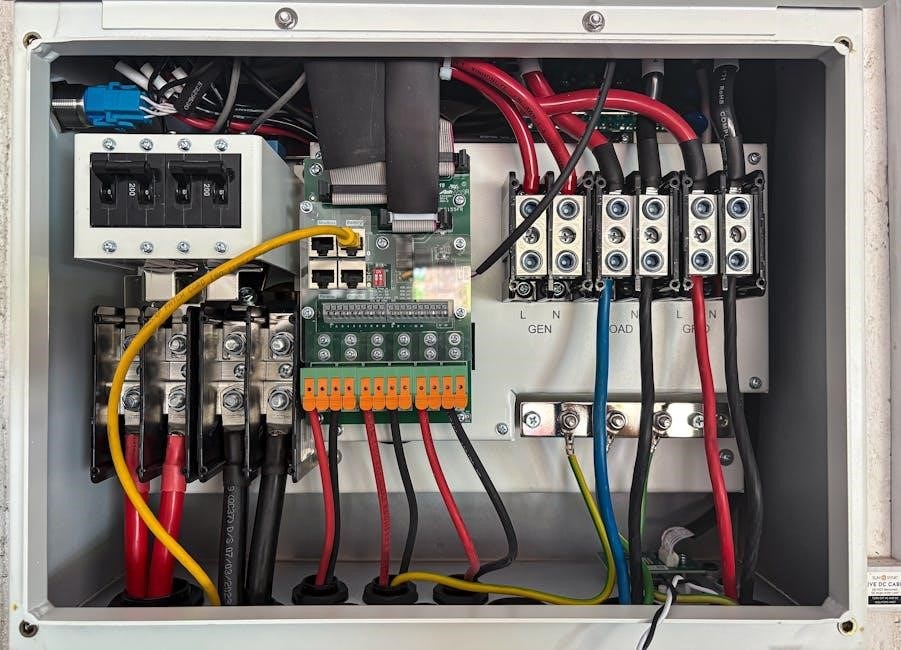
Control Wiring Block Diagram

The PowerFlex 40’s control terminal block facilitates communication and control signals. A typical diagram illustrates connections for Enable (with a jumper relay – Normally Open/Normally Closed options), and various outputs like Relay 1 (R1), Relay 2 (R2), and Relay 3 (R3).

Analog inputs, including 0-10V and 0-20mA signals, are clearly depicted, alongside voltage supply options: 30V DC, 125V AC, and 240V AC. Current ratings are specified for both resistive (3.0A) and inductive (0.5A) loads.

Understanding this block diagram is crucial for proper operation. It shows how external devices connect to control the drive’s start/stop functions, speed references, and status indications. Careful attention to these connections ensures seamless integration with your automation system. Refer to the manual for detailed terminal assignments and signal descriptions.

Power Wiring Specifications

Proper power wiring is critical for the safe and reliable operation of the PowerFlex 40. The drive accommodates a range of input voltages, typically including 230V and 460V, with corresponding current ratings dependent on the drive’s horsepower. Always consult the drive’s nameplate and manual for precise specifications.

Wiring must adhere to local and national electrical codes. Use appropriately sized conductors, ensuring sufficient ampacity for the connected load and anticipated inrush currents. Grounding is paramount; a dedicated ground wire must be securely connected to the drive’s grounding terminal and the system ground.

Overcurrent protection, typically via fuses or circuit breakers, is essential. Select protective devices with the correct interrupting capacity and time-delay characteristics. Proper wiring practices minimize electrical noise and ensure optimal performance. Incorrect wiring can lead to drive failure or pose a safety hazard.

Drive Configuration

Configuring the PowerFlex 40 involves utilizing the Human Interface Module (HIM) and adjusting key parameters. These settings optimize drive performance for specific motor and application needs.

Using the Human Interface Module (HIM)

The Human Interface Module (HIM) serves as the primary interface for configuring, monitoring, and troubleshooting the PowerFlex 40 drive. This integrated keypad and display allow for direct interaction without requiring a computer. Navigating the HIM involves using the arrow keys to scroll through menus and parameters.

The display presents crucial drive information, including speed, current, voltage, and fault codes. Parameter adjustments are made directly through the HIM, enabling quick and efficient setup. The HIM facilitates accessing and modifying drive parameters, tailoring the drive’s operation to the connected motor and application requirements.

Users can view real-time drive status, monitor performance metrics, and diagnose potential issues directly on the HIM. It’s a vital tool for initial setup, ongoing monitoring, and resolving operational challenges. The HIM simplifies the process of commissioning and maintaining the PowerFlex 40, making it accessible for a wide range of users.

Parameter Overview

Parameter configuration is central to PowerFlex 40 operation, allowing customization for specific applications. These parameters, accessed via the Human Interface Module (HIM), define drive behavior and performance characteristics. They are broadly categorized into motor and drive parameters.

Motor parameters include motor voltage, current, frequency, and speed, ensuring optimal drive-motor matching. Accurate motor parameter entry is crucial for efficient and reliable operation. Drive parameters control acceleration/deceleration rates, current limits, and protection settings.

Understanding these parameters is essential for tailoring the drive to the connected load. Careful adjustment of parameters optimizes performance, protects the motor, and ensures safe operation. The user manual provides detailed explanations of each parameter and its impact on drive behavior. Proper parameterization unlocks the full potential of the PowerFlex 40, maximizing efficiency and extending equipment lifespan.

Motor Parameters

Motor parameters within the PowerFlex 40 define the characteristics of the connected motor, enabling the drive to control it effectively. Key parameters include motor voltage, specifying the required supply voltage for optimal performance; Motor full load amps (FLA), representing the motor’s current draw at its rated load, is critical for current limit settings.

Motor frequency, typically 50 or 60 Hz, dictates the synchronous speed. Motor speed, often expressed in RPM, is used for closed-loop control. Motor poles determine the base speed calculation. Accurate input of these parameters ensures the drive delivers appropriate voltage and frequency to the motor.

Incorrect motor parameter settings can lead to reduced performance, overheating, or even motor damage; The user manual provides guidance on obtaining accurate motor nameplate data and entering it correctly into the drive. Precise parameterization is fundamental for efficient and reliable motor operation.

Drive Parameters

Drive parameters within the PowerFlex 40 configure the drive’s operational behavior and protection features. Maximum frequency limits the highest output frequency, safeguarding the motor and driven equipment. Acceleration time and deceleration time control the ramp-up and ramp-down rates, minimizing mechanical stress.

Current limit protects the motor from overload by restricting the maximum output current. Voltage boost compensates for voltage drop during startup. Carrier frequency influences the motor’s audible noise and switching losses. Proper configuration of these parameters optimizes performance and extends equipment life.

The user manual details each parameter’s function and recommended settings. Understanding these settings is crucial for tailoring the drive to specific application requirements. Incorrect parameterization can result in instability, reduced efficiency, or unwanted tripping. Careful attention to drive parameters ensures reliable and efficient operation.

Operation and Control

The PowerFlex 40 operates via a control terminal block, enabling start/stop and speed control. Quick start guides detail basic operation and programming steps for users.

Basic Drive Operation

Initiating operation with the PowerFlex 40 involves several key steps, as outlined in available quick start manuals. First, ensure proper wiring and configuration are completed, referencing the user manual for detailed instructions. The drive requires an enable signal, often connected through the control terminal block, to activate.

Once enabled, the drive can be started via external commands or the Human Interface Module (HIM). Speed control is typically achieved through analog inputs (0-10V or 4-20mA) or digital commands. Monitoring drive status is crucial; the HIM displays parameters like frequency, current, and fault codes.

Understanding the relay outputs (R1, R2, R3) is also important for integrating the drive into larger systems. These relays can signal run status or fault conditions. Remember to consult the manual for specific parameter settings and safety precautions before operating the PowerFlex 40.

Control Terminal Block Details

The PowerFlex 40’s control terminal block provides essential connections for operation and monitoring. Key terminals include those for enabling the drive, utilizing both normally open (N.O.) and normally closed (N.C.) relay contacts. Analog inputs, such as 0-10V and 4-20mA, facilitate speed control, while digital inputs allow for preset speed selection or other functions.

Relay outputs (R1, R2, R3) offer status signaling, capable of switching 3.0A resistive or 0.5A inductive loads at various voltages (30V DC, 125V AC, 240V AC). A clear understanding of these connections, as detailed in the user manual, is vital for proper system integration.

Proper wiring and configuration of the control terminal block are crucial for safe and reliable drive operation. Always refer to the wiring diagrams and parameter settings outlined in the official documentation before making any connections.

Troubleshooting

Addressing issues with the PowerFlex 40 involves identifying fault codes and following basic troubleshooting steps, as detailed in the user manual and quick start guides.

Common Fault Codes

Understanding fault codes is crucial for effective PowerFlex 40 troubleshooting. The drive utilizes a comprehensive system of codes to indicate specific issues, ranging from power supply problems to motor faults and communication errors. These codes, detailed within the user manual, provide a starting point for diagnosis.

Commonly encountered faults include overcurrent (indicating a potential motor or wiring issue), overvoltage/undervoltage (suggesting power supply instability), and motor overload (signaling excessive load on the motor). Communication faults often relate to improper network configuration or wiring. The manual provides specific actions to take for each code.

Furthermore, the drive may display codes related to internal hardware failures, requiring professional service. Regularly referencing the fault code list in the manual, alongside a systematic approach to checking wiring and parameters, will significantly reduce downtime and ensure efficient operation of the PowerFlex 40.

Basic Troubleshooting Steps

Initial troubleshooting of a PowerFlex 40 drive begins with a thorough visual inspection. Check all wiring connections for tightness and proper insulation, ensuring no loose wires or damaged cables are present. Verify the input power supply voltage is within the drive’s specified range, and confirm the motor is not mechanically seized or obstructed.

Next, review the drive’s fault display. Consult the user manual to decode the fault code and understand the potential cause. Resetting the drive after addressing the identified issue is a standard step. If the fault persists, examine relevant parameters, comparing them to the motor nameplate data and application requirements.

Simple tests, like jogging the motor at low speed, can help isolate the problem. If issues remain, consider consulting the detailed troubleshooting sections within the manual or seeking assistance from a qualified technician. A systematic approach, guided by the manual, is key to efficient resolution.

char broil big easy instructions manual

Char-Broil Big Easy Oil-Less Turkey Fryer: A Comprehensive Guide

Welcome! This guide provides detailed instructions for safely and effectively using your Char-Broil Big Easy oil-less turkey fryer, ensuring delicious results every time․

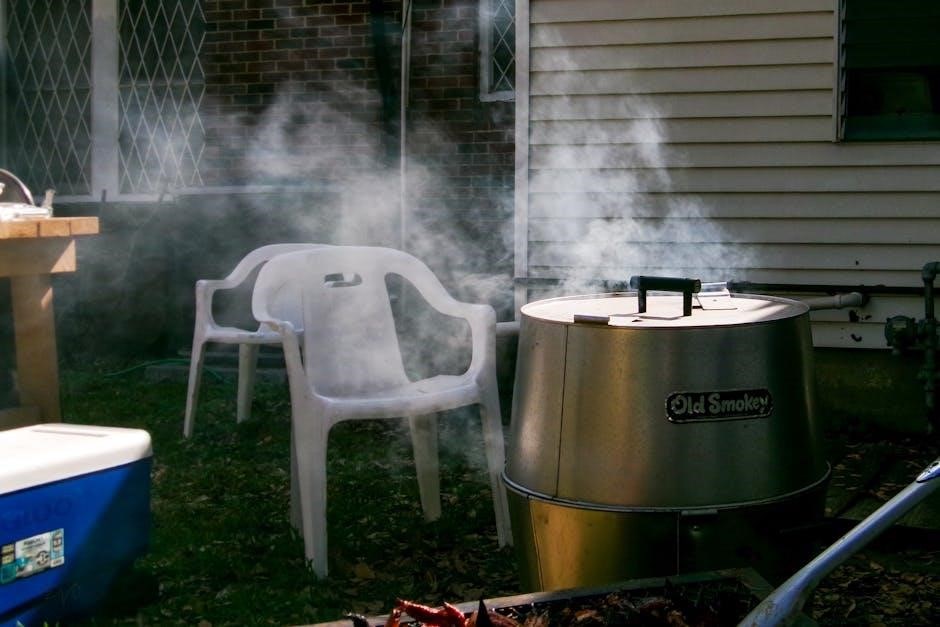
The Char-Broil Big Easy is a revolutionary outdoor cooker designed to deliver juicy, flavorful turkey – and much more – without the hassle and dangers of traditional oil frying․ This appliance utilizes infrared heat to cook food quickly and evenly, resulting in incredibly moist meat and delightfully crispy skin․

Unlike conventional deep-frying methods, the Big Easy eliminates the need for gallons of oil, significantly reducing the risk of burns and messy cleanup; It’s a safer, cleaner, and more convenient alternative for preparing your favorite holiday meals or enjoying a backyard barbecue․

This guide will walk you through every step, from initial setup and turkey preparation to cooking, cleaning, and troubleshooting․ Whether you’re a seasoned grill master or a first-time fryer user, the Char-Broil Big Easy promises a fantastic cooking experience and consistently delicious outcomes․

Understanding Oil-Less Turkey Frying

Oil-less turkey frying, as employed by the Char-Broil Big Easy, differs significantly from traditional deep-frying․ Instead of submerging the turkey in hot oil, this method utilizes infrared heat radiating from the burner assembly․ This radiant heat cooks the turkey from all sides simultaneously, creating a remarkably even cooking process․

The key to this process is the enclosed cooking chamber․ It traps and circulates the heat, ensuring the turkey cooks thoroughly while retaining its natural juices․ Because no oil is used, there’s no risk of oil splattering or boil-overs, making it a much safer option․

The result is a turkey with crispy skin and incredibly moist meat, comparable to – and often exceeding – the quality achieved through oil frying, but without the associated hazards and mess․ It’s a healthier and more manageable way to enjoy a perfectly cooked turkey․

What’s Included in the Box: Components Overview

Your Char-Broil Big Easy package contains several key components designed for efficient and safe turkey frying․ You’ll find the main unit housing the burner assembly and cooking chamber․ Included is a removable cooking basket, specifically engineered to hold your turkey securely during the cooking process․

A lid is provided to help maintain consistent temperatures and reduce cooking time․ The package also includes a propane regulator and hose, essential for connecting to a standard propane tank (sold separately)․ You’ll also receive a thermometer to accurately monitor the internal temperature of your turkey․

Finally, a detailed instruction manual – this very document! – is included, along with helpful cooking charts and safety guidelines․ Ensure all parts are present before beginning assembly and familiarize yourself with each component’s function․

Safety First: Important Precautions

Using the Char-Broil Big Easy requires strict adherence to safety guidelines․ This appliance generates high temperatures and involves propane gas, demanding careful operation․ Always prioritize safety to prevent accidents and ensure a pleasant cooking experience․

Never operate the fryer indoors or in enclosed spaces; adequate ventilation is crucial․ Keep children and pets a safe distance away during operation․ Inspect the propane hose for damage before each use, and ensure connections are secure․ Do not overfill the cooking chamber, and always use oven mitts when handling hot components․

Be aware of the hot surfaces and avoid touching them․ Never leave the fryer unattended while in operation․ Familiarize yourself with the emergency shut-off procedures outlined in this manual․ Ignoring these precautions could result in serious injury or property damage․

Outdoor Use Only

The Char-Broil Big Easy is explicitly designed for outdoor use only․ Operating this appliance indoors, in a garage, carport, or any enclosed area is strictly prohibited and extremely dangerous․ These spaces lack the necessary ventilation to prevent the buildup of carbon monoxide, a colorless and odorless gas that can be fatal․

Ensure the fryer is positioned on a level, non-combustible surface, at least three feet away from any walls, structures, or flammable materials․ Avoid operating under overhead obstructions like trees or power lines․ Adequate airflow is essential for safe and efficient operation․ Never attempt to shield the unit from the elements, as this can restrict ventilation and create a hazardous situation․

Always prioritize a well-ventilated outdoor space to mitigate risks associated with propane gas and high temperatures․ Your safety depends on following this crucial guideline․

Grounding Requirements

Proper grounding is essential for the safe operation of your Char-Broil Big Easy․ This appliance is equipped with a three-prong plug for grounding purposes․ Never attempt to alter or remove the grounding prong․ Connecting the fryer to an improperly grounded outlet could result in electric shock hazard․

Always plug the fryer into a grounded 120-volt outlet that is compatible with the plug’s configuration․ Avoid using extension cords whenever possible․ If an extension cord is absolutely necessary, it must be a heavy-duty, three-wire outdoor extension cord with a sufficient amperage rating․ Inspect the extension cord regularly for damage․

Ensure the outlet is protected by a circuit breaker or fuse of the appropriate amperage․ A qualified electrician should inspect your electrical system if you have any concerns about grounding․

Avoiding Water Contact

Water and electricity are a dangerous combination․ Absolutely no part of the Char-Broil Big Easy, including the burner assembly, should ever come into contact with water․ Even a small amount of moisture can create a significant electrical hazard․

Never operate the fryer in wet conditions, such as during rain or near a swimming pool․ Ensure the area surrounding the fryer is completely dry before use․ Do not attempt to clean the fryer while it is still connected to the propane tank or electrical outlet․

If the fryer is exposed to water, immediately disconnect it from both the propane tank and the electrical outlet․ Have the unit inspected by a qualified technician before attempting to use it again․ Prioritize safety and avoid any risk of electrical shock․

Preparing Your Turkey for the Big Easy

Proper turkey preparation is key to achieving a juicy and flavorful result with your Char-Broil Big Easy․ Begin by ensuring the turkey is fully thawed – this is non-negotiable for even cooking and safety․ Next, consider enhancing the flavor through brining or marinating; these processes infuse moisture and seasoning deep into the meat․

Brining involves submerging the turkey in a saltwater solution, while marinating uses a seasoned liquid; Both methods require several hours, or even overnight, for optimal results․ Finally, thoroughly dry the turkey’s skin with paper towels․ This crucial step promotes crispy skin during the cooking process, maximizing the overall enjoyment of your meal․

Thawing the Turkey (Crucial Step!)

Thawing your turkey completely is absolutely essential before using the Char-Broil Big Easy․ A partially frozen turkey will cook unevenly, leading to a potentially unsafe and unappetizing result․ The safest method is refrigerator thawing: allow approximately 24 hours for every 4-5 pounds of turkey․

Alternatively, you can thaw in cold water, changing the water every 30 minutes to maintain a safe temperature․ Never thaw at room temperature! Ensure the turkey is fully pliable throughout before proceeding․ A thawed turkey should not have any ice crystals remaining in the cavity․ Proper thawing guarantees a safe and delicious cooking experience with your Big Easy;

Brining or Marinating (Flavor Enhancement)

Enhance your turkey’s flavor and moisture with brining or marinating! Brining involves submerging the turkey in a saltwater solution for 12-24 hours, allowing it to absorb moisture and seasoning․ A basic brine includes water, salt, sugar, and your preferred herbs and spices․

Marinating offers a quicker flavor infusion, typically lasting 4-12 hours․ Marinades often contain acidic ingredients like citrus juice or vinegar, alongside oils, herbs, and spices․ Both methods contribute to a juicier, more flavorful bird when cooked on the Char-Broil Big Easy․ Remember to thoroughly rinse and pat the turkey dry after brining or marinating before loading it into the fryer basket․

Drying the Turkey (For Crispy Skin)

Achieving crispy skin with your Char-Broil Big Easy requires a thoroughly dried turkey․ After brining or marinating (or even if you skip those steps!), pat the turkey completely dry, inside and out, with paper towels․ This is a crucial step often overlooked․

Moisture is the enemy of crispiness! Consider leaving the turkey uncovered in the refrigerator for several hours, or even overnight, to allow the skin to air dry further․ A fan can expedite this process․ The drier the skin, the more effectively it will crisp up during cooking․ Don’t skip this step if you desire that perfectly golden-brown, satisfyingly crunchy skin that makes a fried turkey so enjoyable․

Setting Up the Char-Broil Big Easy

Before your first cook, proper setup is essential for safe and efficient operation․ Begin by assembling the unit, ensuring all parts are securely connected according to the diagram in your included documentation․ Double-check all screws and fasteners․

Next, connect the propane tank to the regulator, tightening securely․ Always check for leaks using a soapy water solution – bubbles indicate a leak․ Perform an initial burn-off by turning the burner on high for 10-15 minutes․ This cleans the burner and removes any manufacturing residue․ This initial burn-off should be done in a well-ventilated outdoor area, away from flammable materials․

Assembling the Unit

Unpack all components carefully, referencing the parts list to ensure everything is present․ Begin by attaching the legs to the base, securing them with the provided bolts and washers – tighten firmly but avoid over-tightening․ Next, carefully slide the burner assembly into the designated slot within the base, ensuring it sits flush and secure․

Attach the lid, aligning the hinges correctly and fastening them with the included pins․ Verify the lid opens and closes smoothly․ Finally, connect the grease drain pan to the base, ensuring it’s positioned to catch drippings effectively․ Double-check all connections for stability before proceeding․ A properly assembled unit is crucial for safe operation․

Propane Tank Connection

Ensure the propane tank is securely connected to the regulator valve, hand-tightening the connection․ Never use tools to tighten, as this can damage the valve․ Before connecting, inspect the hose for any cracks or damage – do not use if compromised․ Apply a soapy water solution to the connection point after attaching the tank to check for leaks; bubbles indicate a problem․

Position the propane tank upright and away from any heat sources․ The tank should be placed on a level surface for stability․ Always use a standard 20-pound propane tank with a POL valve connection․ Periodically inspect the hose and connection for wear and tear, replacing them as needed to maintain safe operation․

Initial Burn-Off (Cleaning the Burner)

Before your first cook, perform a burn-off to eliminate any manufacturing residues from the burner assembly․ Connect the propane tank as described previously and open the tank valve․ Turn the control knob to the “High” setting and ignite the burner using the igniter button․ Allow the unit to run on high for 15-20 minutes․

This process will burn off any residual oils or coatings․ You may notice some smoke or odor during this initial burn-off – this is normal; Ensure the area is well-ventilated․ After the burn-off, turn the control knob to the “Off” position and allow the unit to cool completely before proceeding with cooking․ Regular burn-offs can help maintain optimal performance․

Cooking with the Big Easy: Step-by-Step Instructions

Now for the exciting part! Begin by ensuring the unit is set up on a level, non-combustible surface outdoors․ Carefully lift the turkey, ensuring it’s completely dry, and gently lower it into the cooking basket․ Secure the lid, making sure it’s properly closed to maintain consistent heat․

Turn the control knob to your desired cooking temperature – typically around 350°F (175°C)․ Set the timer according to the turkey’s weight; a general guideline is 12-15 minutes per pound․ Avoid opening the lid frequently, as this releases heat and extends cooking time․ Monitor the process visually, and trust the timer!

Loading the Turkey into the Basket

Prior to loading, double-check that the turkey is fully thawed, dried thoroughly, and any excess fat has been removed; Carefully position the turkey breast-side up within the cooking basket․ Ensure the turkey fits comfortably without touching the burner assembly; overcrowding hinders even cooking․

Secure the lifting hook firmly into the turkey’s cavity, providing a stable point for raising and lowering․ Slowly and steadily lower the basket into the fryer, maintaining control throughout the process․ Never force the turkey into the basket; Once fully seated, close the lid securely, ensuring a tight seal to maximize heat retention and efficiency․

Setting the Temperature and Timer

To begin cooking, connect the regulator to the propane tank, ensuring a secure fit․ Turn the control knob to the “High” setting and ignite the burner using the igniter button․ Once lit, adjust the control knob to achieve the desired cooking temperature – typically around 350°F (175°C) for optimal results․

Set the timer according to the turkey’s weight․ A general guideline is approximately 30 minutes per pound, but always verify internal temperature for doneness․ Monitor the temperature gauge frequently throughout the cooking process, making adjustments as needed to maintain a consistent heat․ Avoid opening the lid unnecessarily, as this releases heat and extends cooking time․

Monitoring the Cooking Process

Throughout the cooking cycle, periodically check the temperature gauge to ensure it remains within the 325-350°F (163-177°C) range․ Slight fluctuations are normal, but consistent deviations require adjustment of the control knob․ Listen for the consistent, even heating sound of the burner; a sputtering or uneven flame indicates a potential issue․

Visually inspect the turkey through the viewing window, noting the skin’s color change․ It should gradually turn golden brown․ Resist the urge to frequently lift the lid, as each opening extends cooking time․ Trust the timer and temperature readings, and focus on maintaining a stable cooking environment for the best outcome․

Determining Doneness: Internal Temperature Checks

Accurate temperature readings are crucial for ensuring a safely cooked and flavorful turkey․ Use an instant-read meat thermometer, inserting it into the thickest part of the thigh, avoiding the bone․ The turkey is considered done when the thigh reaches a minimum internal temperature of 165°F (74°C)․

Check the temperature in multiple locations within the thigh to confirm consistent doneness․ Also, verify the breast reaches at least 160°F (71°C)․ Do not rely solely on cooking time; internal temperature is the definitive indicator of safety․ A properly cooked turkey will be juicy and tender, offering a delightful dining experience․

Removing the Turkey and Resting

Carefully lift the cooked turkey from the Big Easy using the provided lifting hook, ensuring it’s securely fastened․ Gently transfer the turkey to a large cutting board or platter․ Exercise caution as the turkey and basket will be hot! Allow the turkey to rest for at least 20-30 minutes before carving․

Resting allows the juices to redistribute throughout the meat, resulting in a more tender and flavorful final product․ Cover loosely with foil during the resting period․ This crucial step prevents the turkey from drying out when carved․ Enjoy the fruits of your labor – a perfectly cooked, oil-less turkey!

Cleaning and Maintenance

Always allow the Char-Broil Big Easy to cool completely before cleaning․ Remove the basket and wipe down the interior with a damp cloth and mild dish soap․ Avoid abrasive cleaners that could damage the non-stick surface․ The basket and drip pan are dishwasher safe for easy cleanup;

For the burner assembly, inspect for any blockages and clean with a wire brush if necessary․ Ensure the burner ports are clear for optimal performance․ Store the Big Easy in a dry, covered location to protect it from the elements․ Regular cleaning extends the life of your fryer!

Cleaning the Basket and Interior

After each use, once the Big Easy is completely cool, remove the cooking basket and drip pan․ Both are designed for easy cleaning – they are dishwasher safe! For stubborn food residue, soak them in warm, soapy water before washing․ The interior of the fryer can be wiped down with a damp cloth and mild dish soap․

Avoid using abrasive cleaners or scouring pads, as these can damage the non-stick coating․ Pay close attention to the bottom of the fryer, where grease may accumulate․ A plastic scraper can help remove stuck-on bits․ Thoroughly dry all components before reassembling and storing․

Cleaning the Burner Assembly

Regular burner cleaning ensures optimal performance․ Always disconnect the propane tank before attempting any cleaning of the burner assembly! Inspect the burner for any blockages – food particles or debris can obstruct the gas flow․ Use a small wire brush or pipe cleaner to carefully clear any clogged burner ports․

Do not enlarge the burner ports, as this can affect the flame pattern․ Wipe down the burner assembly with a damp cloth to remove any grease or grime․ Ensure the burner is completely dry before reconnecting it to the fryer․ A clogged burner can lead to uneven heating and longer cooking times, so consistent maintenance is key․

Proper Storage

To ensure longevity, proper storage is crucial․ After thoroughly cleaning and drying all components, store the Char-Broil Big Easy in a cool, dry place, protected from the elements․ Always disconnect the propane tank and store it separately in a well-ventilated area, away from heat sources․

Cover the fryer with a suitable protective cover to prevent dust and debris accumulation․ Store the basket and other accessories inside the fryer body to keep them organized․ Avoid stacking heavy objects on top of the unit․ Inspect the unit periodically during storage for any signs of rust or damage․ Following these steps will help maintain your fryer’s condition for years to come․

Troubleshooting Common Issues

If the burner won’t ignite, first ensure the propane tank is full and properly connected․ Check the igniter for debris and clean if necessary․ A weak flame could indicate a low propane level or a blocked burner; inspect and clean the burner assembly․ Uneven cooking often results from an improperly thawed or positioned turkey – ensure complete thawing and even weight distribution․

Excessive smoking may occur if the drip pan is overly full or if the turkey isn’t adequately dry․ Regularly empty the drip pan and pat the turkey dry before cooking․ If you encounter persistent issues, consult the Char-Broil customer support website for further assistance and detailed troubleshooting guides․

Beyond Turkey: Other Foods You Can Cook

The Char-Broil Big Easy isn’t limited to just turkey! Explore a world of flavorful possibilities․ Chicken, ribs, and pork roasts cook beautifully, achieving incredibly moist and tender results․ For chicken, consider spatchcocking for even cooking․ Seafood, like salmon or whole fish, benefits from the indirect heat, preventing it from drying out․

Vegetables, such as potatoes, corn on the cob, and even pineapple, can be roasted directly in the basket for a smoky, caramelized flavor․ Experiment with marinades and rubs to customize your dishes․ Remember to adjust cooking times based on the food type and weight․ Always ensure food reaches a safe internal temperature before serving!

pronombres personales pdf

Personal pronouns, crucial for fluent communication, replace nouns, avoiding repetition and enhancing clarity; downloadable PDF resources offer comprehensive study guides for Spanish learners.

What are Personal Pronouns?

Personal pronouns are words that substitute for nouns or noun phrases, representing individuals or entities involved in an action or state of being. They are fundamental building blocks of language, enabling concise and fluid communication by avoiding repetitive noun usage. In Spanish, like all languages, these pronouns vary based on person (first, second, third), number (singular, plural), and gender (masculine, feminine).

Understanding pronombres personales is vital for constructing grammatically correct and natural-sounding sentences. Many online resources, including readily available PDF guides, detail these pronouns and their proper application. These PDF materials often categorize pronouns into subject, object, and reflexive forms, providing clear examples and exercises for practice. Mastering these distinctions is key to achieving proficiency in Spanish. They allow speakers to express who is performing an action, who is receiving it, and whether the action is directed back to the subject itself.

Why are Personal Pronouns Important?

Personal pronouns are essential for effective communication, preventing awkward repetition and fostering a natural flow in speech and writing. They streamline language, making it more concise and easier to understand. In Spanish, mastering pronombres personales is crucial for grammatical accuracy and fluency. Without them, sentences become cumbersome and lack clarity.

Numerous PDF resources are dedicated to teaching these pronouns, highlighting their importance in sentence structure and verb conjugation. These guides often emphasize pronoun agreement – ensuring pronouns match the nouns they replace in gender and number. Understanding this agreement is vital for avoiding common errors. Furthermore, PDF study materials demonstrate how pronouns interact with different verb tenses and moods. Proficiency with pronouns unlocks a deeper understanding of Spanish grammar, enabling more sophisticated and nuanced expression. They are the cornerstone of building complex and coherent sentences.

Types of Personal Pronouns in Spanish

Spanish features subject, object (direct & indirect), and reflexive pronombres personales; PDF guides detail each type, aiding comprehension and practical application for learners.

Subject Pronouns (Pronombres Sujeto)

Subject pronouns (yo, tú, él/ella/usted, nosotros/as, vosotros/as, ellos/ellas/ustedes) perform the action in a sentence, indicating who is doing what. Mastering these is fundamental to Spanish grammar, and numerous PDF resources are available to aid in their understanding. These pronombres sujeto agree in number and person with the verb.

PDF study guides often present subject pronouns alongside verb conjugations, illustrating how they interact. For example, “Yo hablo” (I speak) demonstrates the first-person singular pronoun with its corresponding verb form. Understanding the formal usted and ustedes is also crucial, as their usage differs regionally. Comprehensive PDF materials will cover these nuances, providing exercises for practice and solidifying knowledge. Beginner learners benefit greatly from visually organized charts found within these downloadable guides, facilitating quicker memorization and application.

Object Pronouns (Pronombres Objeto)

Object pronouns (me, te, lo/la, nos, os, los/las) receive the action of the verb. They replace nouns that are the direct or indirect object within a sentence. Many PDF resources dedicate sections to differentiating between direct and indirect object pronouns, a common challenge for Spanish learners. These guides often include detailed charts and example sentences illustrating correct usage.

Understanding placement is key; object pronouns generally precede the conjugated verb. Downloadable PDF exercises focus on this aspect, providing ample practice opportunities. For instance, “Lo veo” (I see him/it) demonstrates a direct object pronoun preceding the verb. PDF materials also clarify pronoun changes when used with infinitives or gerunds. Mastering object pronouns is vital for constructing grammatically correct and natural-sounding Spanish sentences, and readily available PDFs offer structured learning paths.

Direct Object Pronouns (Pronombres de Objeto Directo)

Direct object pronouns (lo, la, los, las) replace the direct object – the noun directly receiving the verb’s action. Numerous PDF guides emphasize identifying the direct object first. For example, in “Veo el libro” (I see the book), “el libro” is the direct object, replaced by “lo” resulting in “Lo veo”.

PDF resources often highlight gender and number agreement: lo for masculine singular, la for feminine singular, los for masculine plural, and las for feminine plural. Practice exercises within these PDFs focus on substituting nouns with the correct pronoun. A common error addressed in PDF materials is incorrect pronoun selection based on gender.

These downloadable materials provide comprehensive tables and examples, solidifying understanding and enabling accurate application of direct object pronouns in Spanish communication. Mastering these pronouns is crucial for fluency.

Indirect Object Pronouns (Pronombres de Objeto Indirecto)

Indirect object pronouns (me, te, le, nos, os, les) indicate to whom or for whom an action is performed. Many PDF resources clarify this distinction, emphasizing they aren’t directly acted upon. For instance, in “Escribo una carta a María” (I write a letter to Maria), “a María” is the indirect object, replaced by “le”, becoming “Le escribo una carta”.

PDF guides consistently demonstrate that le and les can be ambiguous, often requiring clarification with “a + [person]” (e.g., “Le doy el libro a Juan”). These downloadable materials frequently include exercises to differentiate between direct and indirect objects. A common mistake, detailed in PDFs, is confusing the two.

Comprehensive PDFs offer charts detailing pronoun usage and practice sentences, ensuring learners grasp this often-challenging aspect of Spanish grammar for effective communication.

Reflexive Pronouns (Pronombres Reflexivos)

Reflexive pronouns (me, te, se, nos, os, se) are used when the subject performs an action on itself. Numerous PDF guides highlight that the action “reflects” back onto the subject. For example, “Me lavo” (I wash myself). These PDF resources emphasize recognizing reflexive verbs – verbs where the action is directed inward.

Many downloadable PDFs detail the placement of reflexive pronouns, typically before the conjugated verb (e.g., “Me voy” – I am leaving). However, with infinitives and gerunds, they attach to the end (e.g., “Voy a lavarme” – I am going to wash myself).

PDF exercises often focus on distinguishing reflexive verbs from verbs that simply use reflexive pronouns for emphasis. Comprehensive PDFs provide extensive conjugation charts and practice sentences, solidifying understanding of this crucial grammatical concept for fluent Spanish.

Pronoun Agreement: Number and Gender

Pronoun agreement, detailed in PDF guides, requires pronouns to match nouns in gender (masculine/feminine) and number (singular/plural) for grammatical correctness.

Gender Agreement (Concordancia de Género)

Gender agreement in Spanish is a fundamental aspect of grammar, and readily explained within comprehensive PDF resources. Pronouns must align with the gender of the noun they replace – masculine or feminine. This isn’t about biological sex, but a grammatical categorization assigned to nouns. For example, “el libro” (the book) is masculine, requiring masculine pronouns like “lo” or “él” when referring back to it. Conversely, “la casa” (the house) is feminine, necessitating feminine pronouns such as “la” or “ella”.

PDF study guides often illustrate this with charts and examples, clarifying how adjectives and articles also participate in this agreement. Incorrect gender agreement is a common error for learners, leading to confusion. Mastering this concept, through dedicated practice using downloadable PDF exercises, is crucial for constructing grammatically sound and natural-sounding Spanish sentences. Ignoring gender agreement can significantly alter the meaning or render a sentence incomprehensible.

Number Agreement (Concordancia de Número)

Number agreement, detailed in accessible PDF guides, dictates that pronouns must match the noun they represent in singularity or plurality. Spanish distinguishes clearly between singular and plural forms, impacting pronoun selection. If referring to “el estudiante” (the student – singular), you’d use singular pronouns like “él” or “lo”. However, when referencing “los estudiantes” (the students – plural), plural pronouns such as “ellos” or “los” are required.

Many PDF resources emphasize that this agreement extends beyond just pronouns; articles, adjectives, and verbs must also align in number. Consistent practice, utilizing downloadable PDF exercises, is key to internalizing this rule. Errors in number agreement can lead to miscommunication and sound unnatural to native speakers. Thoroughly studying examples within these PDF materials will solidify understanding and improve fluency. Mastering number agreement is vital for accurate and effective Spanish communication.

Pronoun Placement in Spanish Sentences

PDF guides detail Spanish pronoun positioning—typically before conjugated verbs, or attached to infinitives/gerunds; understanding these rules is crucial for grammatical correctness.

Placement with Conjugated Verbs

When utilizing personal pronouns alongside conjugated verbs in Spanish, a specific order must be followed. Generally, pronouns precede the verb. For instance, instead of saying “Yo te veo” (I you see), the correct structure is “Te veo” (I see you). PDF resources dedicated to Spanish grammar consistently emphasize this placement rule. Direct and indirect object pronouns, reflexive pronouns, and even certain adverbial pronouns all adhere to this pattern before the conjugated verb form.

However, there are nuances. With affirmative commands, pronouns attach directly to the verb—”Dime” (Tell me). Negative commands maintain the pronoun’s preceding position—”No me digas” (Don’t tell me). Comprehensive PDF guides often include charts illustrating these variations. Mastering this placement is vital for constructing grammatically sound and natural-sounding Spanish sentences, and readily available practice exercises within these downloadable resources can solidify understanding.

Placement with Infinitives and Gerunds

When personal pronouns accompany infinitives or gerunds in Spanish, their placement differs from that with conjugated verbs. Pronouns precede infinitives, attaching directly to them. For example, “Quiero verte” (I want to see you) – “verte” combines the infinitive “ver” with the pronoun “te”. Many PDF guides highlight this crucial distinction. This attachment avoids ambiguity and maintains clarity in sentence structure.

With gerunds, the same principle applies: the pronoun precedes the gerund. “Estoy escribiéndote” (I am writing to you) demonstrates this. Detailed PDF exercises often focus on correctly positioning pronouns with these verb forms. It’s important to note that when using a double infinitive (e.g., “tener que + infinitive”), the pronoun goes before the first infinitive: “Tengo que decírtelo” (I have to tell it to you). Mastering these rules, reinforced through downloadable practice materials, is key to fluent Spanish expression.

Pronouns and Verb Conjugation

Pronoun usage significantly impacts verb forms, demanding careful attention to agreement; PDF resources detail these interactions, clarifying potential conjugation errors for Spanish learners.

Impact on Verb Forms

Personal pronouns profoundly influence Spanish verb conjugation, dictating the form a verb takes to agree with the subject. This isn’t merely a grammatical rule, but a cornerstone of constructing coherent and accurate sentences. The placement and type of pronoun—subject, object, or reflexive—directly correlate with the verb’s ending.

For instance, the informal “tú” (you) necessitates a different verb conjugation than the formal “usted” (you). Similarly, object pronouns, when combined with verbs, often trigger changes in verb form, particularly in compound tenses. Mastering this interplay is vital for fluency.

Numerous PDF resources are available, offering detailed charts and exercises to illustrate these conjugations. These guides often focus on common pitfalls and provide ample practice opportunities. Understanding how pronouns shape verb forms is essential for both speaking and writing in Spanish, ensuring clarity and grammatical correctness. These downloadable materials can significantly accelerate the learning process.

Common Conjugation Errors with Pronouns

Spanish learners frequently stumble with verb conjugation when pronouns are involved, particularly with irregular verbs and the subjunctive mood. A prevalent error involves misconjugating verbs after indirect object pronouns like “le” and “les,” often forgetting to adjust for “leísmo” or “laísmo” – regional variations impacting pronoun usage. Another common mistake is incorrect placement of reflexive pronouns, leading to awkward or grammatically incorrect sentences.

Furthermore, confusion arises when combining pronouns – for example, using both a direct and indirect object pronoun with a single verb. Many PDF guides dedicate sections to these specific errors, providing clear explanations and practice exercises. These resources highlight the importance of memorizing irregular verb forms and understanding the nuances of pronoun placement.

Consistent practice and careful attention to detail, aided by downloadable PDF materials, are crucial for overcoming these challenges and achieving accurate Spanish conjugation.

Pronouns in Complex Sentences

Pronouns connect clauses, demanding careful agreement; PDF resources detail relative pronouns and subordinate clause usage, ensuring clarity and grammatical precision in complex structures.

Relative Pronouns (Pronombres Relativos) ─ Brief Overview

Relative pronouns establish essential connections between clauses, providing context and detail within sentences. These crucial elements – que, quien, cual, cuyo – link subordinate clauses to main clauses, referencing previously mentioned nouns or pronouns. Understanding their nuances is vital for constructing grammatically correct and fluid Spanish sentences.

PDF resources dedicated to Spanish grammar extensively cover relative pronouns, offering detailed explanations and practical exercises. These guides often categorize pronouns based on their function (identifying, non-identifying, possessive) and provide examples illustrating correct usage. Mastering relative pronouns significantly improves comprehension and expression in Spanish, allowing for more complex and nuanced communication. They are fundamental for building sophisticated sentence structures and avoiding ambiguity.

Furthermore, downloadable PDF exercises focus on pronoun selection and placement, reinforcing learning through practical application. These materials often include answer keys for self-assessment, facilitating independent study and skill development.

Using Pronouns in Subordinate Clauses

Subordinate clauses, dependent on a main clause for meaning, frequently utilize pronouns to maintain clarity and conciseness. Correct pronoun usage within these clauses is paramount for grammatical accuracy and effective communication in Spanish. PDF resources specializing in Spanish grammar dedicate significant attention to this aspect, detailing how subject, object, and reflexive pronouns function within complex sentence structures.

These downloadable PDF guides often present examples illustrating pronoun placement relative to conjunctions like que, si, cuando, and emphasize the importance of pronoun agreement with the verb within the subordinate clause. Mastering this skill allows for the creation of more sophisticated and nuanced sentences.

Exercises within these PDF materials focus on identifying and correctly utilizing pronouns in various subordinate clause contexts, reinforcing understanding through practical application and self-assessment with provided answer keys.

Resources for Further Learning (PDF Focus)

PDF guides offer extensive Spanish pronoun practice, covering all types with detailed explanations and exercises for mastering pronombres personales effectively.

Online Spanish Pronoun Exercises (PDF Downloadable)

Numerous websites provide invaluable PDF-downloadable exercises specifically designed to reinforce your understanding of pronombres personales. These resources cater to various learning levels, from beginner to advanced, offering a progressive approach to mastering Spanish pronouns. You’ll find exercises focusing on subject, object (direct and indirect), and reflexive pronouns, often with answer keys for self-assessment.

Many PDFs include fill-in-the-blank activities, sentence transformation tasks, and pronoun replacement drills. Some even simulate real-life conversational scenarios, allowing you to practice using pronouns in context. Look for resources that explain the grammatical rules alongside the exercises, providing a comprehensive learning experience. Websites offering these PDFs often categorize them by pronoun type and difficulty, making it easy to find targeted practice. Regularly utilizing these downloadable exercises will significantly improve your accuracy and fluency when using pronombres personales in Spanish.

Comprehensive Spanish Grammar Guides (PDF Format)

For a deeper understanding of pronombres personales, several comprehensive Spanish grammar guides are available in PDF format. These guides typically dedicate substantial sections to pronouns, detailing their various types – subject, object, reflexive, and even relative pronouns – with clear explanations and illustrative examples. They often cover pronoun agreement rules concerning gender and number, a crucial aspect of Spanish grammar.

These PDF resources go beyond simple definitions, exploring pronoun placement within sentences, interactions with verb conjugations, and nuances in complex sentence structures. Many guides include charts summarizing pronoun forms and usage, aiding in quick reference. Look for guides that offer practice exercises and answer keys to reinforce learning. Utilizing these detailed PDFs will provide a solid foundation for mastering pronombres personales and achieving greater accuracy and confidence in your Spanish communication skills;